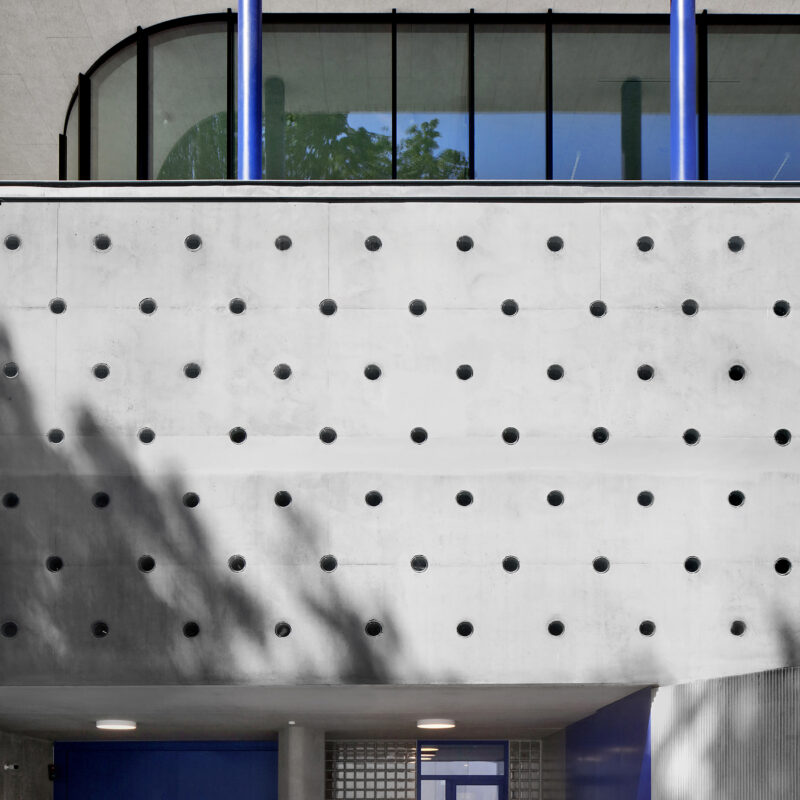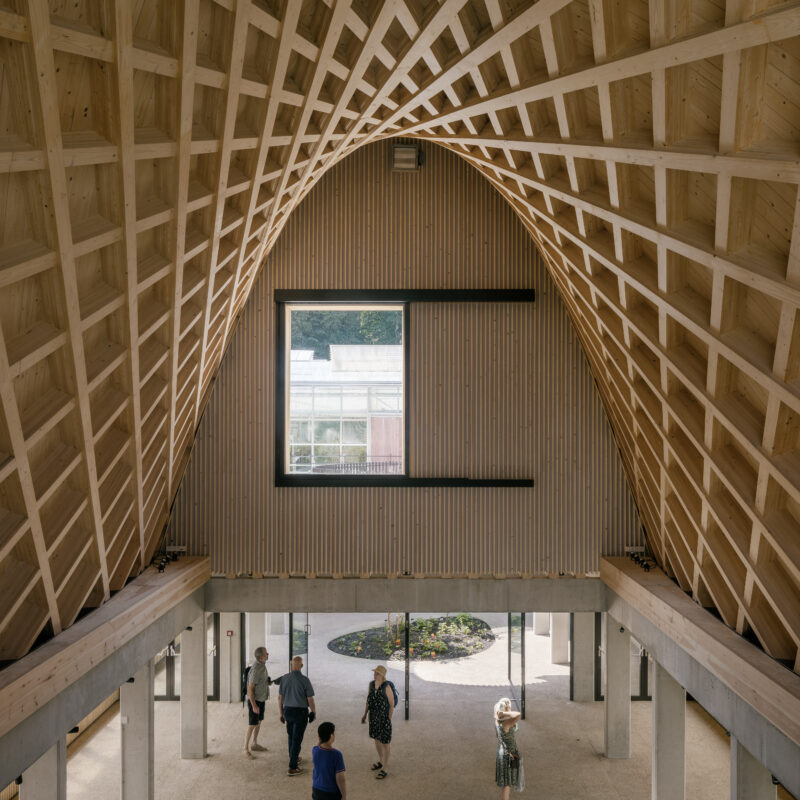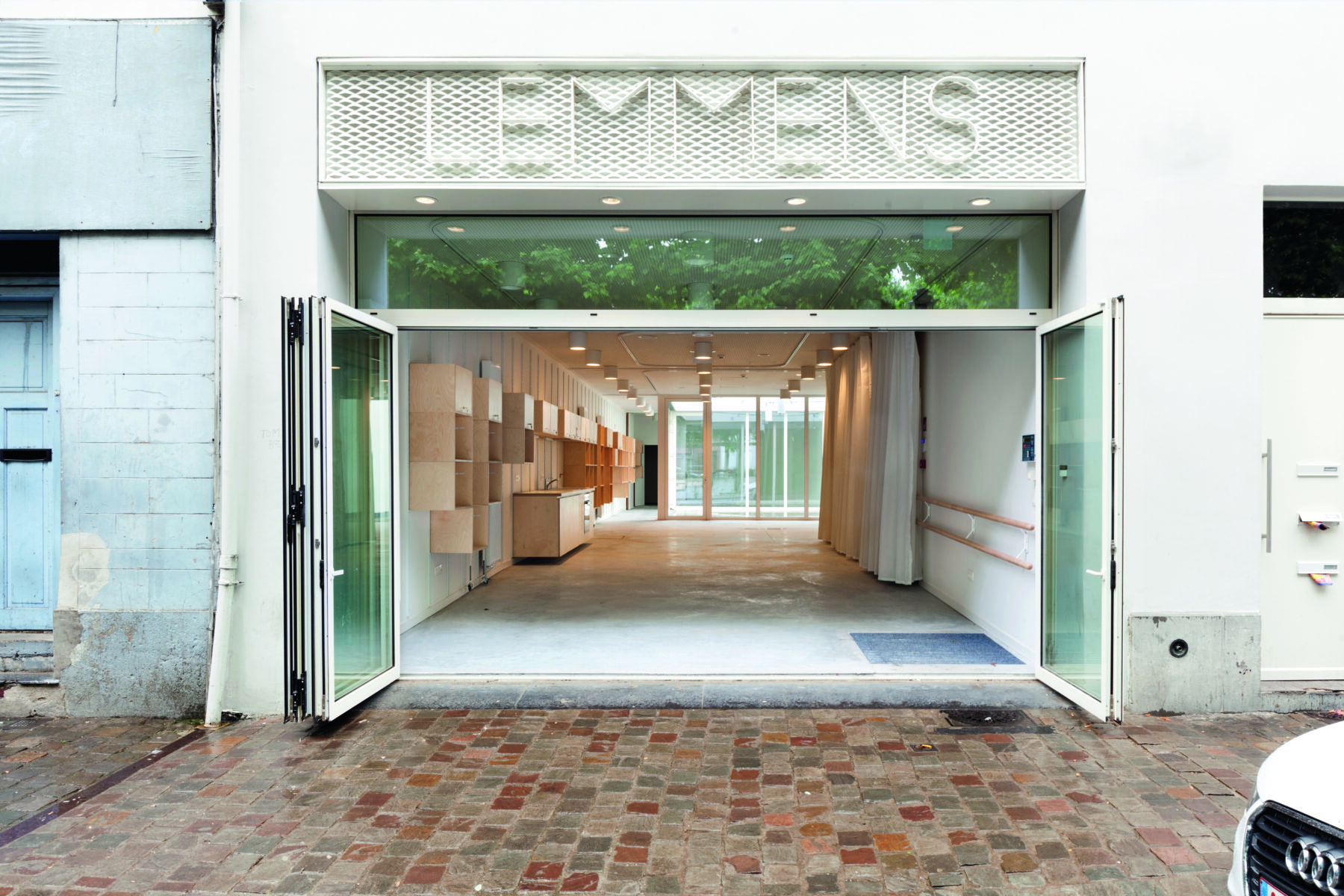
Historically, Kuregem has been a gateway for newcomers, an anchor or transit point where people wait for better economic and social conditions. The neighbourhood and its residents have long been neglected by the government and urban policy. It was not until the late 1990s that the first neighbourhood contracts were introduced, bringing with them the promise of urban renewal. As part of the fourth neighbourhood contract, Kompas, a community centre designed by Réservoir A was inaugurated last year on Lemmensplein.
A September morning in the Brussels neighbourhood of Kuregem. It is still early, but the mercury is already climbing to 27 degrees. In the shade of a tree, a group of women watch their children walk through the gates of the primary school. A little further on, at the edge of Alphonse Lemmensplein, a few workers are taking a break. They observe a young man enthusiastically doing pull-ups. With its sports equipment, petanque court and tall plane trees, the place has the atmosphere of a village square. But the benches are empty. The villagers seem to have abandoned the square. Lemmensplein was once a lively place, lined with shops and cafés. From the 1960s onwards, the surrounding factories and workshops closed down and things went downhill. Breweries, tanneries and textile workshops, much of the industry left the neighbourhood, taking the middle class with it, which dealt a severe blow to the economic and social fabric of the neighbourhood.