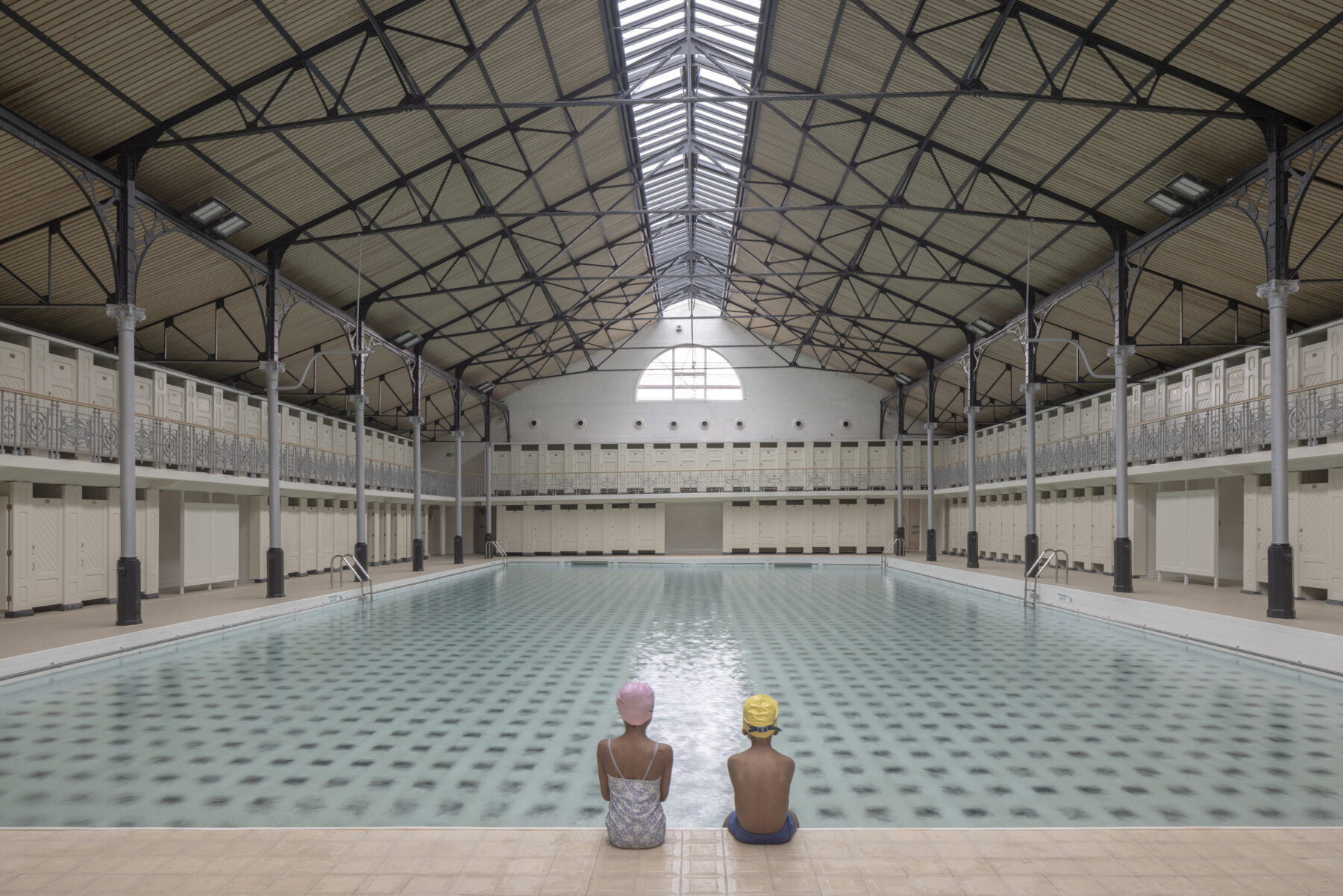
The evolution of the Ixelles municipal swimming pool since its inauguration in 1903 illustrates the transition from prophylactic baths to modern public facilities. The recent renovation carried out by AAC combines adaptation to contemporary uses with scrupulous respect for heritage, revealing unexpected layers of history beneath the pool. Before the exuberance of the Art Deco swimming pools of the 1930s, at the very beginning of the 20th century, there were municipal baths designed to improve the hygiene of the working classes. Their functional architecture was reflected in sober façades, faithful to their utilitarian purpose. The Ixelles swimming pool, built by Alexandre Cooreman and Jules Rau between 1901 and 1904, was the first of its kind in Brussels.
In 2005, the AAC office won the renovation competition to adapt the building to contemporary standards and uses. A significant part of the project involved redesigning the layout of the spaces in line with these requirements, without altering the original architecture. The almost domestic simplicity of the street façade has been preserved, while the main entrance has been moved to an adjoining courtyard, where a winding ramp facilitates access.