The local widening and raising of a solid boundary wall is an anomaly that has become the norm in the neighbourhood. Behind the wall, a sloping roof is cautiously revealed to the neighbourhood. At the level of the recess in the wall, a window is situated some distance away. The wall is a projection of the structure built against it. Next to a car park belonging to the local tyre centre, MAGMA architects built a house behind a three-storey apartment block. From that site, it is by no means clear what structure stands on the adjacent plot. That is precisely the intention.
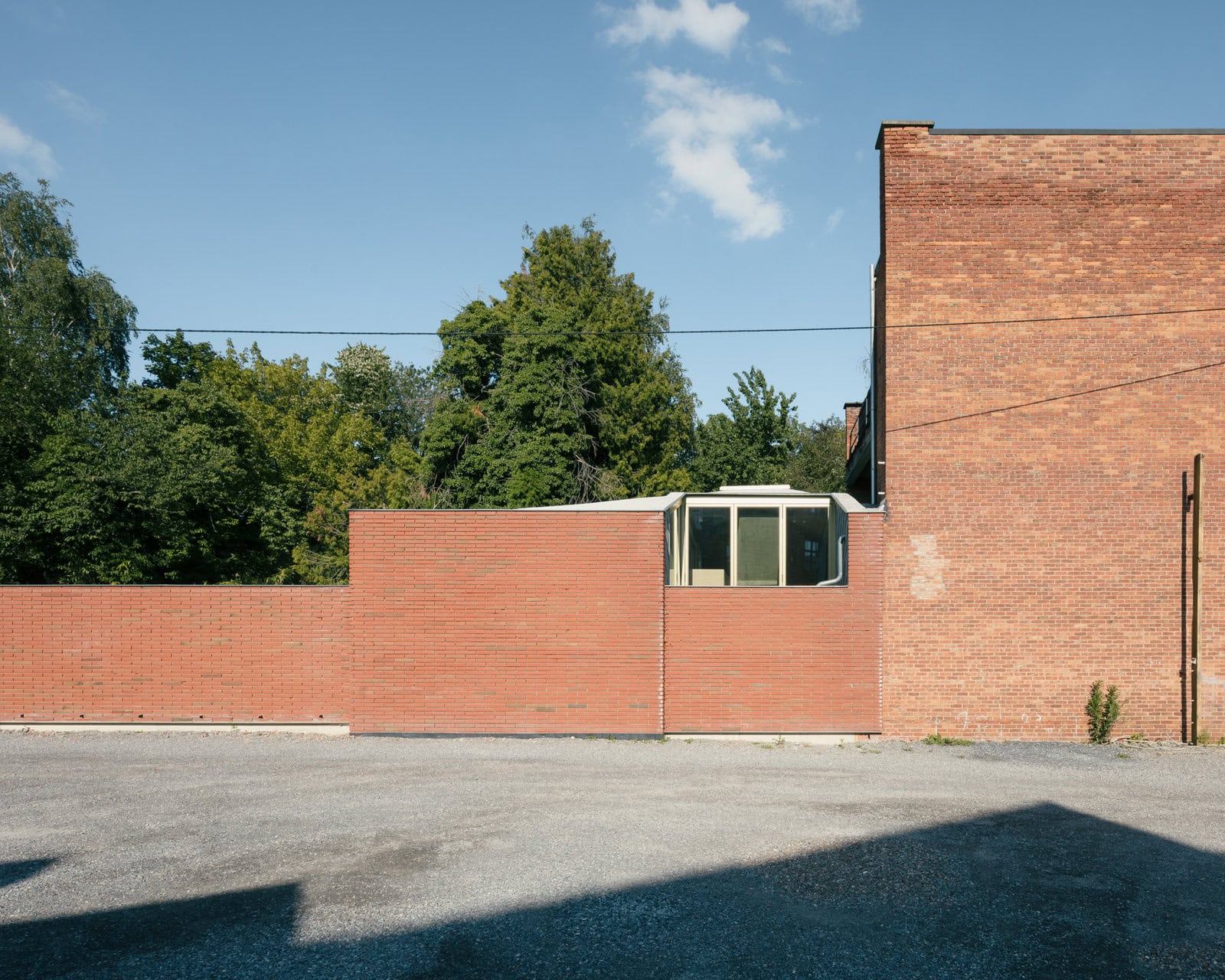
The apartment block in question is situated along an access road to Hasselt. The surroundings, a typical example of a spatially diffuse urban fringe, are an amalgam of roadside shops, open-plan development and multi-family dwellings. This is also evident from the local plot structure. The apartment block stands on an elongated plot, bordering both a hangar and a small copse. Between the building and the garden stood a single-storey house in line with the commercial space facing the street. It is this house that MAGMA demolished to build its project. In a location where various sightlines intersect, the architectural firm did not want to compromise the views of the neighbours above, nor the privacy of the residents.
What the firm built there is the result of balancing these sensitivities. The building adopts a modest stance and is only one storey high. Or so it seems. In reality, the floor plan slopes downwards from the ground-floor entrance. This is where the night-time area of the house is situated, out of sight from above. MAGMA is building a spacious family home for five people, turning the classic housing typology on its head.
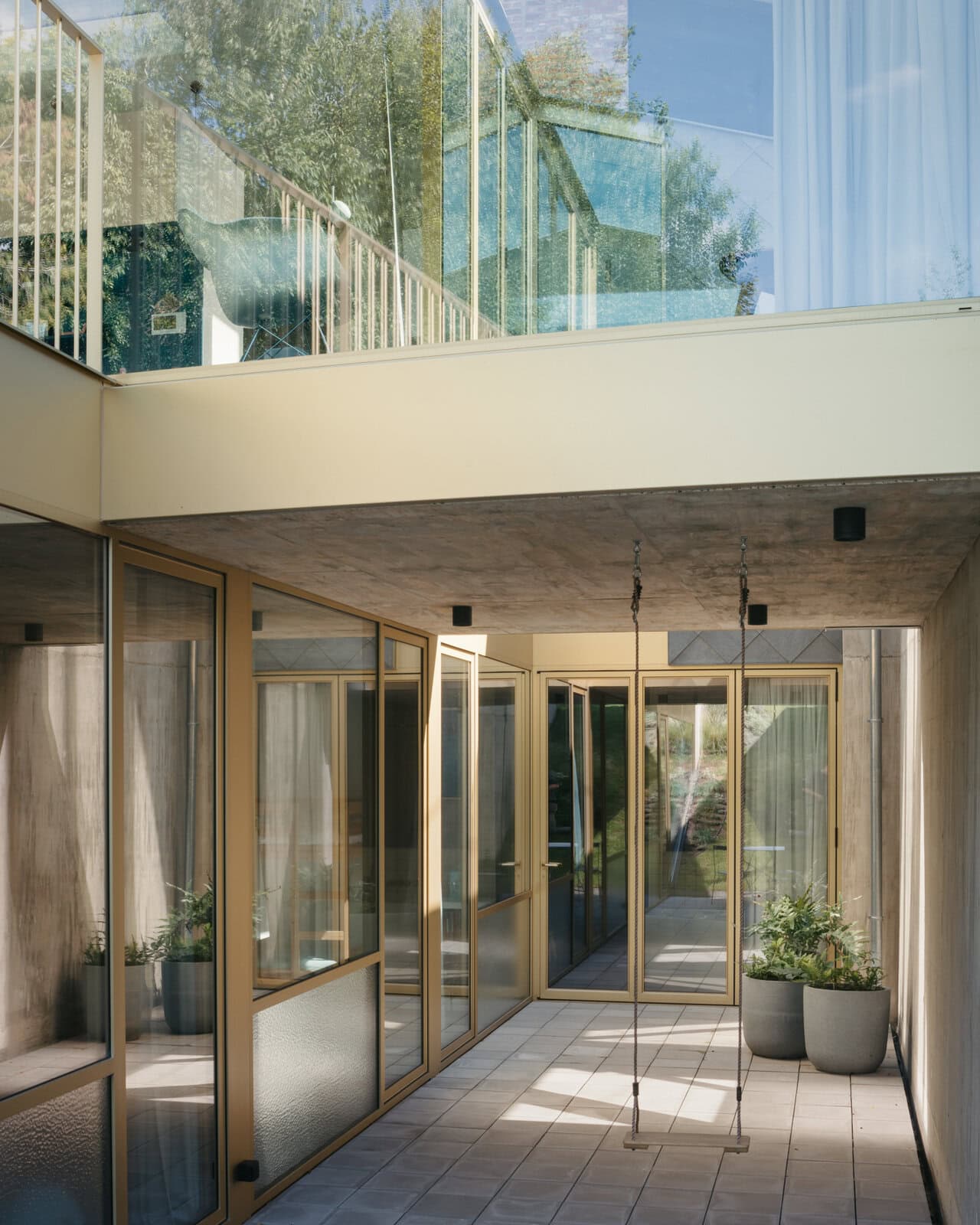
Although the lower floor is concealed, it is not deprived of light. All the rooms are arranged around an open patio connected to the garden via a slope. Four bedrooms and a bathroom are arranged around the patio along a long corridor. Each room has access to the slit-shaped space and is thus connected to the garden. This access gives the rooms a certain autonomy from one another and from the house, although they are interconnected. At the end of the slope, the bathroom serves both as a functional space and a place to cool off at the edge of the large garden. The upper floor evokes a monastic layout, with the patio as its centrepiece and most important space.
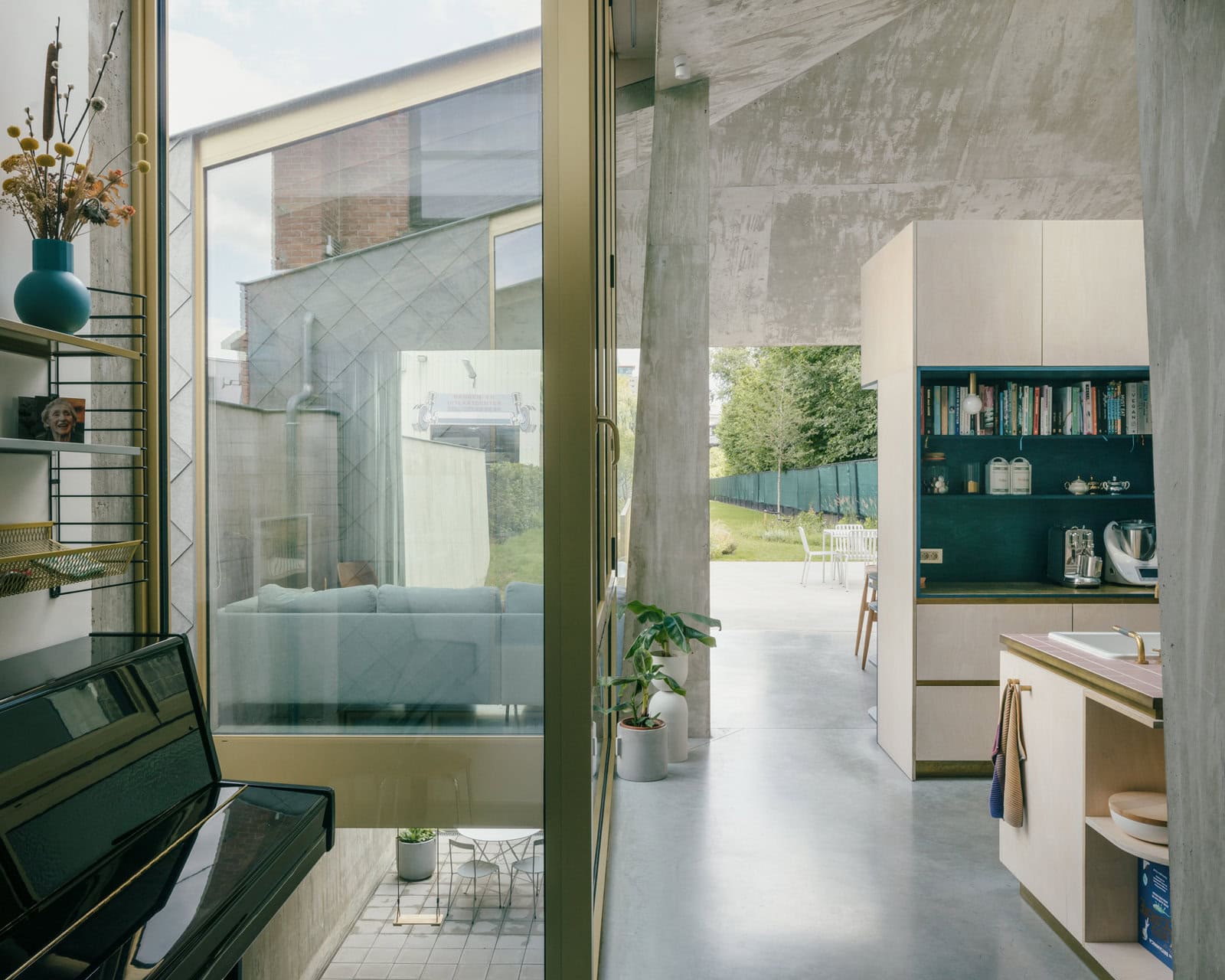
In contrast to the calm and stately ground floor, the first floor is full of movement. This is most evident in its roof structure. The roof, in exposed concrete supported by sculptural columns, slopes towards a central skylight. The space is enclosed between two outdoor areas, of which the garden is the principal one. Next to the kitchen, it appears as though a bite has been taken out of the volume. The recessed window — which opens fully — adjoins a patio that leads down to the garden slope below. In short, the interior connects with the world outside the garden via the lowered boundary wall. This creates a division in the space, which is visually reinforced by the central built-in unit within it. The living and dining area is situated by the garden, whilst the kitchen is next to the patio. The staircase leading down is situated in line with the worktop.
MAGMA architects describe this project as ‘vol-ledig’ (full-ledig), a project arising from the interplay between built space and unbuilt adjacent space. This adjacent space enhances the main space, forming its extension. It is therefore no surprise that all the rooms are connected to it, with large windows and doors. The adjacent space facilitates a direct interaction between the floors and with the surroundings. From the quest for light, away from unwanted views, emerged a home that seeks spaciousness within a limited space.