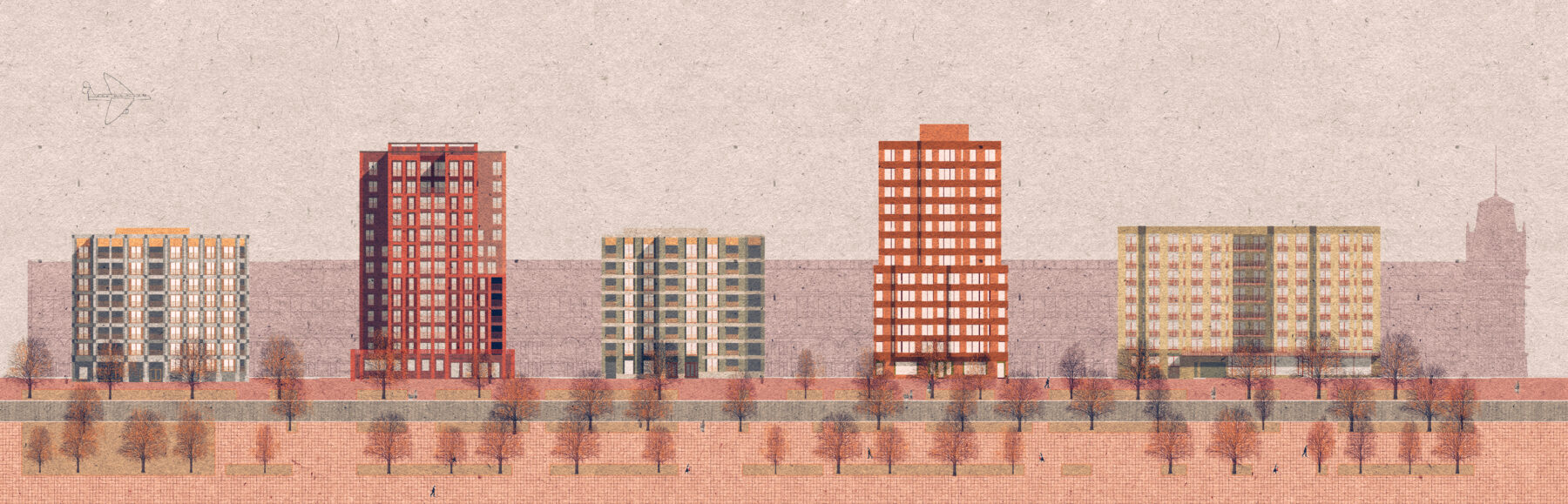
Sofie De Caigny, guest editor of this A issue, recalled a conversation in which I had stated that I really wanted to work for property developers and that it had taken some effort. I could remember that conversation. I had been annoyed by criticism of a new urban development – it included one of our buildings – which had once again been market-driven and would further exacerbate the acute shortage of social or affordable housing. To begin with, that wasn’t entirely true. The city council had put pressure on the developer and stipulated a high percentage of social and modest housing. The central park connected seamlessly with the streets of the working-class neighbourhood: you certainly wouldn’t find only the new residents there. They weren’t displacing anyone, they were just joining in. No one’s home had been demolished, only a company that left behind few buildings and a lot of soil contamination: reclaiming this piece of land for the city would cost something. That was, of course, the reason why the city council had called in private capital. It could not be ruled out that the wider neighbourhood would undergo gentrification. But the previous major investment in that neighbourhood, a courthouse, had not brought about the predicted takeover of the housing market by lawyers and magistrates. The bottom line was that an inclusive city also had to make room for the middle class, that much-vaunted and endlessly stretched group. They were the most numerous in society; the city could not do without them. The dilemmas of gentrification through urban regeneration are not as inexorable in a Western European welfare state as they are in the aggressive Anglo-Saxon capitalist system.
Anyone who wanted to work on the city had to win over project developers. But what did we have to offer them? We knew more than the market specialists they had on their payroll. We saw through their stereotypes. We had got to know the middle class they saw as their customers through commissions for individual homes, not as a uniform market profile, but as a hotbed of individual desires and sensibilities. Their housing preferences were no less diverse than the geography of the city. We were able to mould such differences – between people, between places – into urban forms.