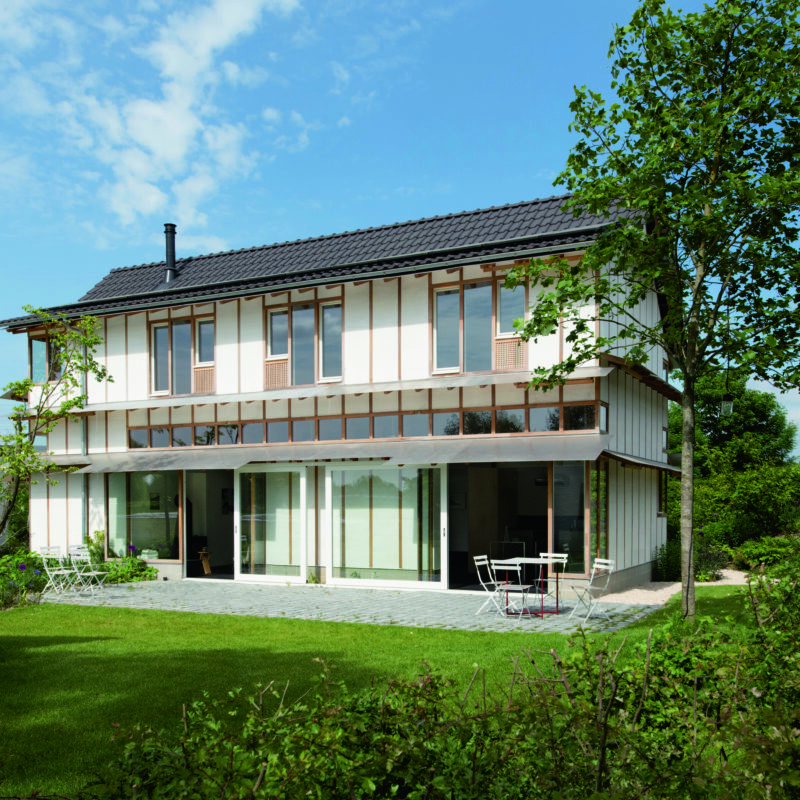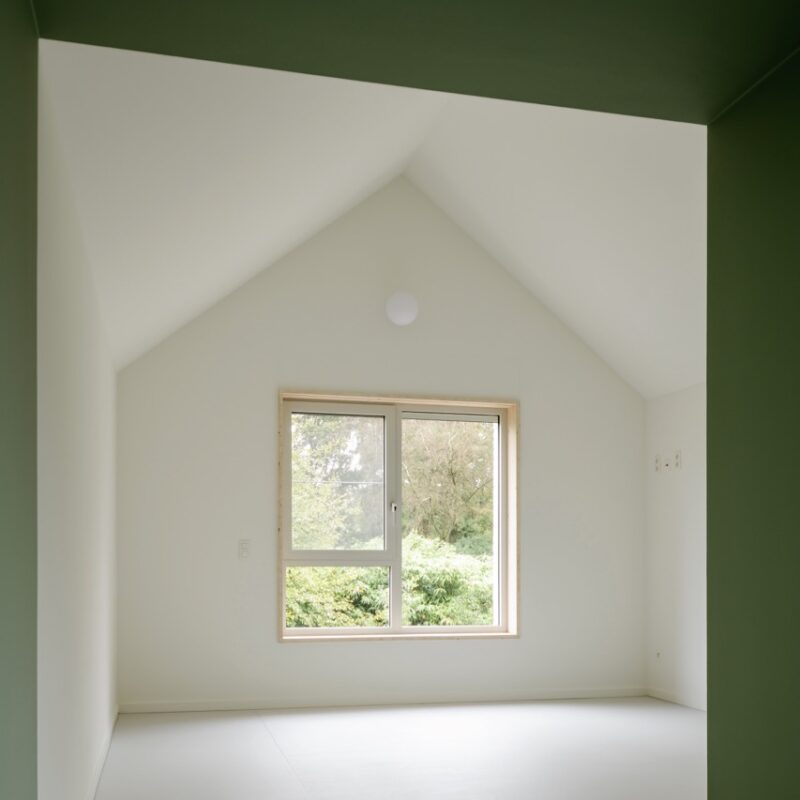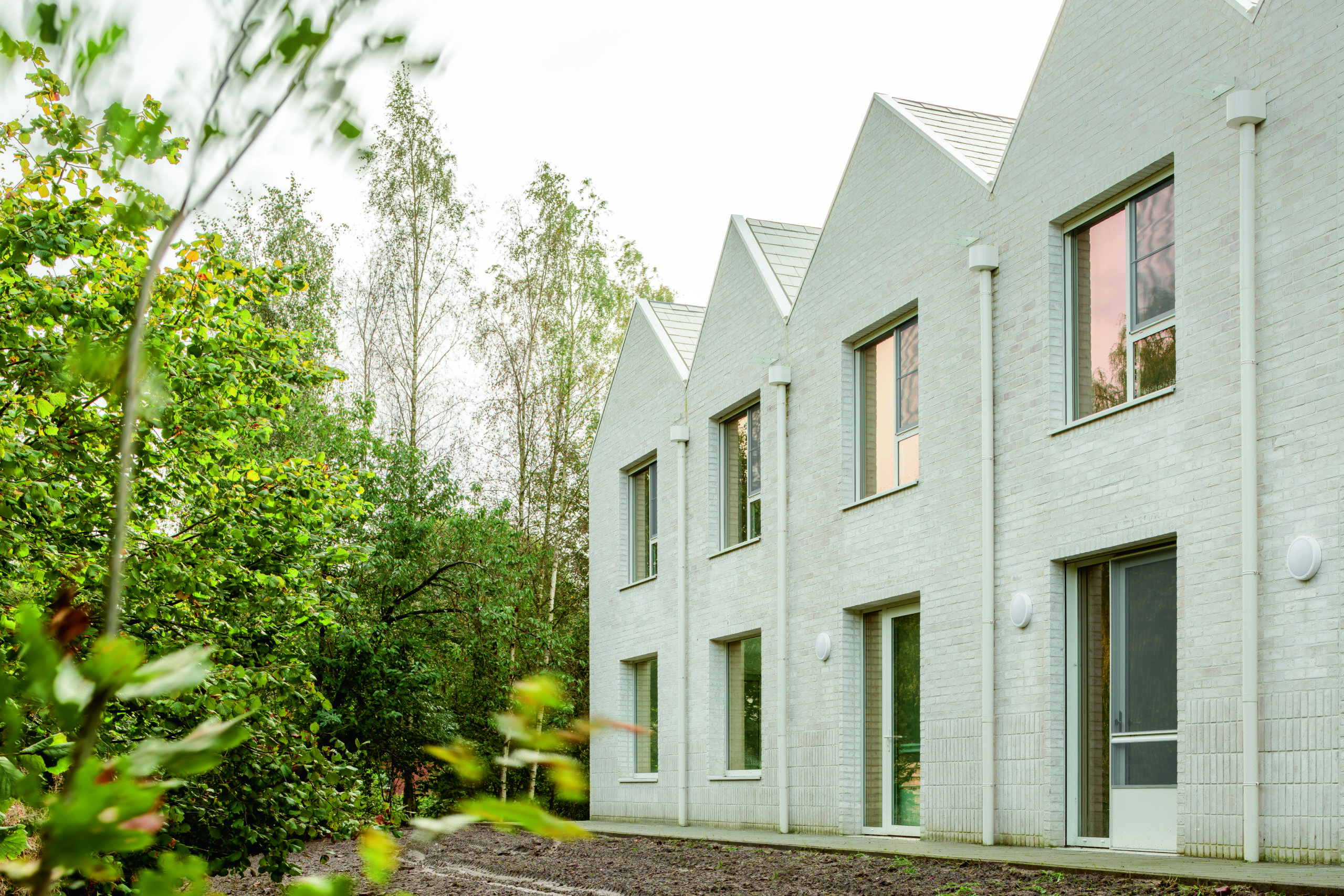
In a residential area lined with bushes on the road between Turnhout and Merksplas, Felt, in collaboration with Robuust, transformed a spacious but outdated house into a home for sixteen people in need of care. The new group of residents makes the building seem like an odd one out, but it nevertheless blends in harmoniously with its surroundings: thanks to an ambiguous roof shape and careful design, the residential group does not stand out among the colossal residences in the green surroundings. At the same time, a serrated contour at the rear provides an expression of individuality that makes it easy for residents to find their own place in a large residential community, even from the lush garden.
How much of a building must be replaced before it can no longer be considered a renovation? And is the guiding principle here the preservation of form or material? Although the completed Care Villa Merksplas building may not immediately raise these questions, they do arise when Jasper Stevens, co-founder of Felt, explains how the end result of this transformation project came about. From a modest alteration, which quickly became a fairly radical renovation in order to comfortably accommodate the requested programme, the process gradually led to a site where, for practical and financial reasons, almost every brick of the existing building was ultimately replaced. The project thus forms an unintended variation on the classic thought experiment about Theseus’ ship, which was repaired so often that it eventually contained no original parts.