Imagine a city where women could walk around at night without worry. Where children could play freely in the streets near their homes. Where homeless people would no longer be forced to live as eternal nomads. This is the “just city,” The Just City1, towards which we must strive, a city that belongs to everyone, created by everyone2, especially marginalised people. 1 Susan S. Fainstein, The Just City, Cornell University Press, 2010 2 Jacobs, J. (1961), The Death and Life of Great American Cities, New York, USA: Random House
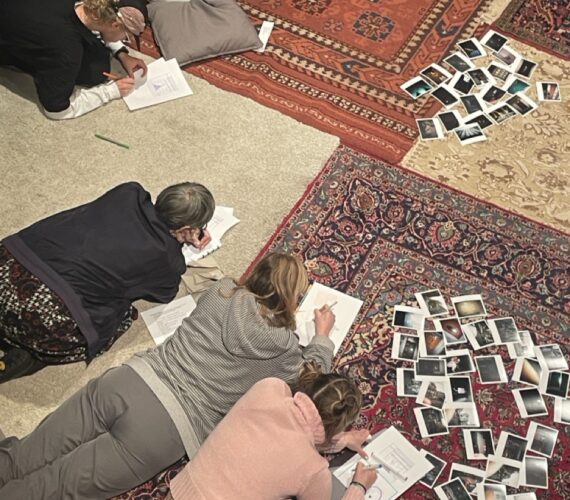
As a trained architect and practising storyteller, my dream of a just city has led me to want to co-create with people. This involves designing participatory processes, translating residents’ needs into plans, building playgrounds with children, and crafting narratives with flâneurs from around the world. 3 In most of my projects, including marginalised voices remains the main challenge. Despite the good intentions and commitment of professionals, the process rarely manages to reach diverse marginalised groups. Too often, the space is dominated by educated, privileged minorities who speak loudly and clearly, leaving little room for others to be heard. 3 Coates, J. (2017), “Key Figure of Mobility: The Flâneur,” in Global Flaneurs. In this article, Jamie Coates explains how the “flâneur,” traditionally perceived as a male figure of leisure, has been reimagined in contemporary urban studies to include various marginalised groups.