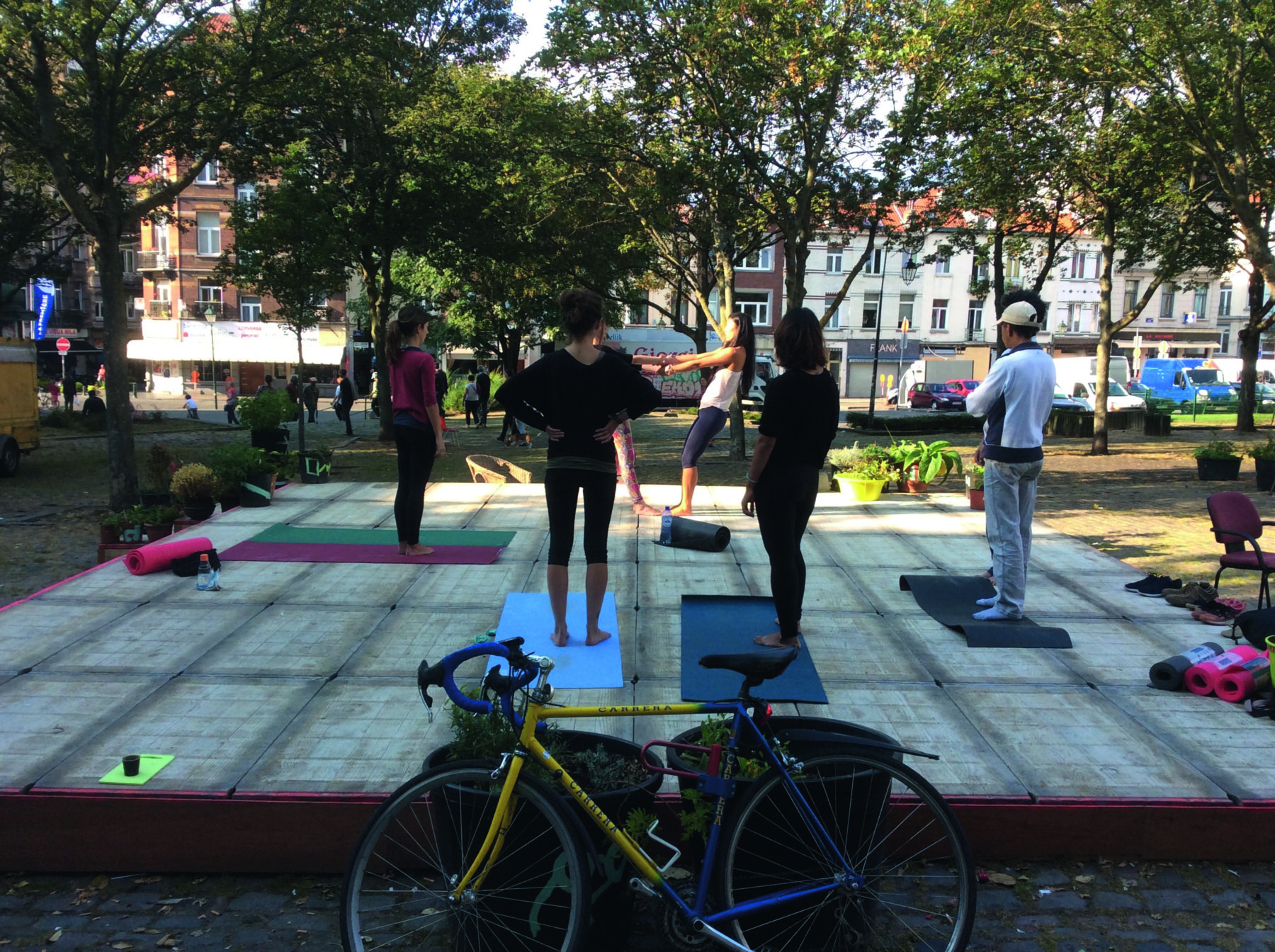
In an architecture competition, the client draws up a number of documents, including a detailed programme of requirements. This describes the intended uses for the residents, visitors or users of the building. It lists the various spaces, the surface area in square metres of each space and their relationship to each other. To avoid delays in a project – which in turn could result in subsidies or political decisions being missed – the programme drawn up is usually not questioned. For this reason, standardised programmes are generally used. How can we avoid this top-down approach and realise a project that is locally anchored and meets the expectations of residents and users?
It was only during a visit to Hôtel Pasteur that I became acquainted with the principle of ‘experimenting with use’ by and for citizens. This building in the heart of Rennes originally housed the university’s Faculty of Science. When it moved, the building became home to the Dentistry department. By 2014, this department only occupied the ground floor, leaving more than 6,000 square metres vacant for almost ten years. At that time, architect Patrick Bouchain submitted a request to the Rennes city council. He wanted to start an experimental ‘city factory’ based on civic solidarity and was looking for a suitable space for this. The Rennes city council offered him the Hôtel Pasteur as a concrete anchor point from which to work on his reflection and experiment.