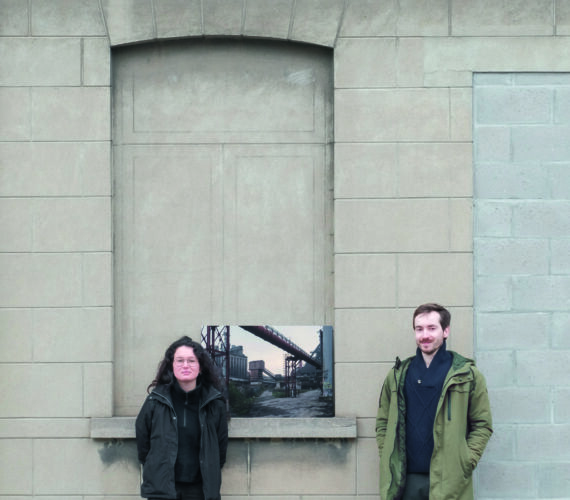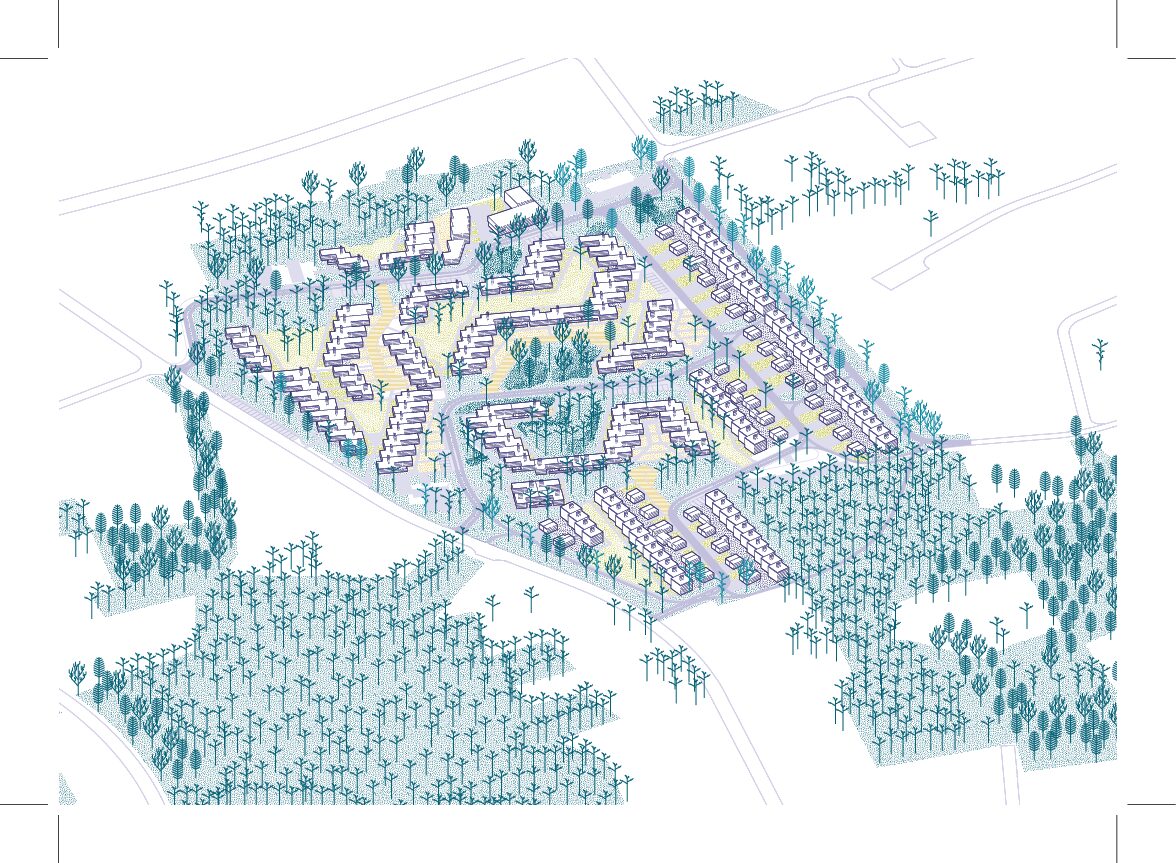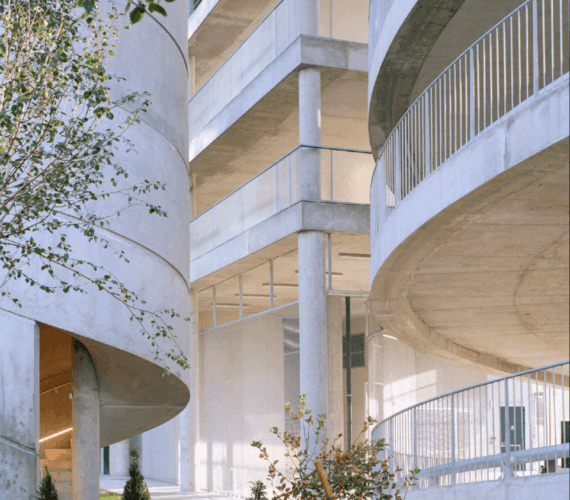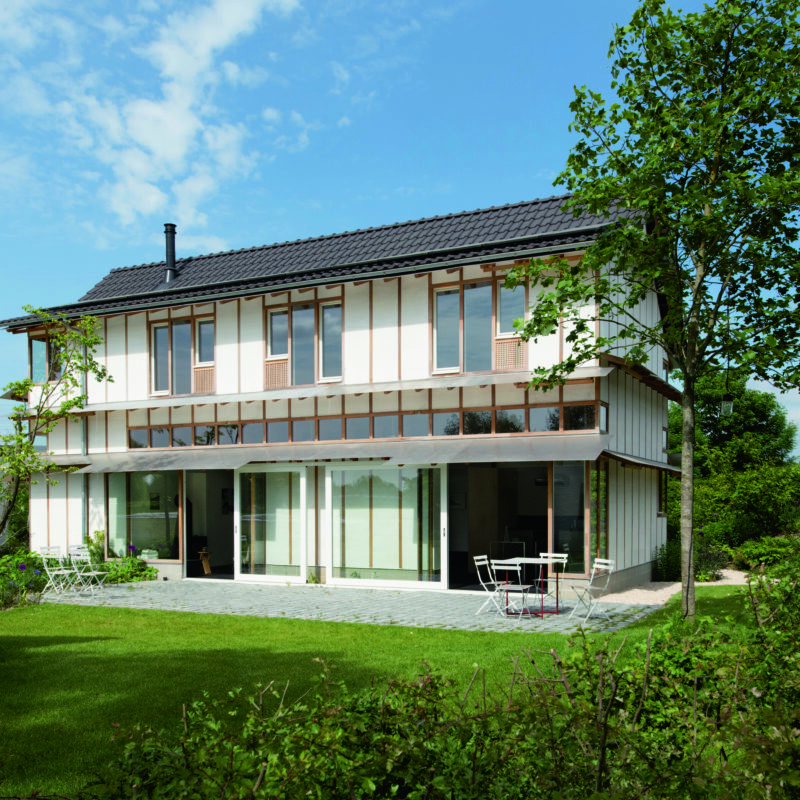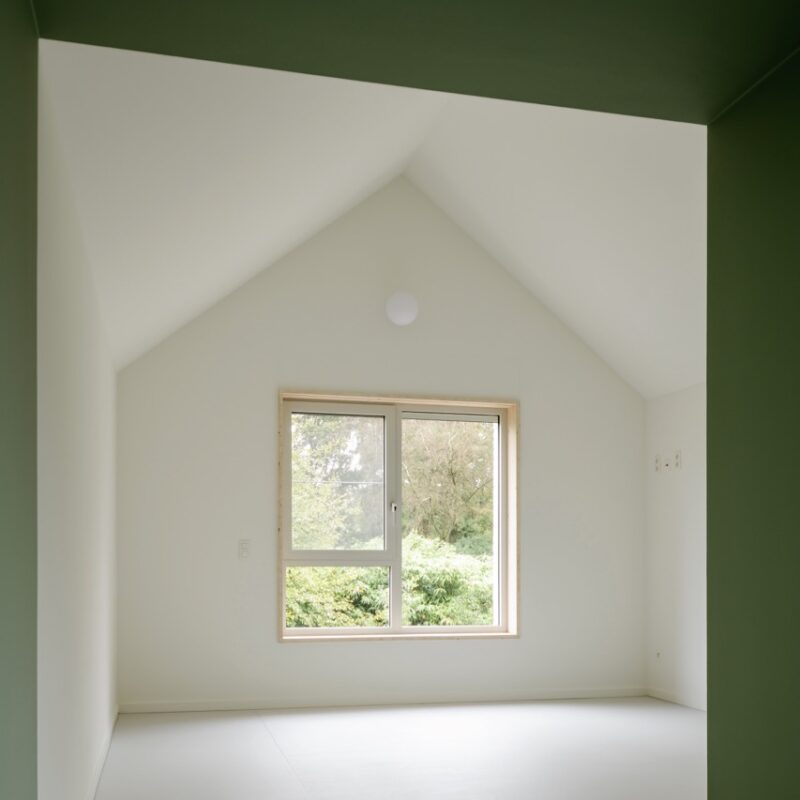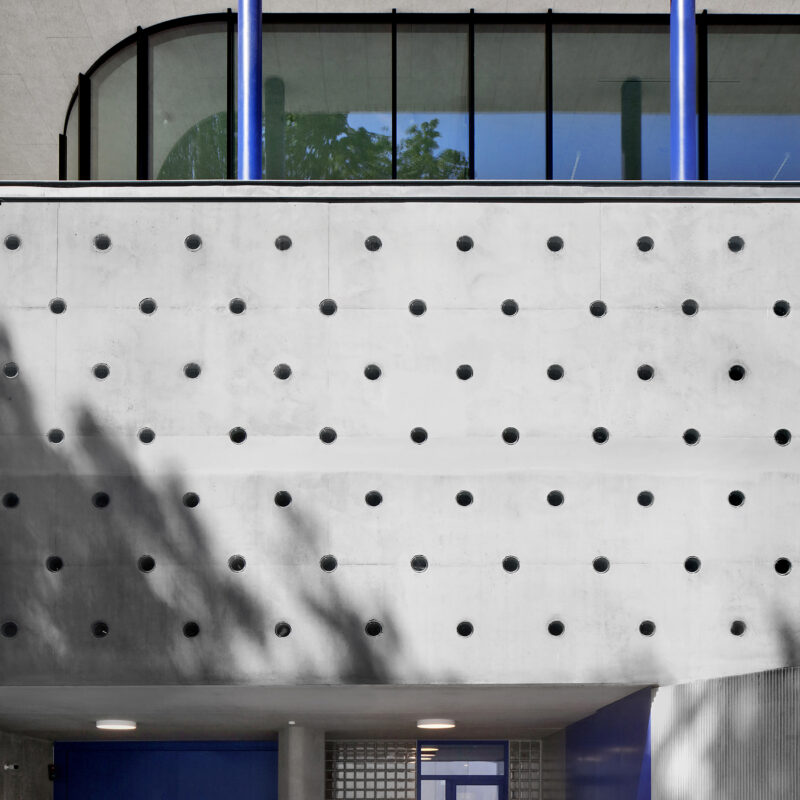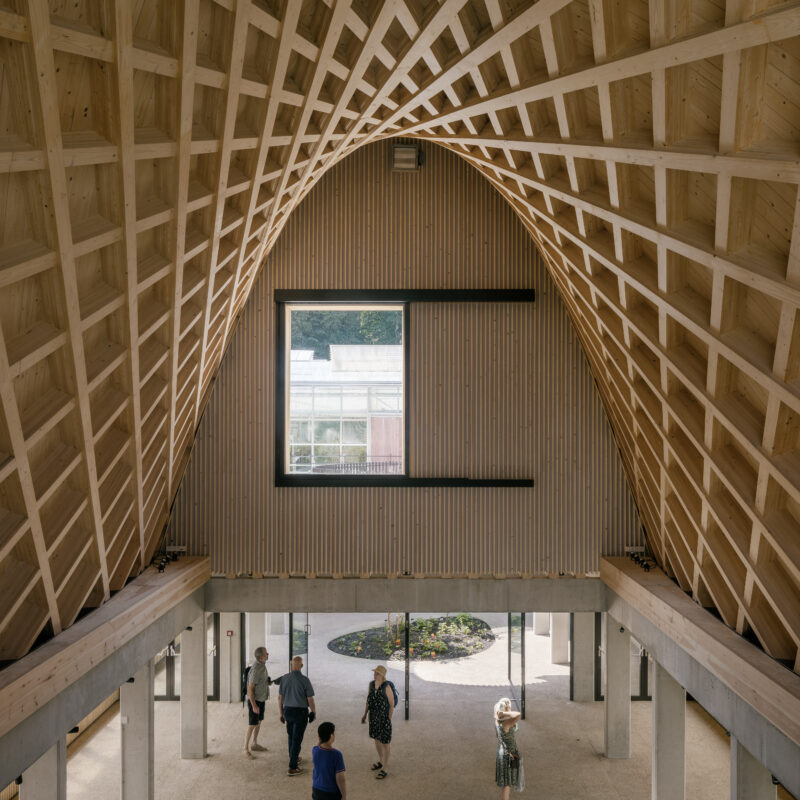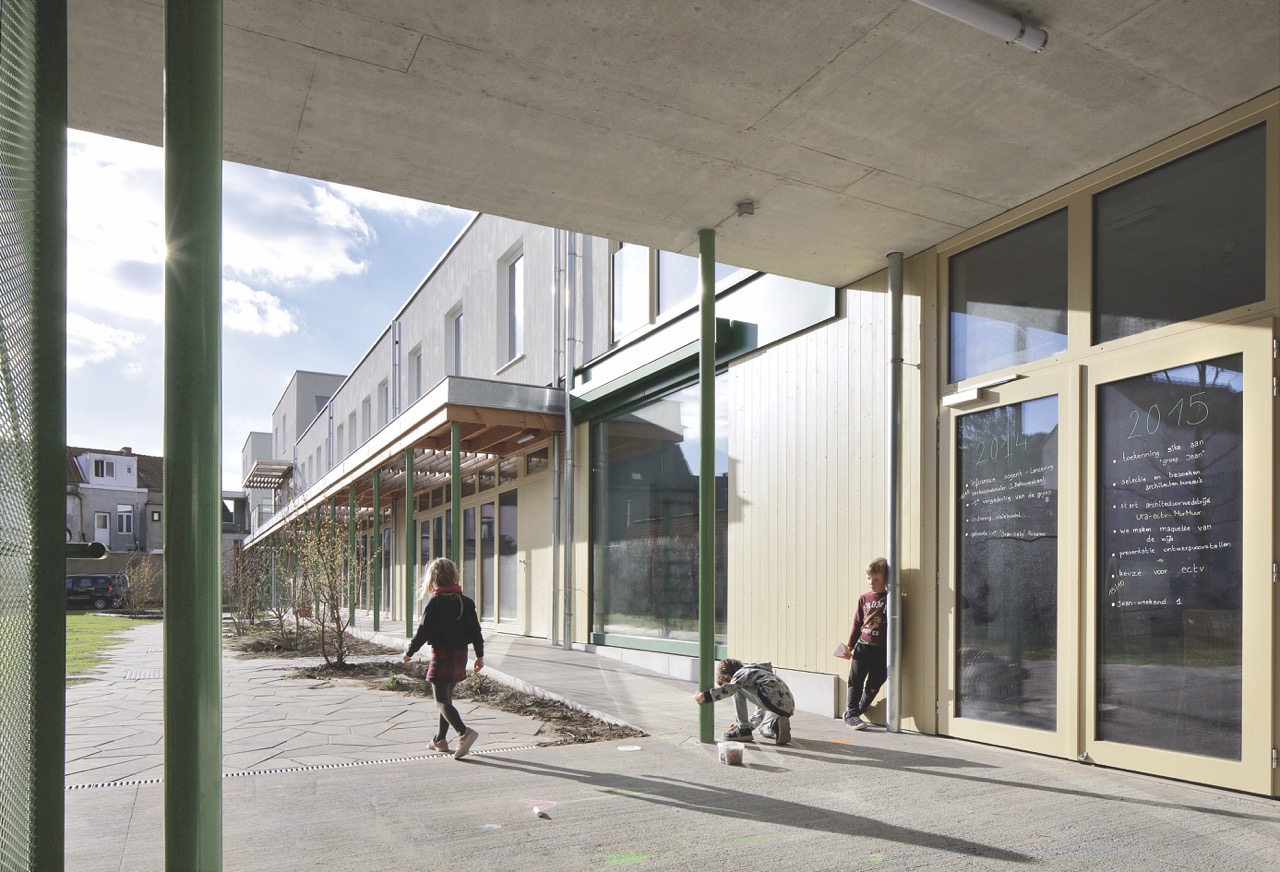
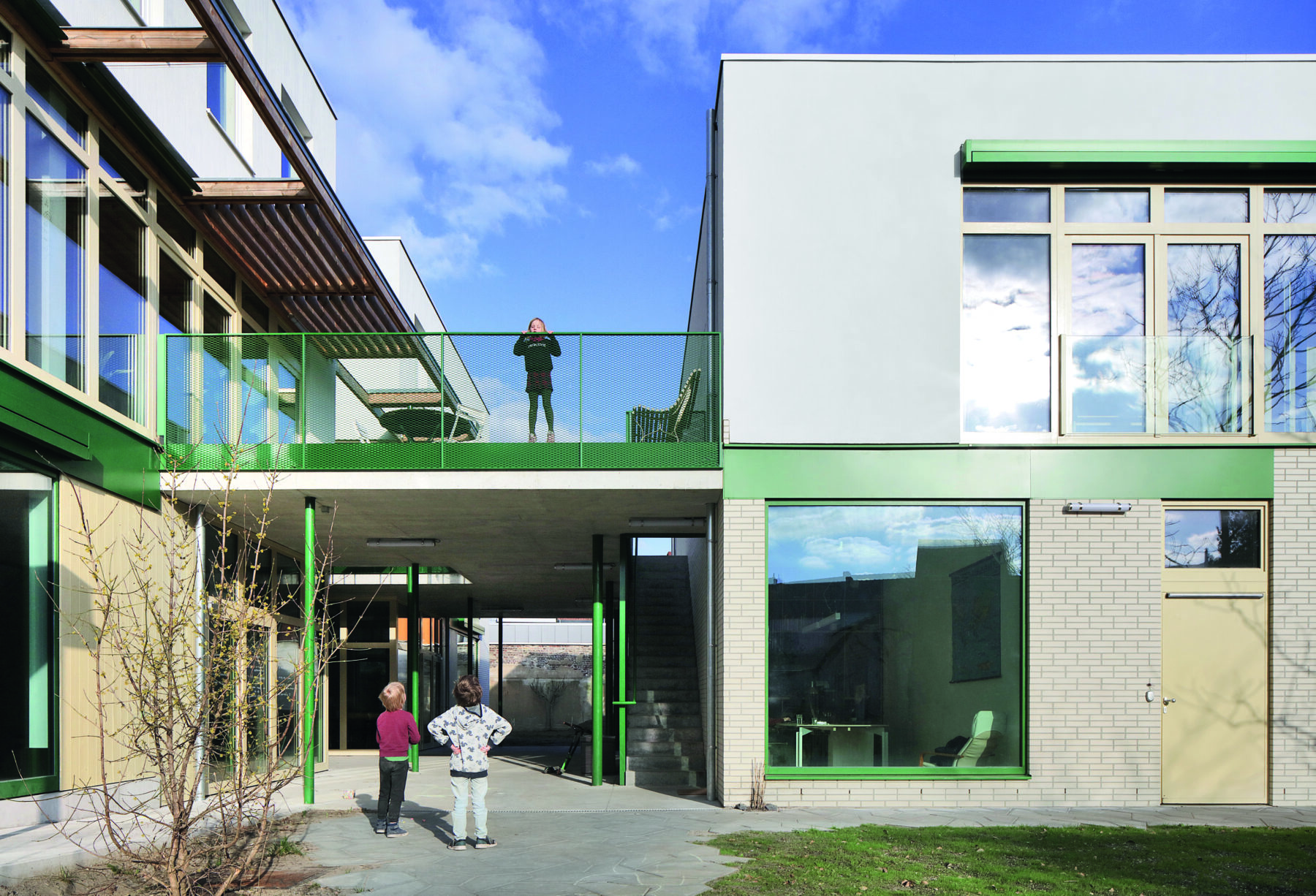
Architects ECTV Els Claessens and Tania Vandenbussche have realised a cohousing project in an old mushroom farm in Sint-Amandsberg (Ghent) that offers spacious and comfortable living. ‘The key is sharing, and what exactly you share.’
Where to go now that building land is becoming scarce and the pressure on the city to provide housing is increasing? The 19th-century belt offers opportunities. The building blocks there are irregularly laid out and large. Even though the streets are narrow – with few squares and only those parks that were later reclaimed on a laissez-faire basis – there is space behind the street buildings. This space has traditionally been reserved for the small businesses that residents used to have: temporary or more solid structures nestled deep between the gardens dotted with small houses. It is the kind of urban model that many now dream of: small-scale manufacturing businesses, living and working close together, more or less in harmony with each other. That model is holding its own, but it is also taking a beating: that business sector is eroding or flowing away to business parks, and planners are relentlessly demanding the greening of inner areas. When such a plot becomes available, you could go and live there. There would be more garden left than such a business had before. Yet, second-order living is met with mistrust by planners and neighbours. It would have to be a different kind of living than on the street.