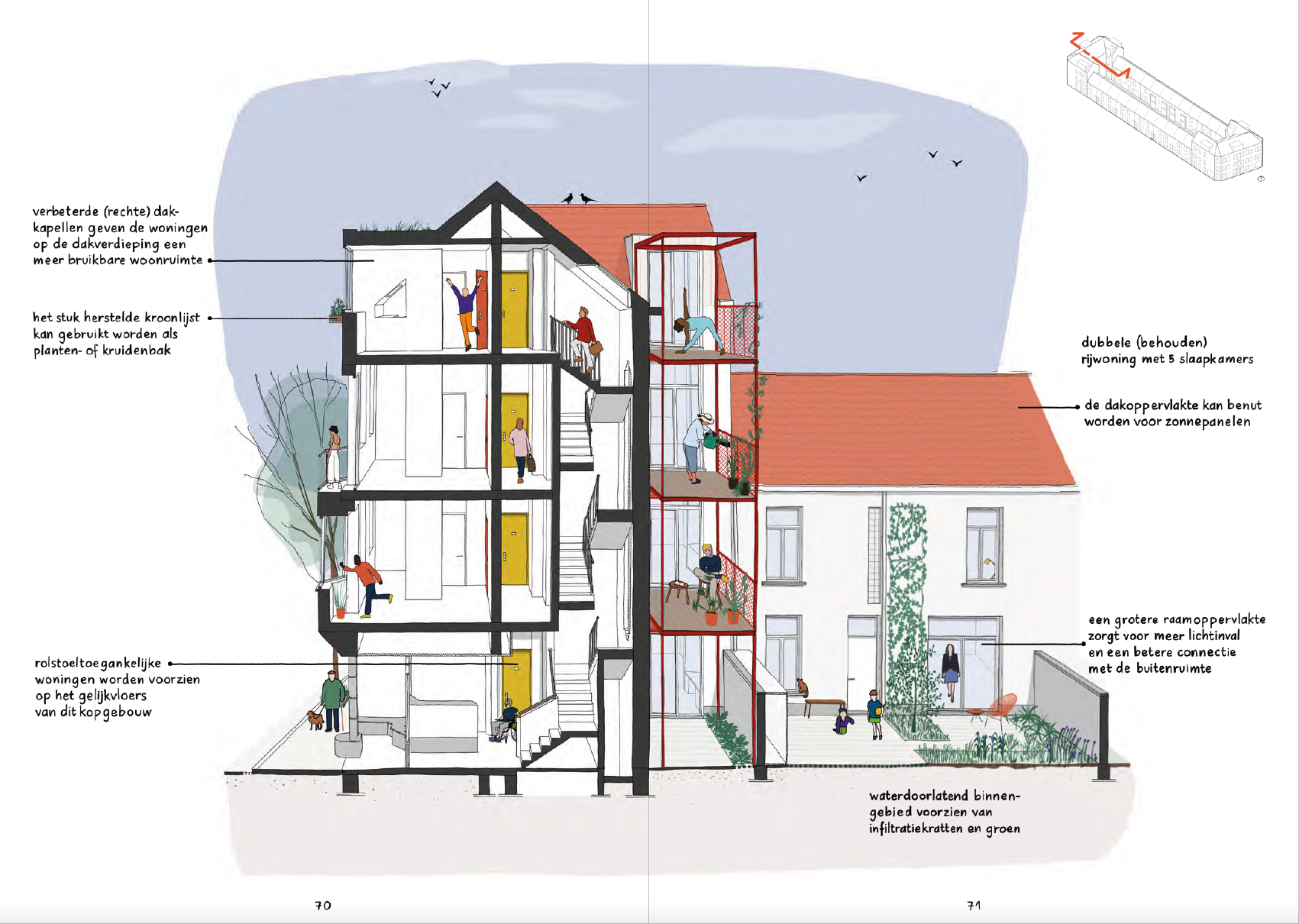
Ilke Kerkhofs graduated from the University of Antwerp in 2022 with a master’s thesis on affordable housing. She investigated the visible and invisible effects of the housing crisis, with Antwerp as her main field of research. Her thesis is an incredibly beautiful and moving book, with drawings and texts that not only sketch the housing situation of a specific individual in a painfully realistic way, but also analyse the theory and current politics surrounding affordable housing and depict possible sustainable future perspectives.
Kerkhofs starts from the poor conditions in which Warda, a young single woman who fled Somalia in 2016, lives in a one-room flat in the Seefhoek neighbourhood of Antwerp. Warda has to make ends meet on social welfare benefits from the OCMW (Public Centre for Social Welfare). She has been on the waiting list for social housing for more than four years. Out of necessity, Warda ended up in the lower echelons of the private rental market, with slum landlords and owners who only carry out the most essential repairs, so that the property can just about be declared habitable. Warda’s flat remains freezing cold, damp, unhygienic and substandard; the front door no longer closes and the windows no longer open, floor tiles are loose, there are mould and damp spots on the walls, there is no emergency lighting, and a hole in the ceiling serves as an escape route in case of fire.