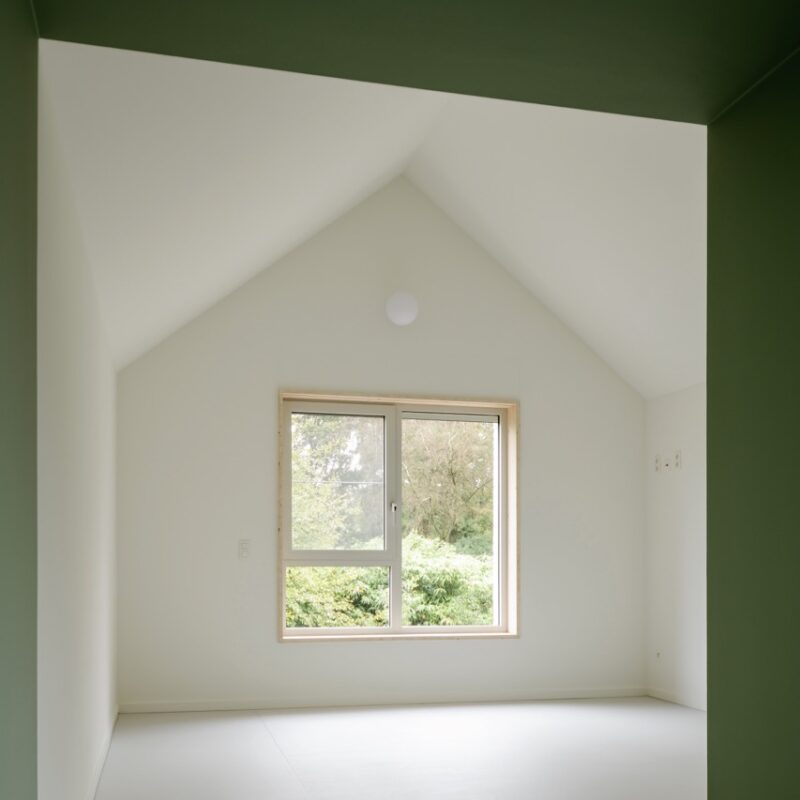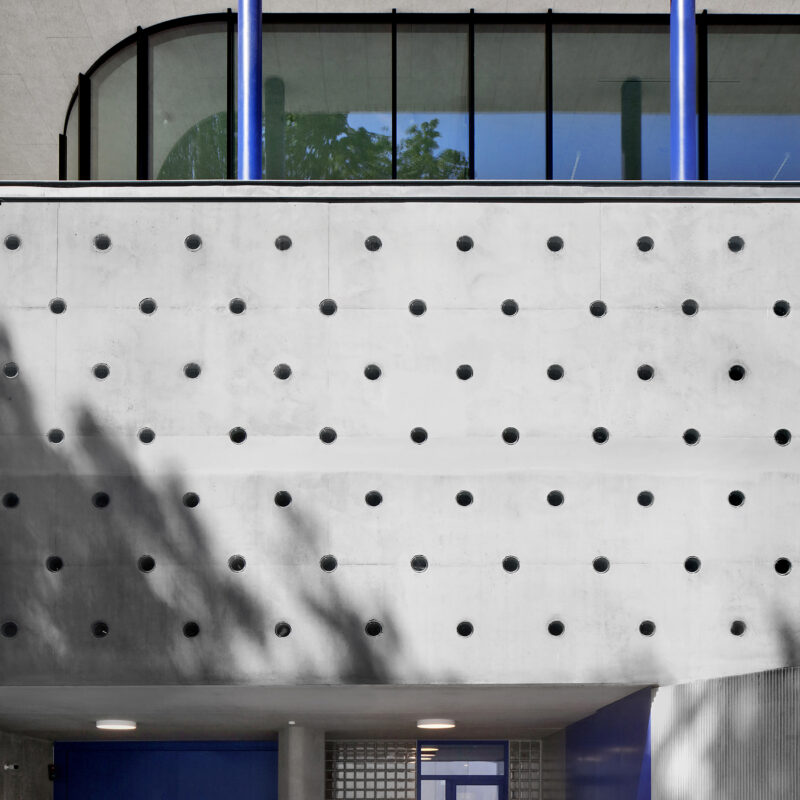
“For us, this building by Lina Bo Bardi illustrates the power of architecture. Through a series of targeted interventions, the closed-off site has been transformed into a public space designed to foster social interaction. A former industrial site has become a vibrant place, at the crossroads of sport and culture, where generations come together. The spaces that were initially undeveloped between the old production halls have become public streets, venues for markets or places to stroll… For us, it is these interstitial spaces that reveal the true quality of a project. As designers, we are very keen to leave a certain degree of ambiguity in our architecture, and we seek out unprogrammed spaces that allow people to make them their own. Intermediate spaces without a specific programme, yet endowed with a distinct spatial character. Generous and sometimes defiant places, which users can themselves occupy and adapt to their needs.
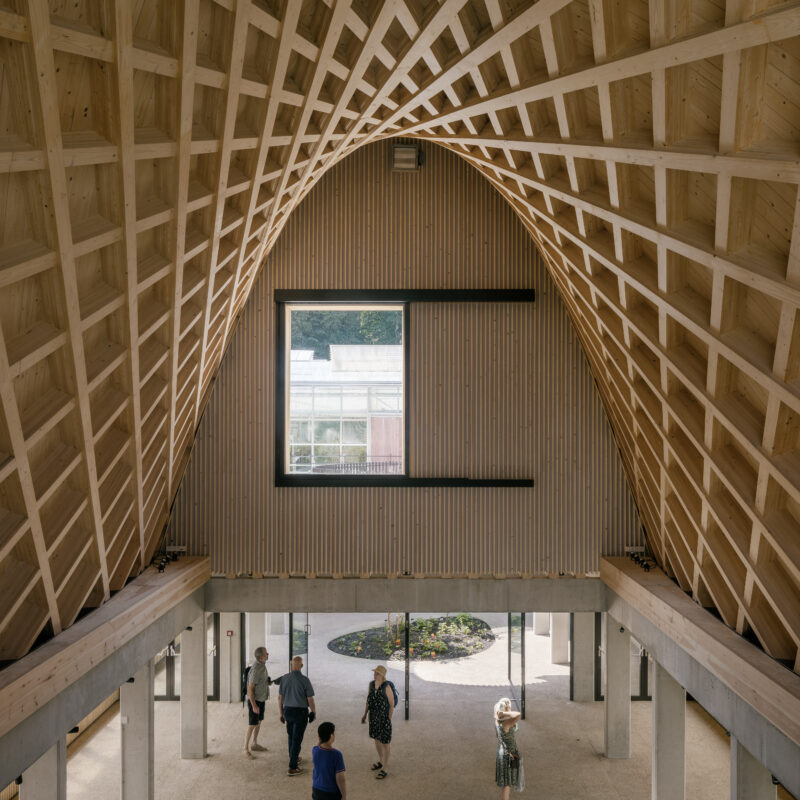
The SESC Pompéia Factory has inspired several of our projects – not as a literal reference, but because we have adopted a similar modus operandi. Recent examples include the competition for the Hoge Rielen (in collaboration with the architectural practice Bart Dehaene). This project treats the heritage of the existing buildings as a ‘found object’ where, through a series of minimal interventions, we aim to enhance the intrinsic qualities of the site. The targeted demolition of the building’s wings and the addition, for example, of a winter garden give rise to intermediate spaces offering a quality of life in more direct contact with the landscape. It is a form of spatial sustainability: in this project, users are free to reappropriate the spaces in a different way, just as was the case in São Paulo.”