Edito
Lisa De Visscher
Rédactrice en chef
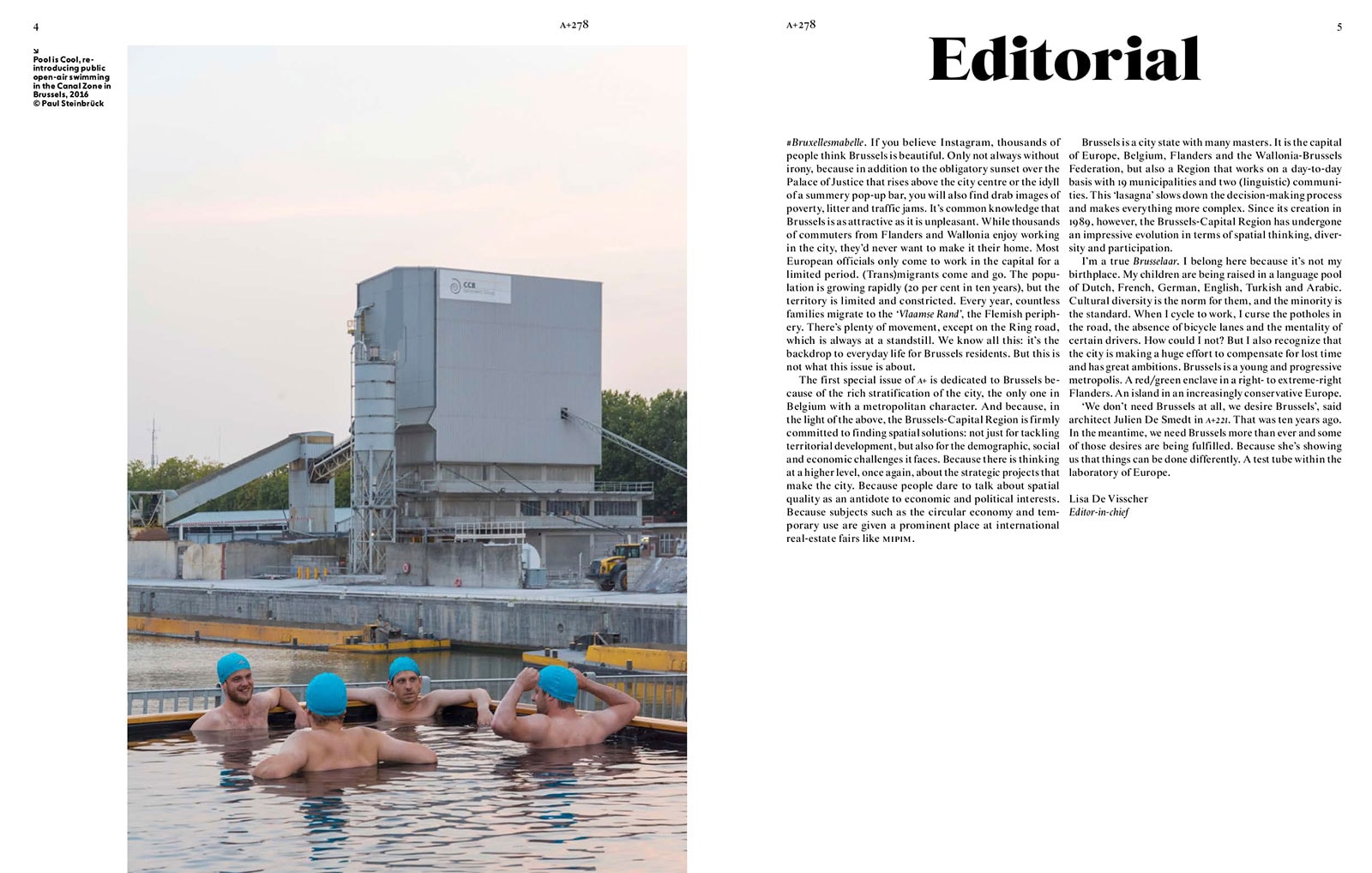
#Bruxellesmabelle. If you believe Instagram, thousands of people think Brussels is beautiful. Only not always without irony, because in addition to the obligatory sunset over the Palace of Justice that rises above the city centre or the idyll of a summery pop-up bar, you will also find drab images of poverty, litter and traffic jams. It’s common knowledge that Brussels is as attractive as it is unpleasant. While thousands of commuters from Flanders and Wallonia enjoy working in the city, they’d never want to make it their home. Most European officials only come to work in the capital for a limited period. (Trans)migrants come and go. The population is growing rapidly (20 per cent in ten years), but the territory is limited and constricted. Every year, countless families migrate to the ‘Vlaamse Rand’, the Flemish periphery. There’s plenty of movement, except on the Ring road, which is always at a standstill. We know all this: it’s the backdrop to everyday life for Brussels residents. But this is not what this issue is about.
more
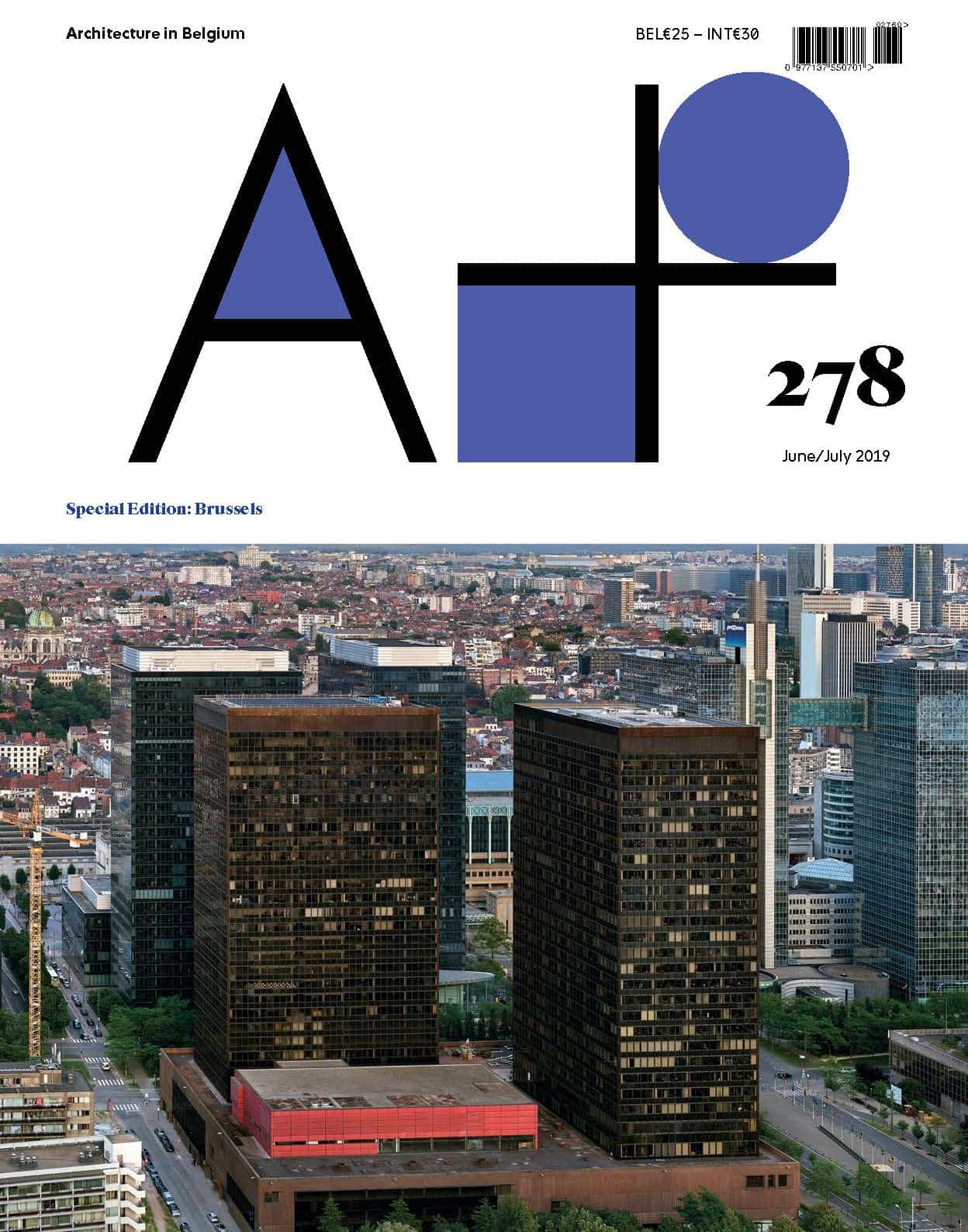
The first special issue of A+ is dedicated to Brussels because of the rich stratification of the city, the only one in Belgium with a metropolitan character. And because, in the light of the above, the Brussels-Capital Region is firmly committed to finding spatial solutions: not just for tackling territorial development, but also for the demographic, social and economic challenges it faces. Because there is thinking at a higher level, once again, about the strategic projects that make the city. Because people dare to talk about spatial quality as an antidote to economic and political interests. Because subjects such as the circular economy and temporary use are given a prominent place at international real-estate fairs like MIPIM.
Brussels is a city state with many masters. It is the capital of Europe, Belgium, Flanders and the Wallonia-Brussels Federation, but also a Region that works on a day-to-day basis with 19 municipalities and two (linguistic) communities. This ‘lasagna’ slows down the decision-making process and makes everything more complex. Since its creation in 1989, however, the Brussels-Capital Region has undergone an impressive evolution in terms of spatial thinking, diversity and participation.
I’m a true Brusselaar. I belong here because it’s not my birthplace. My children are being raised in a language pool of Dutch, French, German, English, Turkish and Arabic. Cultural diversity is the norm for them, and the minority is the standard. When I cycle to work, I curse the potholes in the road, the absence of bicycle lanes and the mentality of certain drivers. How could I not? But I also recognize that the city is making a huge effort to compensate for lost time and has great ambitions. Brussels is a young and progressive metropolis. A red/green enclave in a right- to extreme-right Flanders. An island in an increasingly conservative Europe.
‘We don’t need Brussels at all, we desire Brussels’, said architect Julien De Smedt in A+221. That was ten years ago. In the meantime, we need Brussels more than ever and some of those desires are being fulfilled. Because she’s showing us that things can be done differently. A test tube within the laboratory of Europe.
Table of contents
Editorial Lisa De Visscher
Tour & Taxis Lisa De Visscher
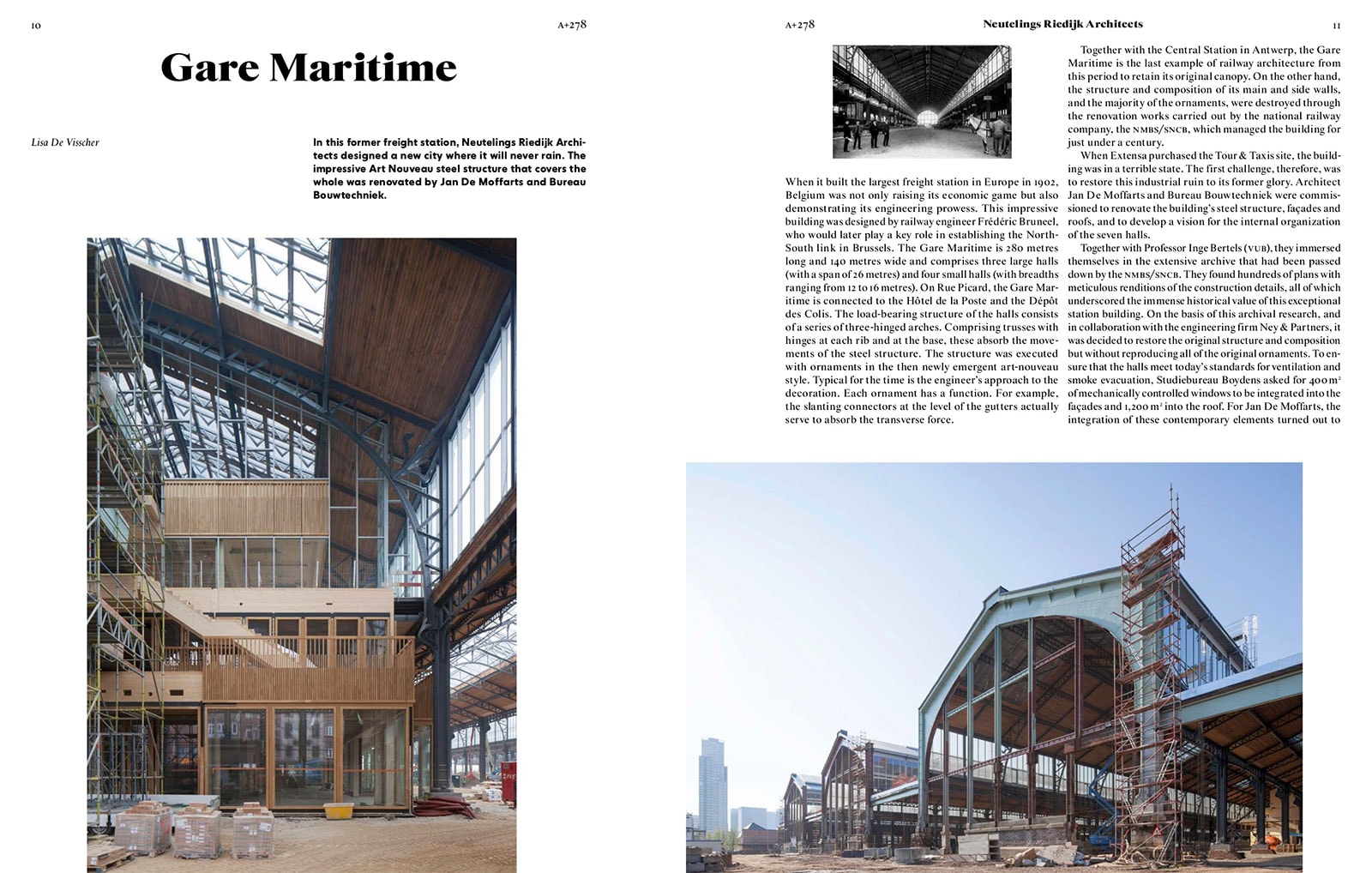
Gare Maritime (Neutelings Riedijk Architects – Jan De Moffarts Architecten) Lisa De Visscher
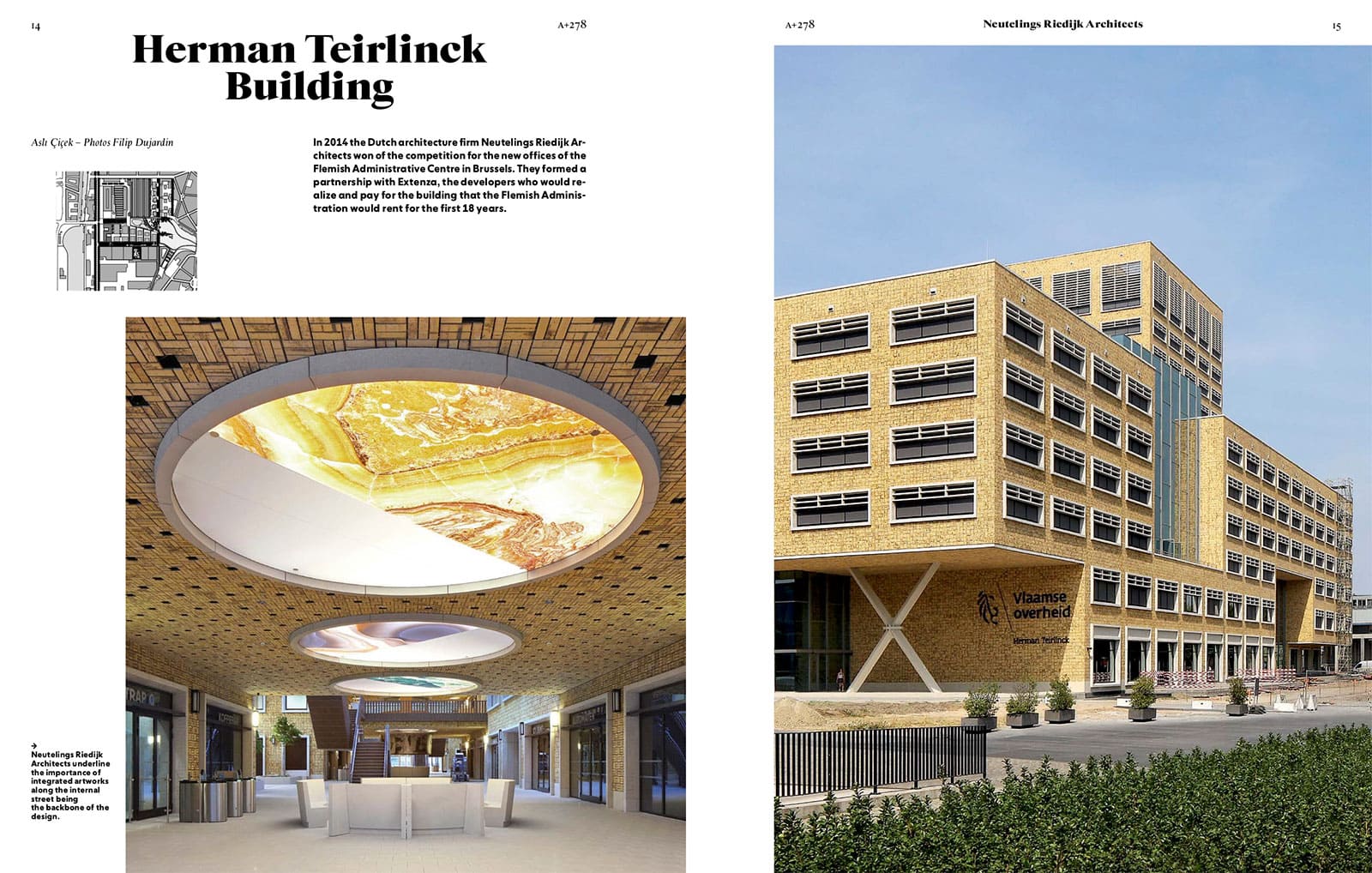
Herman Teirlinck Building (Neutelings Riedijk Architects) 18 mad Museum (v+ and Rotor) Gitte Van den Bergh
Coop (Bogdan & Van Broeck) Thibaut Paggen
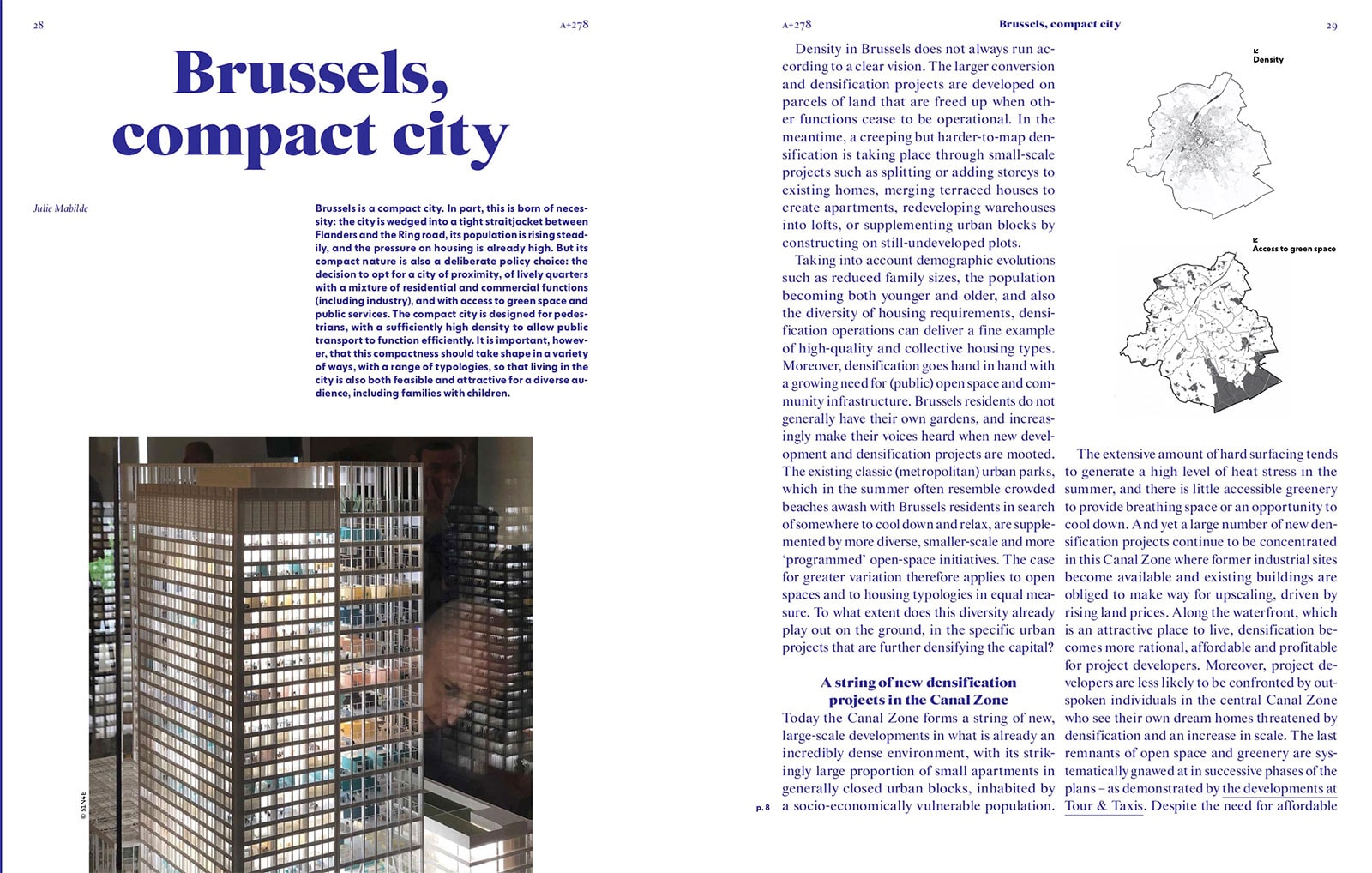
Brussels, compact city Julie Mabilde Aslı Çiçek
Brussels, productive city Mark Brearley
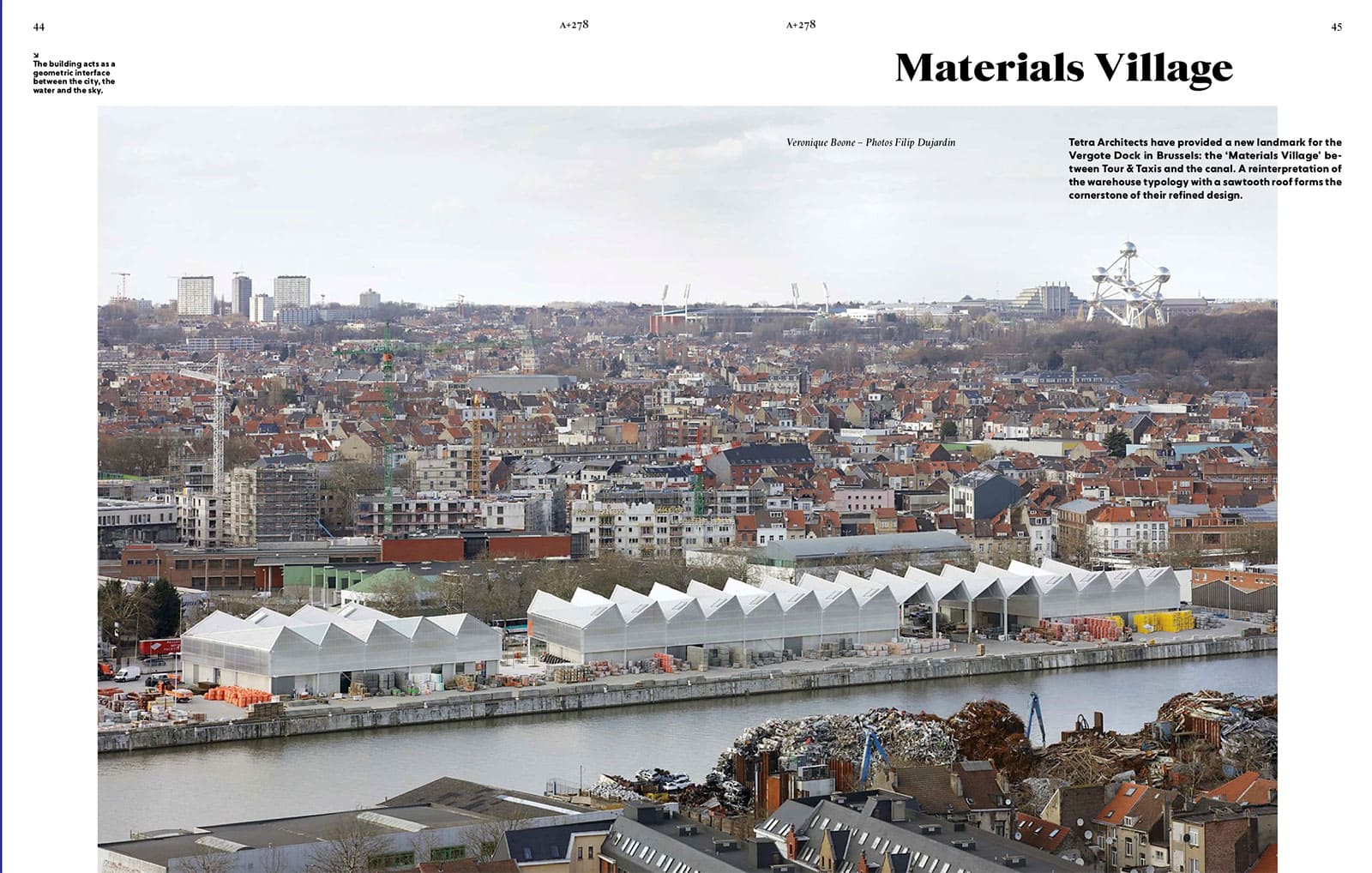
Materials Village (Tetra Architects) Veronique Boone
Foodmet (org Permanent Modernity) Pieter T’Jonck
From sustainable to circular Brussels Pieter T’Jonck
Kicking the car habit Laurent Vermeersch
Place Rogier (XDGA) Véronique Patteeuw
Place Dumon (Artgineering – H+N+S) Eline Dehullu
Parc de la Senne (La Compagnie du Paysage) Eline Dehullu
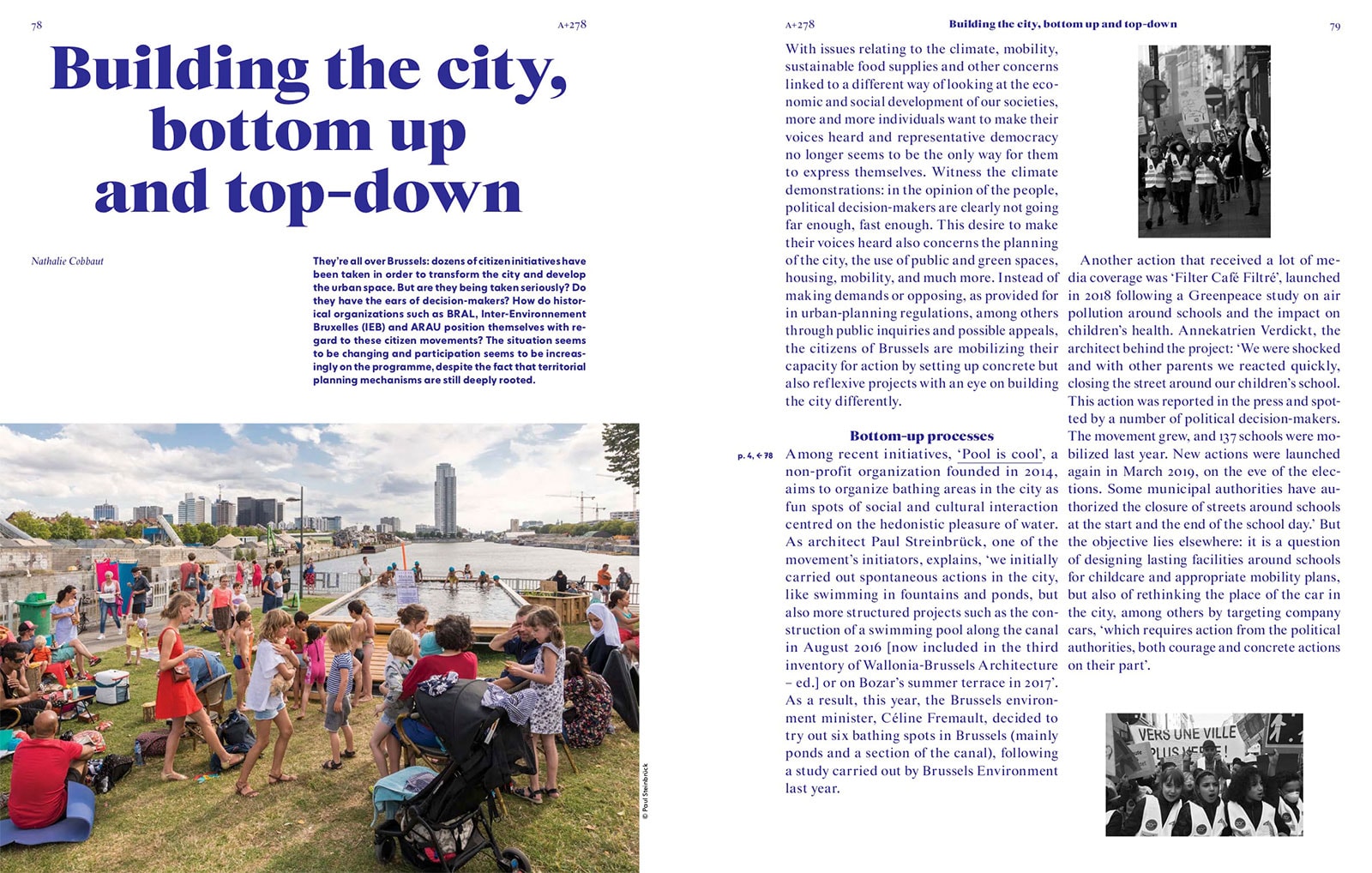
Building the city, bottom up and top-down Nathalie Cobbaut
A glass Trojan Horse Roeland Dudal
Canal Wharf (51N4E) Cécile Vandernoot
The Cosmopolitan (Bogdan & Van Broeck) Eline Dehullu
Brussels, European capital Ludovic Lamant
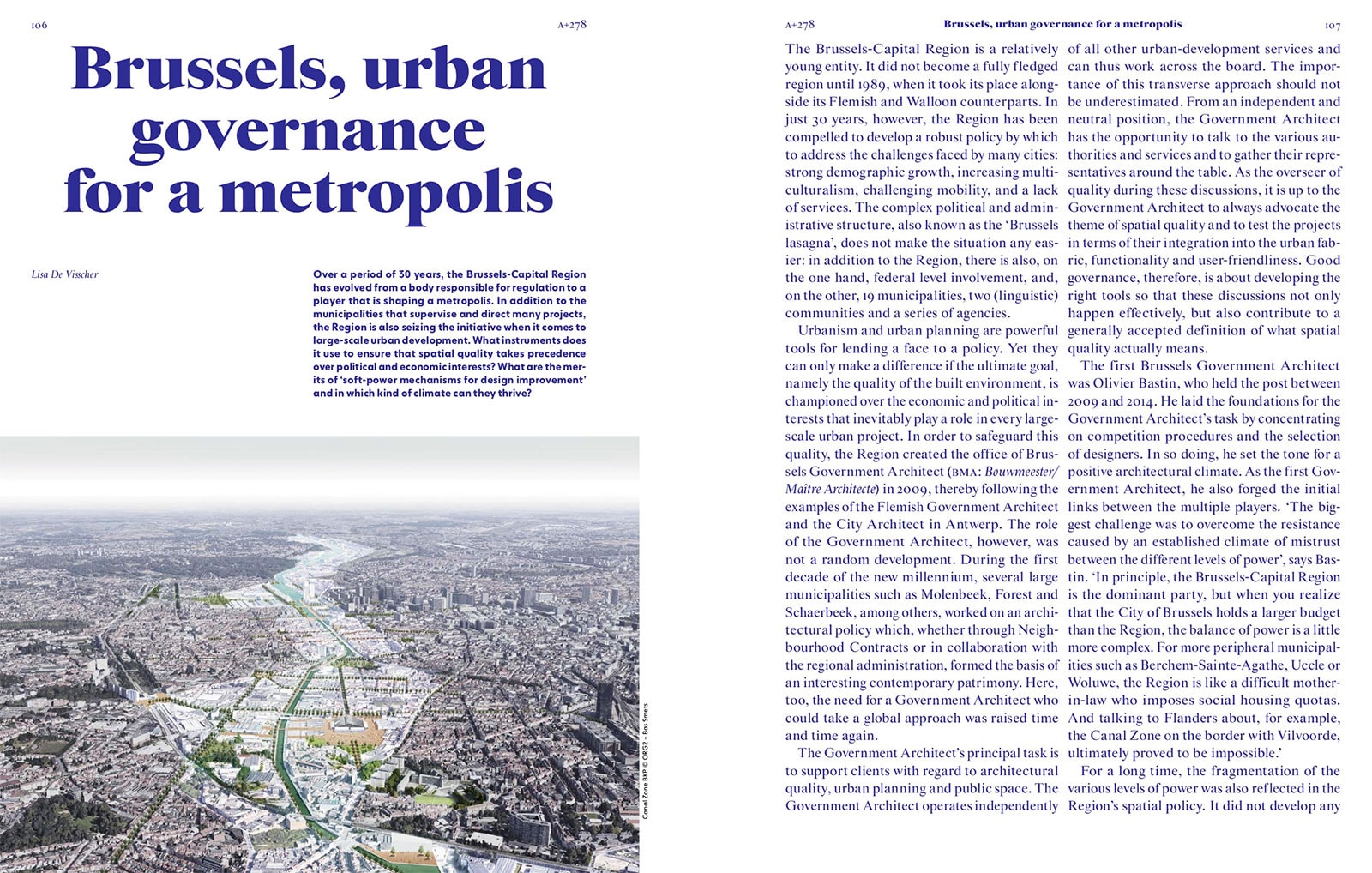
Brussels, urban governance for a metropolis Lisa De Visscher
Rue de la Loi (Christian de Portzamparc, B2AI, Assar Architects) Laurent Vermeesch
Kanal – Centre Pompidou (noA – EM2N – Sergison Bates architects) Pieter T’Jonck
Mediapark Reyers (François Leclercq, Robbrecht en Daem – Dierendonckblancke, v+ and mdw Architecture, Baukunst – Bruther) Pieter T’Jonck