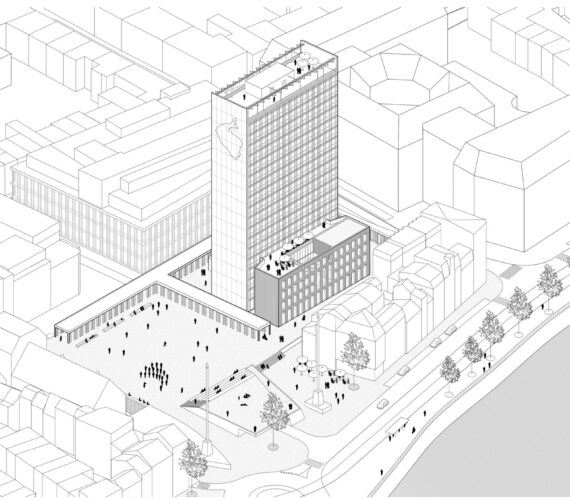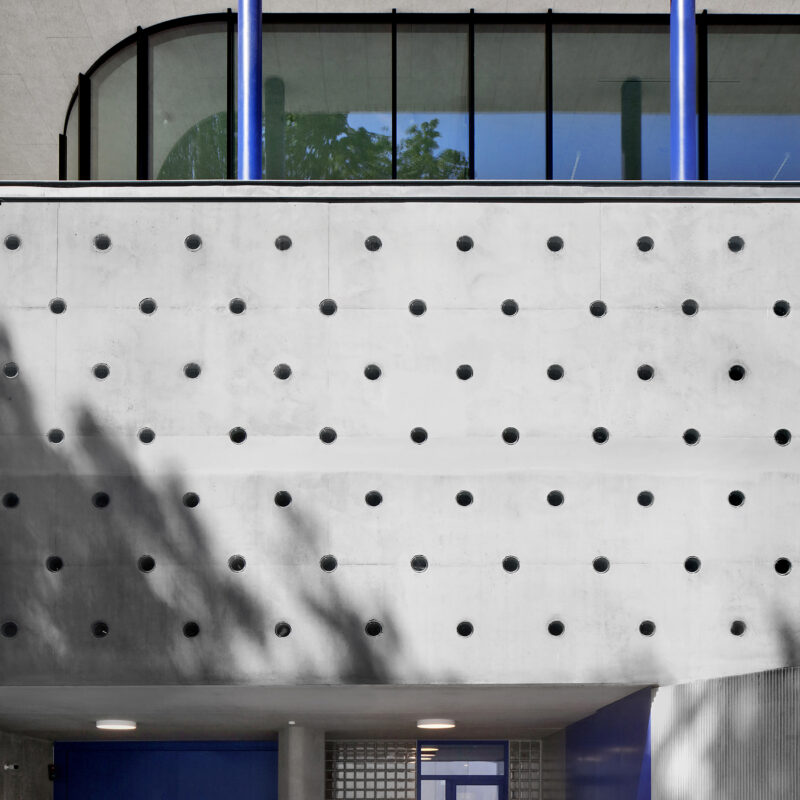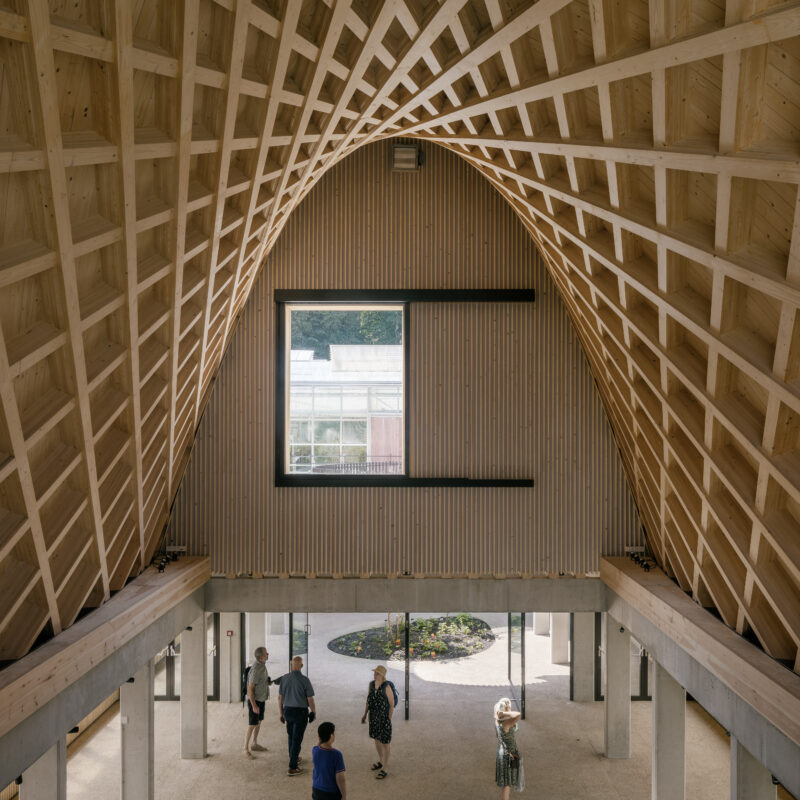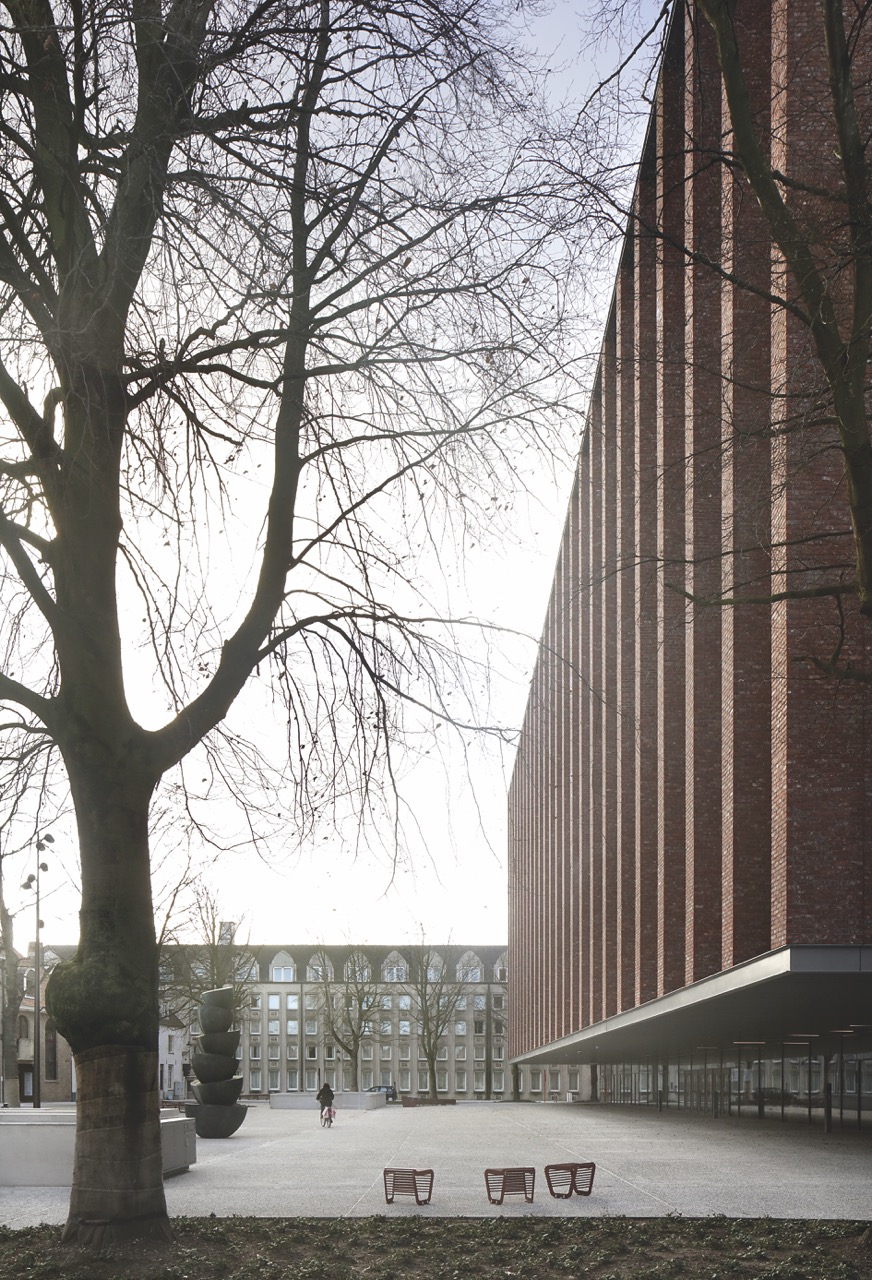
The design team led by Eduardo Souto de Moura and Meta architects translated the complex request from the historic city of Bruges for a new exhibition centre with conference facilities into an iconic building that transcends the initial programme specifications. 1 1 The new exhibition centre, with a usable area of 4,500 m2, is not an obvious addition to the small-scale, residential urban fabric of Bruges. The complex design brief has been translated into an iconic building that is both robust and timeless. The architects have placed the building on a continuous plinth with glass joinery around its entire perimeter. In this way, they have created a completely transparent ground level and introduced a third programme: a covered square.
The stock exchange site is located in the middle of the West Bruges district, a name that came about after the construction of a railway line in 1838 – now the access road under ‘t Zand. As a result, the district is cut off from the historic and tourist city and, however lively it may be, was rather isolated. Still visible on Marcus Gerards’ city map from 1562 as a green private space, named ‘De Keersenboomgaard’, the site was given two public uses in two successive urban renewal plans in the early nineteenth century and the mid-1960s: first a slaughterhouse and later an exhibition hall. Originally intended as a temporary ‘Feesthalle’ (party hall), the latter was designed in 1966-1967 by the Bruges architectural firm Groep Planning.