“That brick-by-brick method, that brick-laying technique, has had its day. That is an architecture of the past; that technique is no longer suited to the present day. We must look for something new, for a standardised method”1, sighed Léon Stynen after his brick house for a brickmaker in Boom gained international attention in 1928. 1 , Léon Stynen in Joos Florquin, Ten huize van …, Davidsfonds: Leuven, 1972, p. 113.
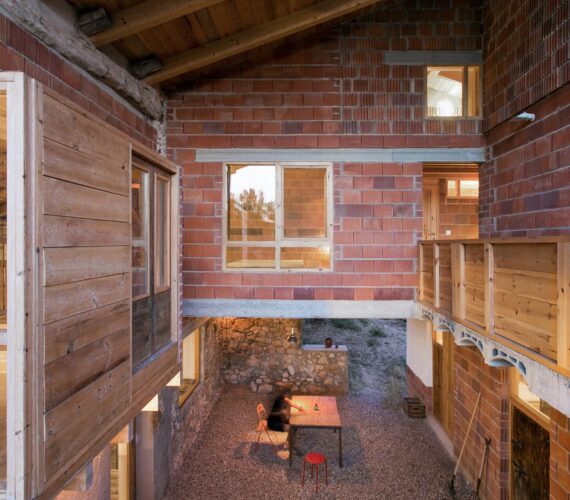
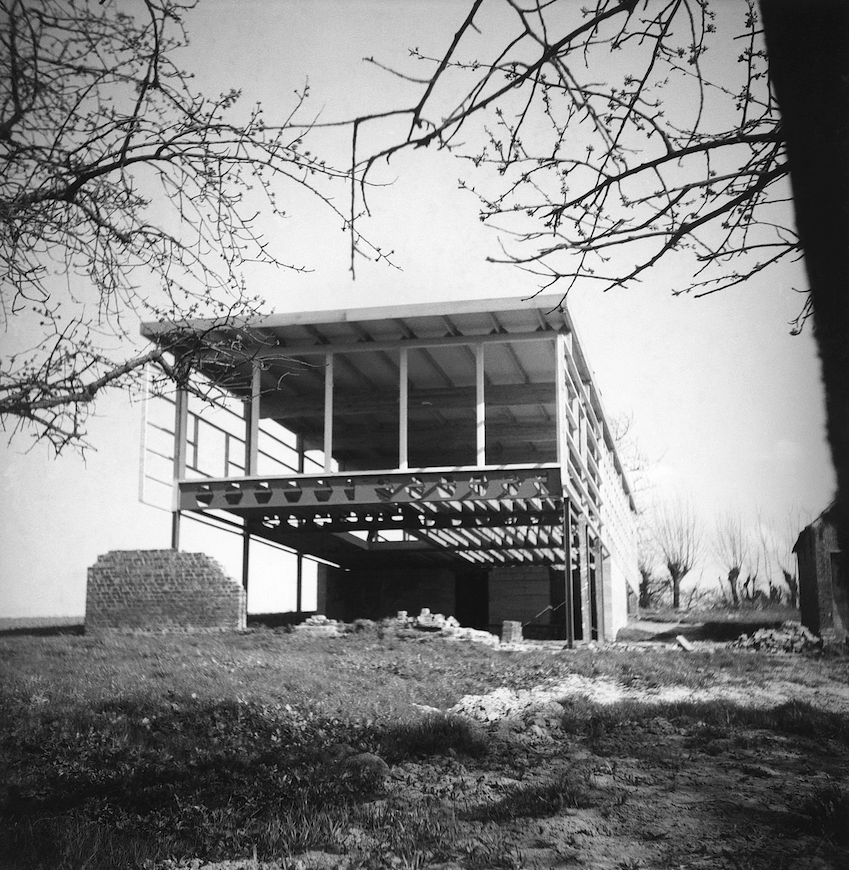
His contemporary Peter Callebout spent his life searching for such a ‘method’. Yet without dogmatic unease when traditional techniques and natural materials proved necessary in the process. It is no coincidence that Callebout’s Centrum De Saedeleer – an indeterminate space on stilts within the brick footprint of a former farmstead – was designed in 1968; it represents the culmination of his quest for architecture that is not anchored in its existing landscape but accepts its own transience.