At the invitation of A+ and Geert Palmers (3E and Duss), guest editors of this issue on architecture and energy, five people with very different backgrounds came together to discuss the transition from fossil fuels to renewable energy and its impact on the built environment. How can we scale up and accelerate this transition? How do we ensure that individual initiatives develop into a coordinated renovation approach at neighbourhood level? What techniques, methods and financing models are required for this? How do we involve residents and end-users in this process, and how do we do so without increasing energy poverty or even derailing the process? And who safeguards the architectural quality of these spatial interventions? The challenges are enormous, but so too is the social commitment of each of the participants in this round-table discussion.
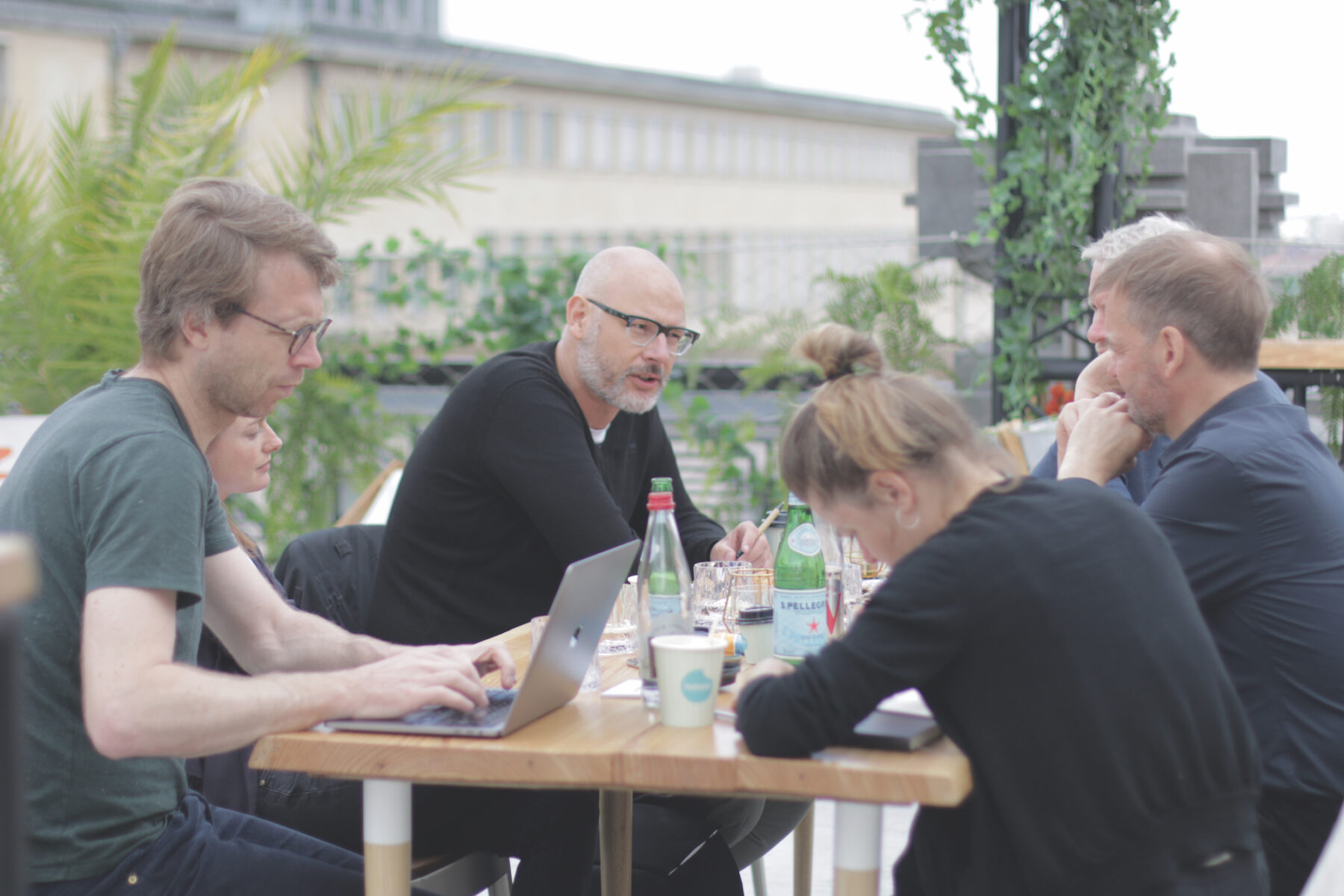
On a warm Monday in June, a few architects, an engineer, a policy officer and an entrepreneur gather on the roof of Bozar in Brussels. Five people who take the objectives of the Green Deal – which states that we must be fully climate-neutral by 2050 – extremely seriously and very much to heart. The challenges on the table are so complex and multi-layered that we have no choice but to examine them simultaneously from different perspectives and at different scales. Bart Cobbaert is a partner at Denc-Studio, an architectural and engineering firm specialising in sustainable construction. Stijn De Roo is the founder of Wattson, a service provider that develops and manages energy-saving measures for existing, often commercial, buildings. Roeland Dudal is a founding member of Architecture Workroom Brussels, a cultural innovation hub for spatial practice change. Marie-France Lebbe is a policy officer for fossil-free neighbourhoods at the City of Ghent (Environment and Climate Department). And Theo Vaes is the driving force behind ArmenTeKort, a non-profit organisation seeking structural solutions to eradicate poverty, and thus plays a key role in the debate on energy poverty.