This special issue of A+, dedicated to ‘Small Escapes’, explores the spaces architects have created for themselves, second homes and the desire to ‘escape ’ (particularly from regulations) and to experiment (particularly with materials), as well as small-scale projects, holiday homes and retreats. The editorial team had asked me if I could present Le Montavoies in this context, a place to which I have devoted myself exclusively since 2009 in the French Jura. I had replied that Le Montavoies had nothing to do with the issue’s theme, and in my mind, the matter was closed. However, A+ phoned me back later and, during that conversation, the idea took shape of writing an article in which I would explain just how far removed Le Montavoies was from the theme envisaged by the editorial team: a definition or a brief description from a contrary perspective.
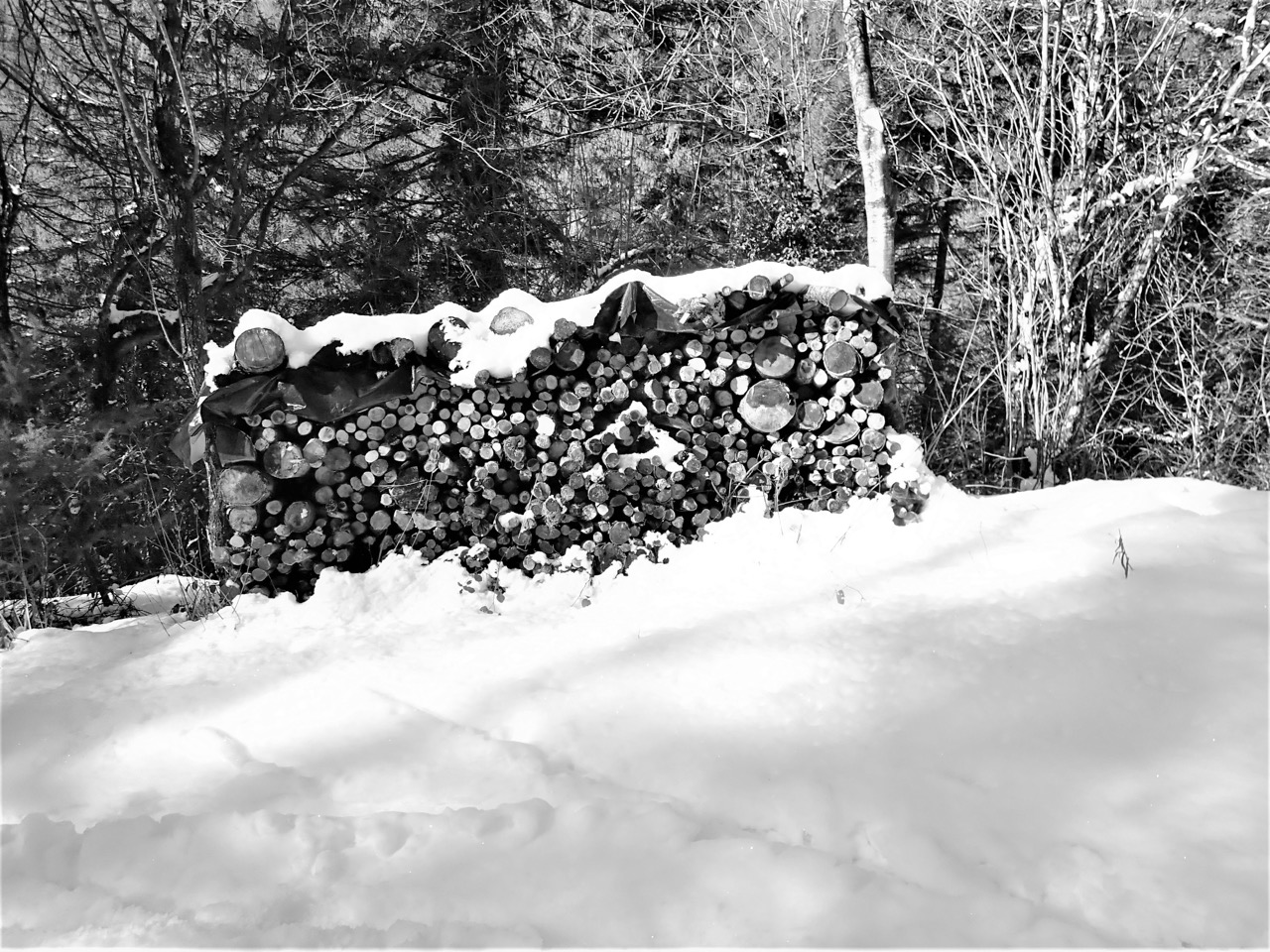
No, Le Montavoies – the mountain and its paths – is not the project of an architect creating for himself. To begin with, Le Montavoies is not a project: it is not a preconceived plan that is carried out. Le Montavoies is constantly evolving and changing; nothing there is ever finished: wood is piled up in heaps. These heaps of wood are almost the most resilient structures I know, and a year and a half later there is no trace of them left. The seasons change everything there, permanently: under the snow or under the scorching sun, a space is radically transformed. Trees fall, rock crumbles, water carves out paths… Furthermore, Le Montavoies is not centred on the architect’s personal desires: one of its main motivations is to make the site ever more welcoming—one might say ever more public.