Edito
Eline Dehullu and Amaryllis Jacobs
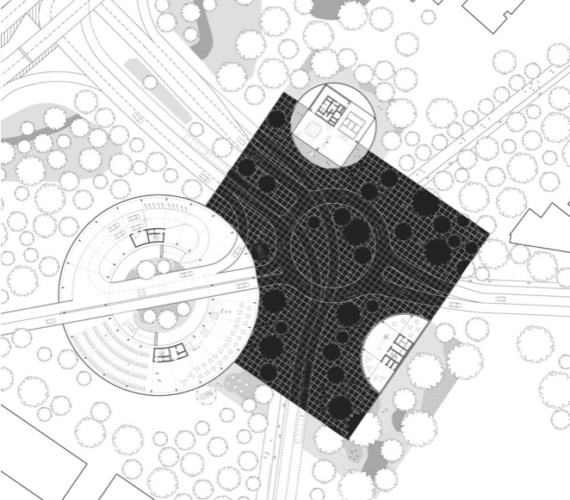
This issue of A presents an intriguing series of circular buildings that have been designed and built. Compiling this kind of collection gives us a better understanding of the architecture of round buildings. We see libraries, schools, healthcare and wellness facilities returning to the circle because it offers a good overview, but also because it creates connection and cohesion. In this sense, their layout clearly references the symbolism of the circle. Pieter T’Jonck explains: ‘Circles are purely geometric shapes that lend themselves to many purposes and interpretations. They bring coherence where chaos might otherwise reign.’
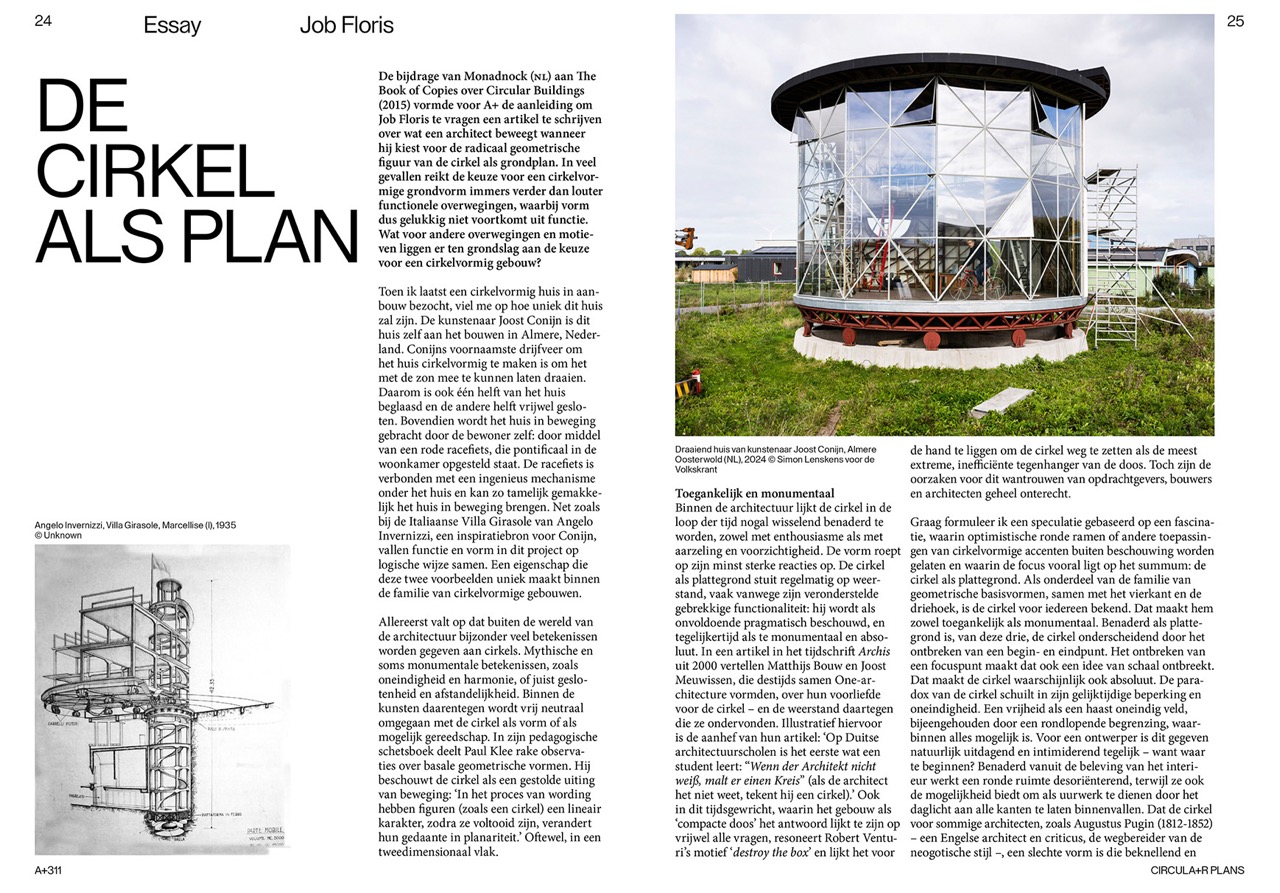
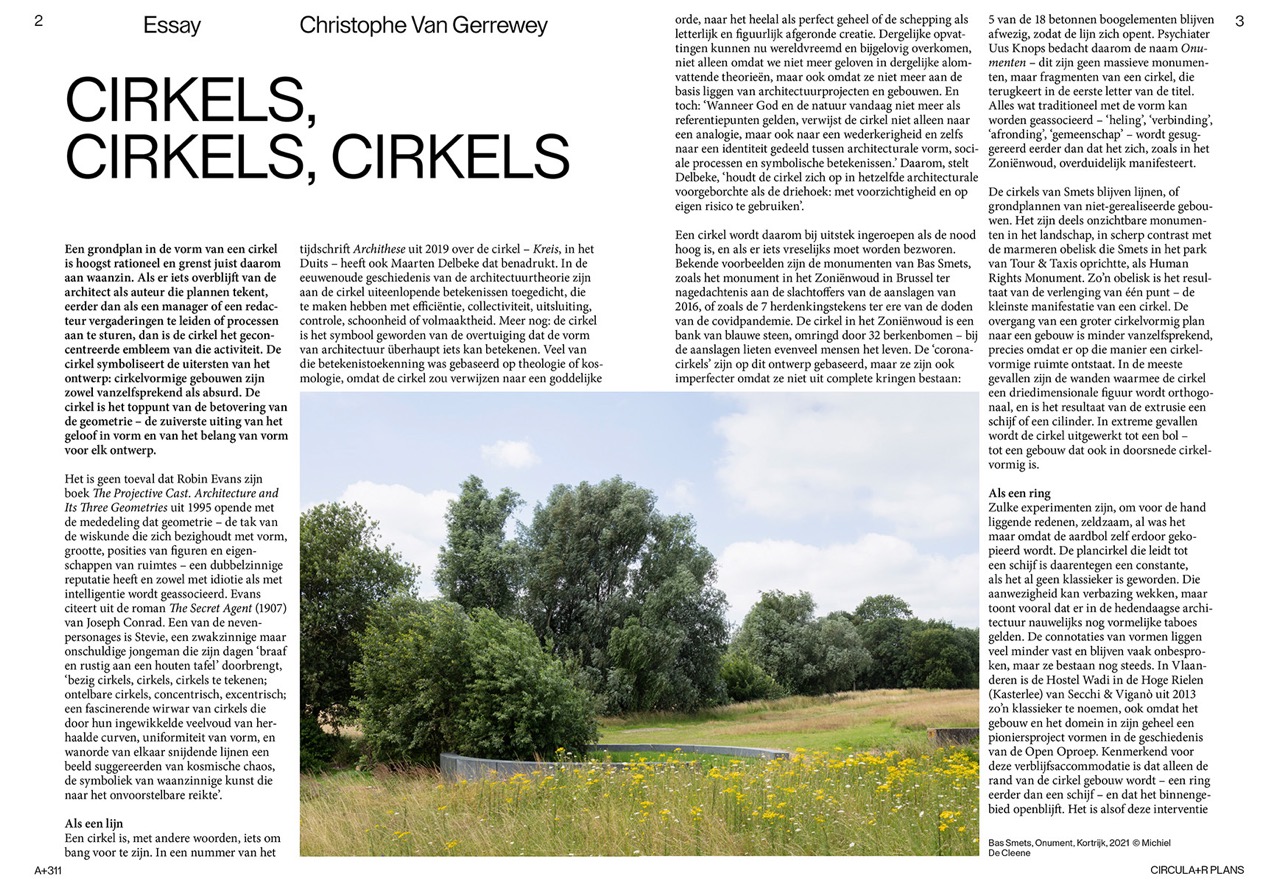
When no cultural context or spatial planning programme immediately leads to the circular form, this type of plan could well be perceived as a reckless, extreme, almost absurd gesture on the part of its author. Indeed, why choose a circular shape for a home or office? Christophe Van Gerrewey explores this question as well as the supposed lack of functionality of the circle as an unlikely plan. He addresses a series of architectural questions raised by the circle. Léone Drapeaud also questions the monumental and absolute dimension of the circle, and commands respect for the architect’s coherent structural exercise aimed at bringing a conclusive logic to a figure that – at first glance – does not lend itself to it. Gideon Boie, for his part, criticises the rejection of the environment inherent in the logic of the circle. “The beauty of forms can have a particular usefulness,” he writes, “but when this formalism becomes radical through the use of a geometric form, there is no longer any connection with the context.”
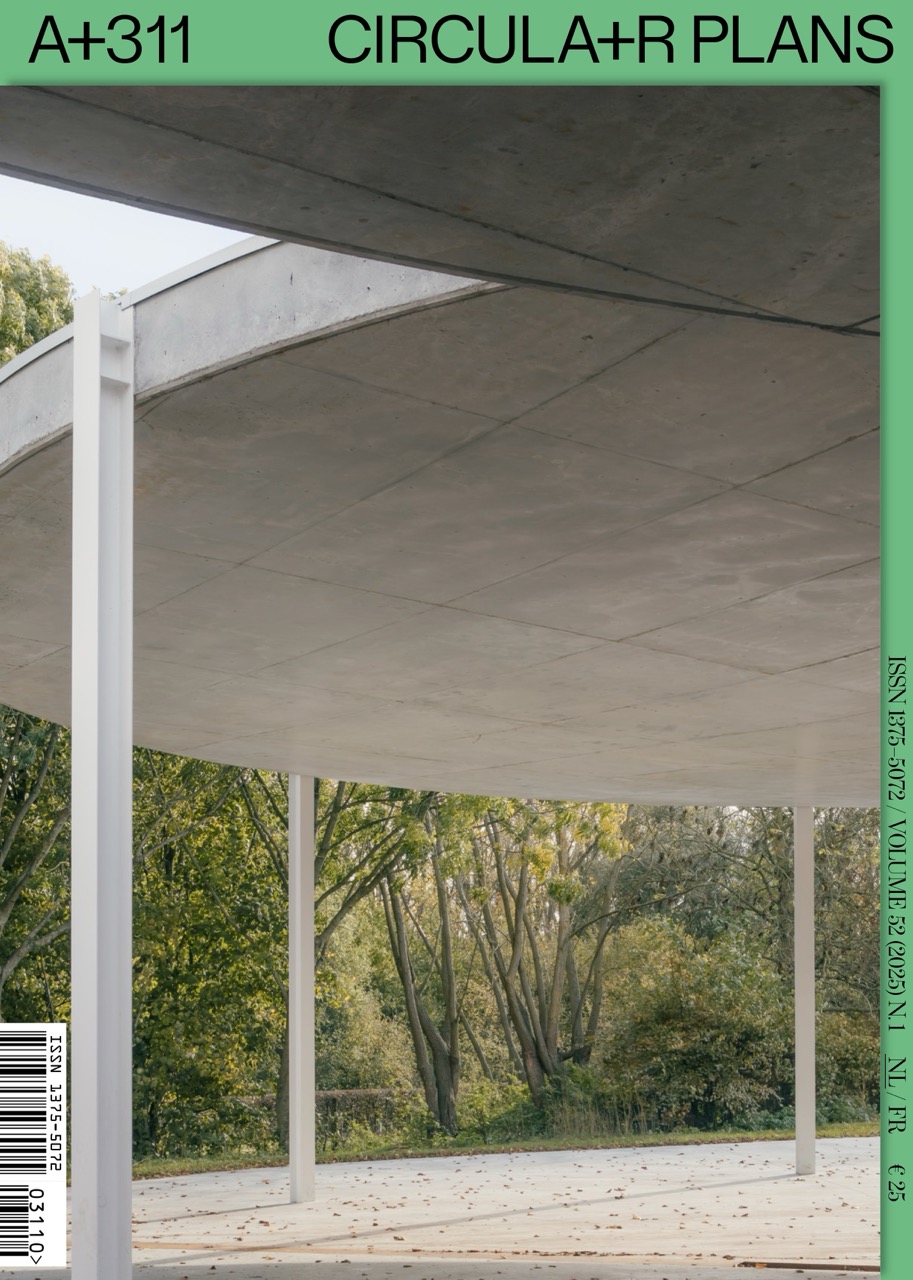
A 311 Circular Plans goes beyond wordplay. It would be a bit of a stretch to imagine that the circular shape could symbolically enter into dialogue with the philosophy of circular architecture, where materials and products can be conserved, revalued and reused. But at a time when the urgent need to drastically reduce our CO2 emissions has never been more pressing, it is almost taboo to talk about circularity rather than circular buildings. Yet Job Floris is categorical on this subject: “The autonomy of geometry is a theme that deserves both attention and recognition. A layout that works properly is no problem, but at a higher level, there is the floor plan, which also manages to tell its own story.”
Starting with this issue, your favourite architecture magazine has been given a makeover: both its design and content have undergone changes. Each issue now consists of two parts. The first presents a selection of challenging and fascinating contemporary Belgian architectural projects. The thematic section, meanwhile, contributes to and fuels the discourse on architecture and its social aspirations through essays and interviews. The thematic reflection is supported by the analysis of recent or older architectural projects in Belgium and abroad. The thematic section of this first issue of 2025 was compiled by the editorial team; in all subsequent issues, the floor will be given to specialists with knowledge or experience related to the theme, who will act as co-editors. By offering you a magazine that has been the focus of our attention, we hope to inform, inspire and surprise you even more.
Table of contents
CIRCULA+R PLANS
Eline Dehullu en Amaryllis Jacobs
Christophe Van Gerrewey
Léone Drapeaud
Iwan Strauven
Job Floris
Het rijk van pure architectuur
Pieter T’Jonck
Lara Molino
Opinie – Het genie van een cirkel
Gideon Boie
PROJECTS
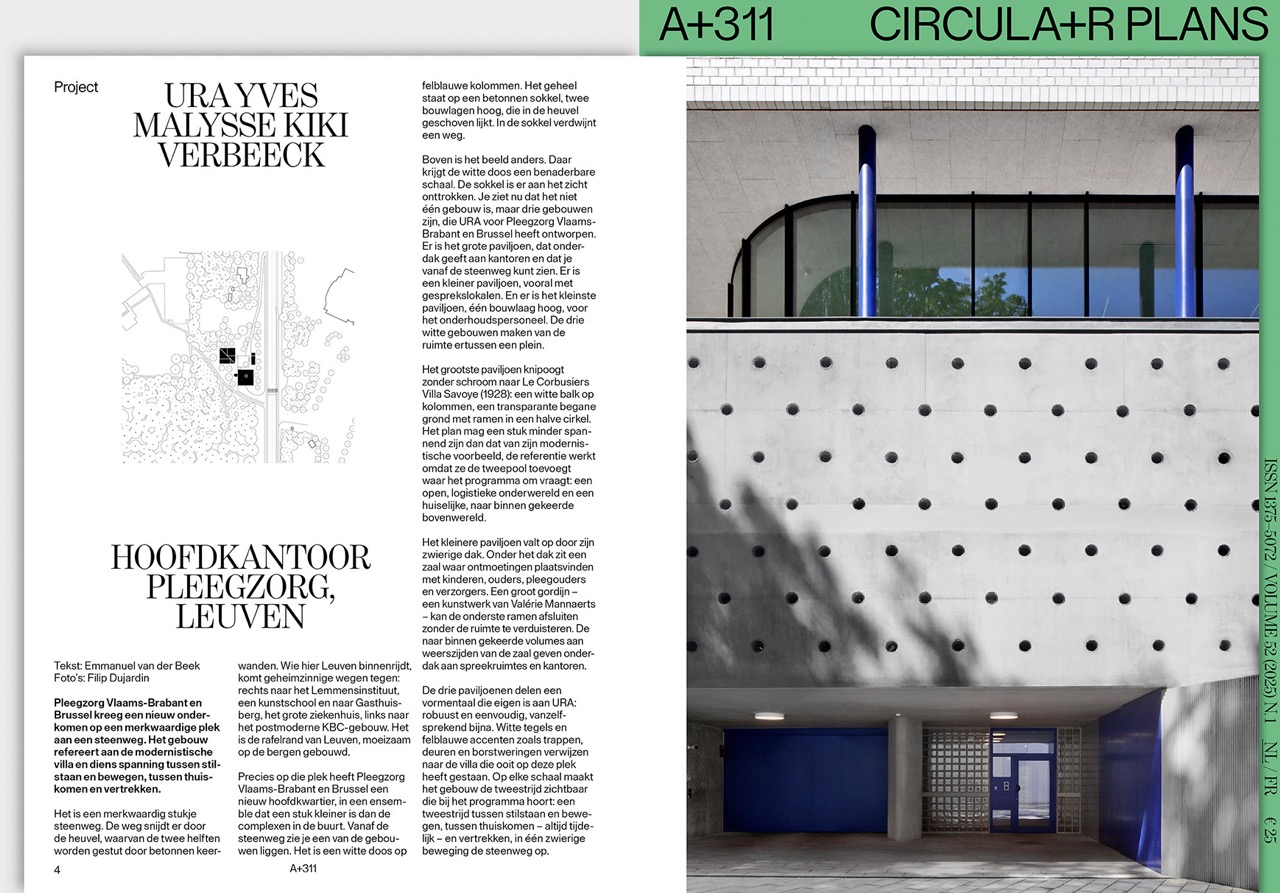
URA Yves Malysse Kiki Verbeeck
Hoofdkantoor Pleegzorg, Leuven
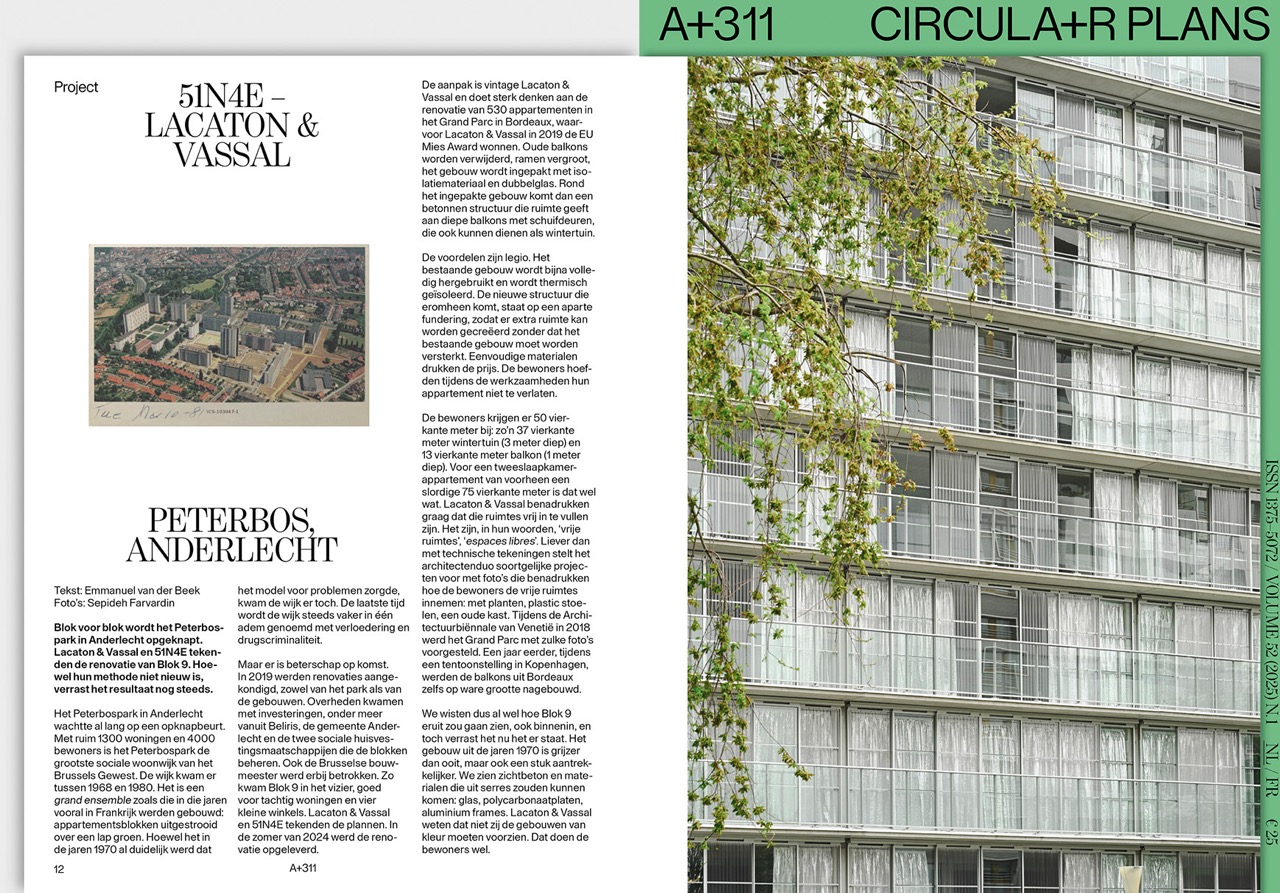
51N4E – Lacaton & Vassal
Peterbos, Anderlecht
A Practice
Maison de la Culture, Doornik
Robbrecht en Daem
Rubenssite, Antwerpen
NU – Archipelago
De Groene Ark, Plantentuin, Meise
Olivier Fourneau
Kurth, Luik
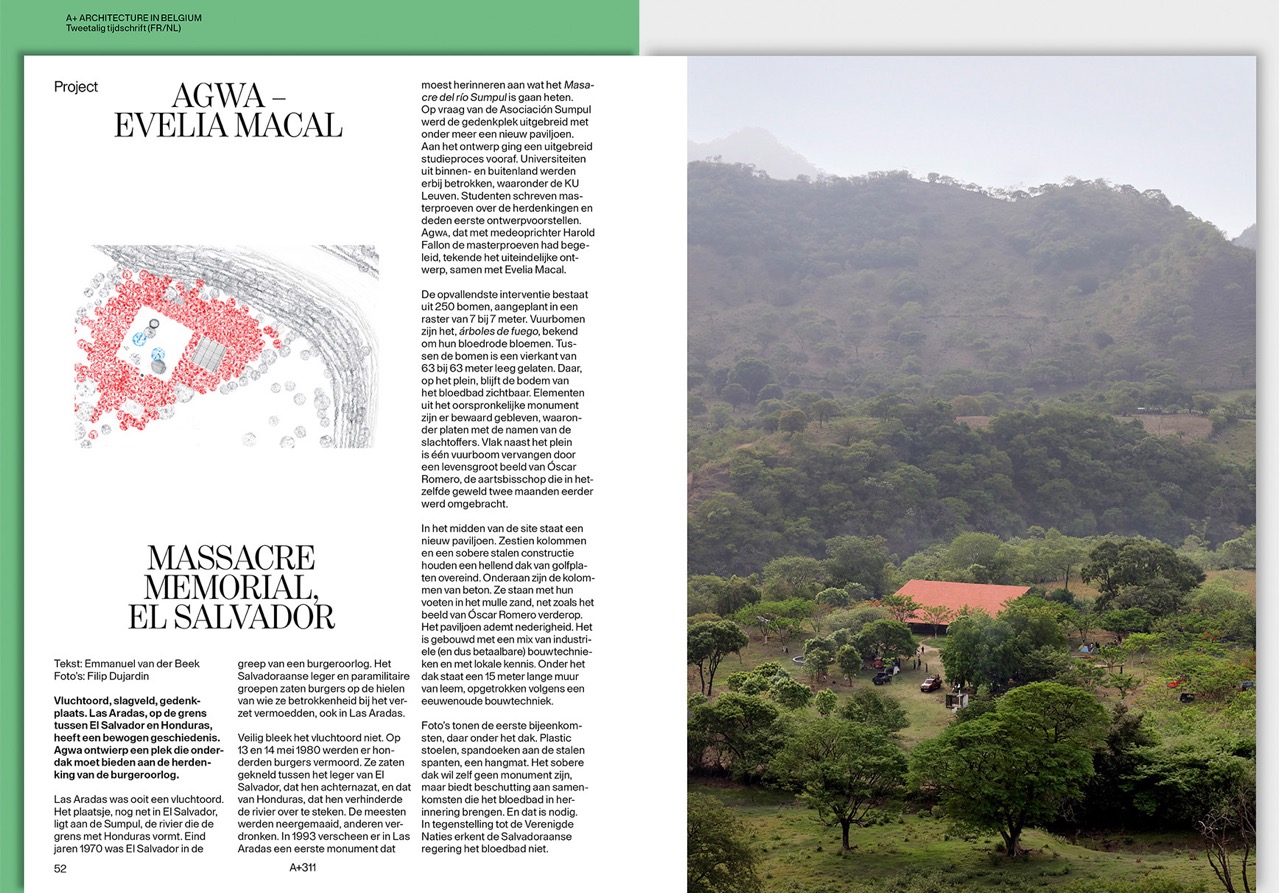
Agwa – Evelia Macal
Massacre Memorial, El Salvador
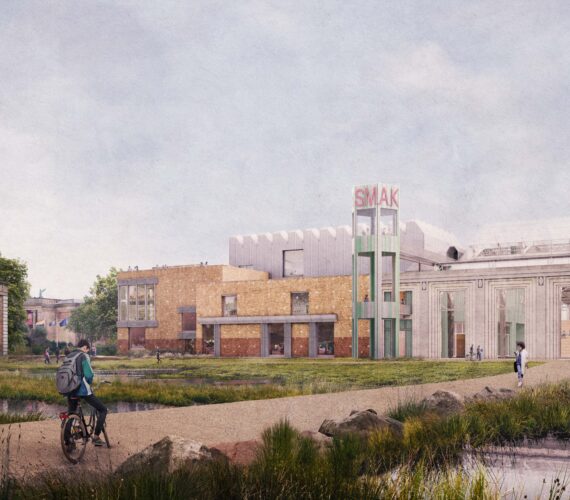
Wedstrijd – Open Oproep S.M.A.K., Gent
Pieter T’Jonck