Edito
Lisa De Visscher
Editor-in-chief
‘The Belgian architectural scene is one of the most interesting at the moment,’ said Konstantinos Pantazis of the Greek firm Point Supreme when, as a member of the jury, he was reviewing the projects submitted for last year’s Brussels Architecture Prize. And he is not alone in this opinion. Both at home and especially abroad, architectural production and culture in Belgium have been influential for quite some time and are closely followed.
‘Belgium is currently experiencing one of those golden ages of architecture where new architects are emerging and high-quality design firms are finding the clients and circumstances that allow them to shine, both at home and abroad,’ wrote Paul Finch, editor of The Architectural Review, in an issue devoted entirely to Belgium in 2018. A year later, it was the turn of Architecture d’Aujourd’hui to publish its issue Belgium, a negotiated architecture.
‘Belgian architects have mastered the art of the palimpsest as much as the budgetary envelope of their projects,’ enthused editor-in-chief Emmanuelle Borne. ‘Between history and stories, audacity and mastery, the Belgian scene is now a guarantee of quality, humanism and poetry.’
The most tangible evidence of the high regard in which Belgian architectural quality is held can be found in the numerous publications and awards, such as the Silver Lion at the 2018 Venice Architecture Biennale for the Unless Ever People project by De Vylder Vinck Taillieu architecten in collaboration with Bavo and Filip Dujardin.
However, there are several factors behind this success. As Paul Finch has already pointed out, it is a question of finding the right circumstances, namely a combination of high-quality commissions, inspiring and innovative teaching, a buoyant economic climate, a stimulating architectural policy and, of course, sufficient local talent. In terms of quality, it is mainly the evolution of policy that has borne fruit. At the end of the last century, the first Flemish Bouwmeester was appointed, responsible for independently monitoring the quality of public buildings in Flanders. In the wake of this, the Vlaams Architectuurinstituut was also created to provide a platform, a showcase and support for architectural culture. Both have evolved into important players in creating the conditions for quality architecture. Since then, we have also seen the creation of the Architecture Unit of the French Community, a Master Architect for the Brussels-Capital Region, master architects in various cities and the ICA/WB, a centre for architectural culture in French-speaking Belgium.
Beyond the regional level, there is also an active focus on the quality of the built environment at the local level in cities such as Charleroi, Antwerp and Ghent, where master architects ensure a progressive policy in support of architectural excellence.
New competition (selection) procedures, pilot projects and project-based research have led to the development of instruments designed to support high-quality projects, which also give young architects the opportunity to win public contracts. In this context, major social issues such as climate change, repurposing, the circular economy and energy transition are among the priorities. Meanwhile, several generations of architects have already been able to flourish and develop their work in this innovative architectural context.
In this issue, produced in collaboration with the teams of the Brussels Bouwmeester–Maître Architecte, the Cellule Architecture and the Vlaams Bouwmeester, we give a voice to architects, policy makers, clients and users, without forgetting to take a look behind the scenes of Belgian architectural production.
Theme
Quality Matters
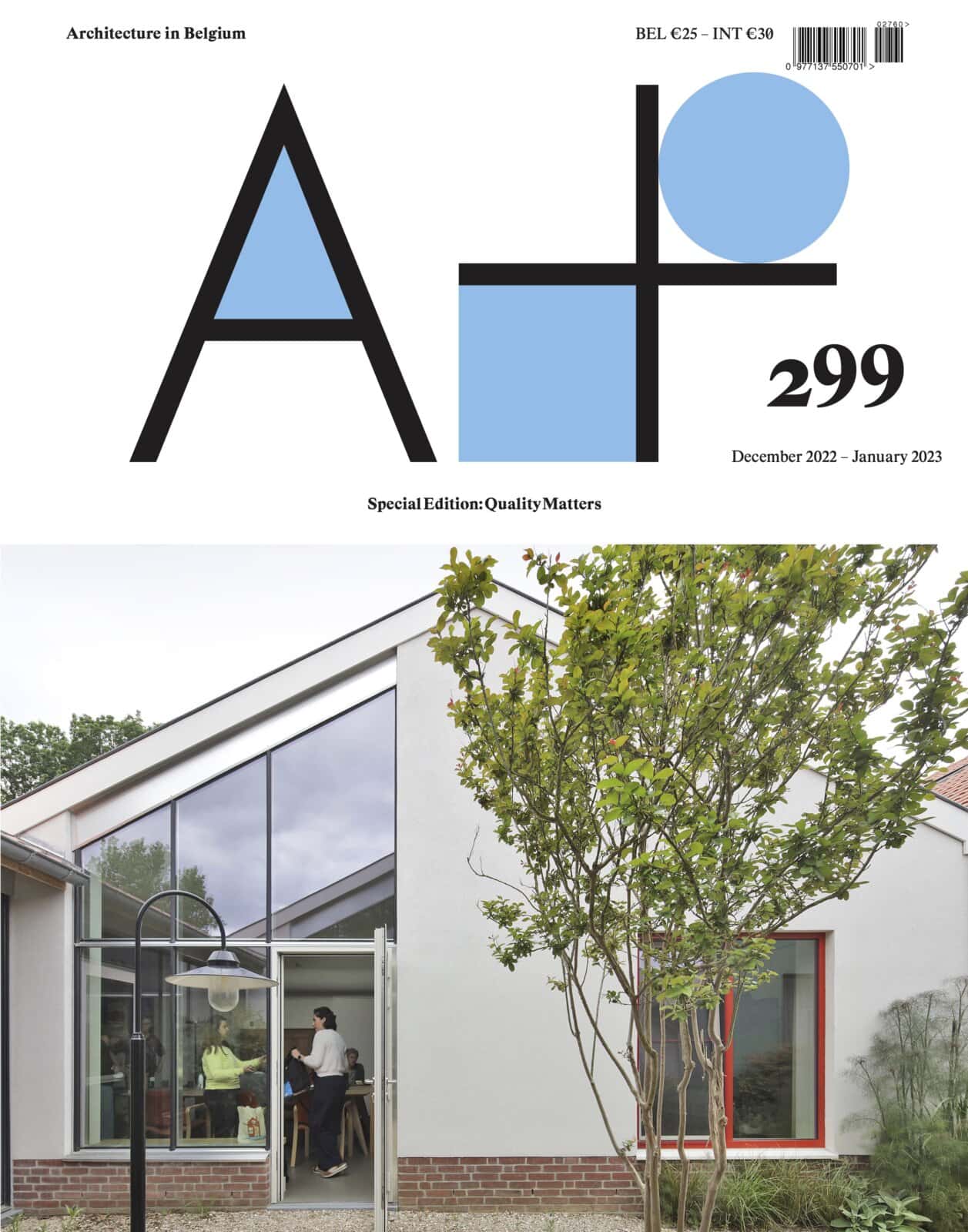
Architecture in Belgium attracts a great deal of attention and interest abroad. This can be explained in part by the ambitious architectural policy that has been developed over the last twenty years: bodies such as the Vlaamse Bouwmeester and the Brussels Master Architect, the various master architects linked to the cities, procedures such as the Open Oproep and the creation of the Architecture Unit or, more recently, the Wallonia-Brussels Cultural Institute of Architecture (ICA-BW) each contribute in their own way. Regional cultural actors and public clients also play an important role in this development. A+ publishes a wide range of projects completed in recent years, using these examples to understand how this policy generates architectural quality and questioning the changes needed to preserve and intensify it. A+ is also organising a debate with the various stakeholders on the role and impact of policy in a bottom-up architectural landscape. This issue will be launched during the debate. In collaboration with the various master architects and institutes.
See all themesTable of contents
OPINIE
Why does Wallonia not (yet) have a Government Architect?
QUALITY MATTERS
noAarchitecten
Coda, Wuustwezel
evr – BC – Callebaut, Kempe Thill – Kaderstudio, Anyoji Beltrando
Usquare, Brussels
Générale – Elmēs
Stations de plein air Madeleine Melot, Namur
On City Architects
Lisa De Visscher
On Quality Chambers in Flanders and Brussels
Théâtre du Rideau, Brussels
Petillon Ceuppens – Schenk Hattori
Park School, Melle
Neutelings Riedijk, 51N4E – Jaspers-Eyers – l’AUC
Northern Quarter, Brussels
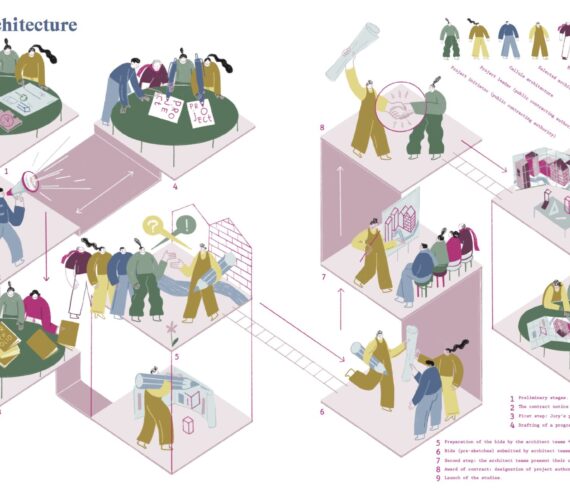
Graphical overview of institutions and instruments