
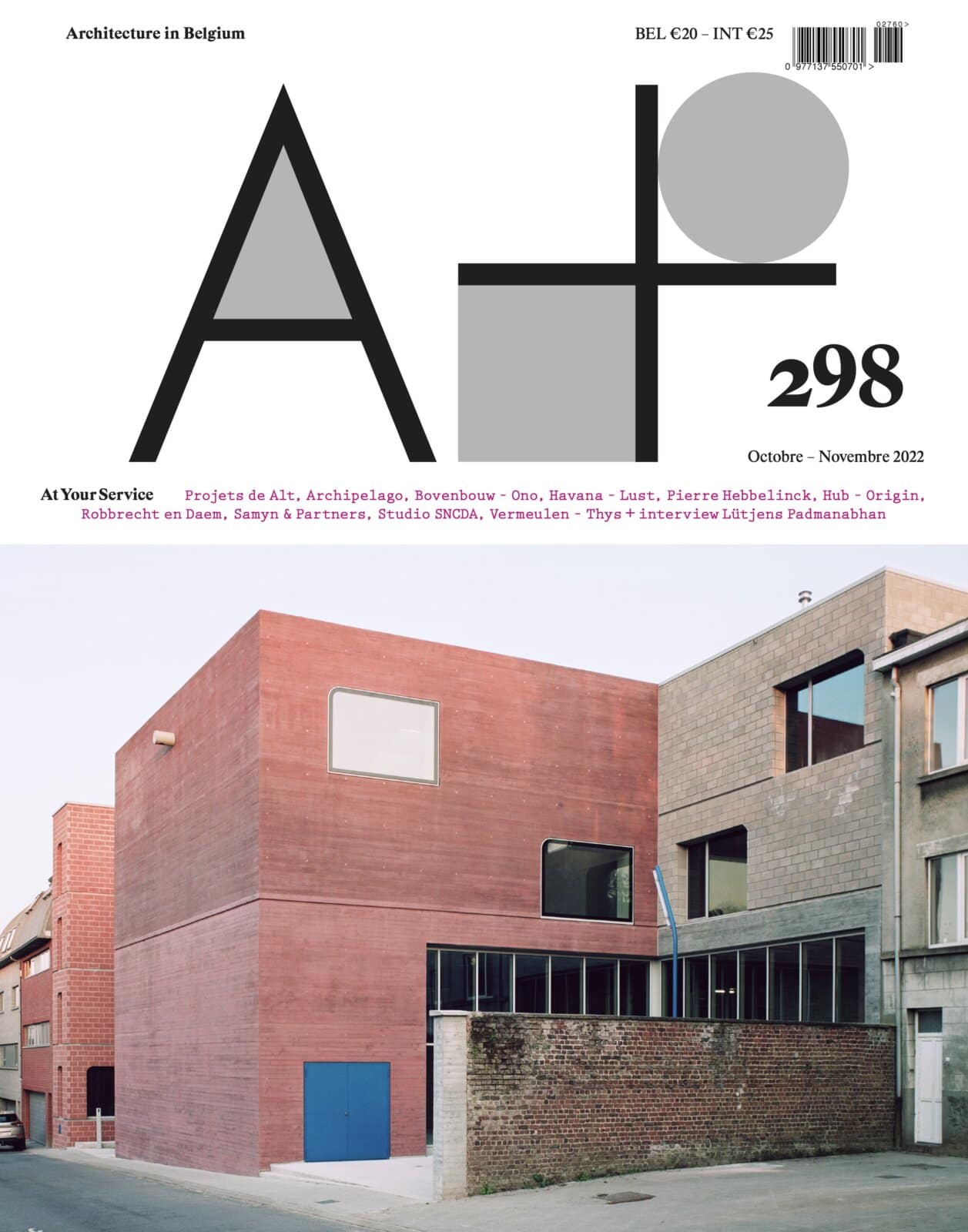
Edito
Lisa De Visscher
Editor-in-chief
When Wivina Demeester, Flemish Minister of Finance, Budget and Health Policy at the end of the last century, took the initiative to appoint the first Flemish Government Architect, her primary aim was to create the conditions for better architectural quality in government buildings. More than twenty years have passed since then, and thanks to this initiative, a policy has been developed that goes far beyond the remit of the government alone. Nevertheless, public buildings in Flanders, Brussels and Wallonia remain a showcase for competitive culture, in which the government, as an exemplary client, has the opportunity to immediately translate its vision of the built environment into reality and set a good example.
Whether this always succeeds is questionable, and is also the subject of the debate between Gérald Leloutre and Luc Symoens in their respective opinion pieces on Brucity, the new offices of the City of Brussels. How the government wants and is able to house its staff, or “those who serve society”, as the English term “civil servant” so aptly puts it, is also the externalisation of internal policy.
It is striking that cities, municipalities and even the European Union – with the exception of the City of Brussels – are increasingly opting to revalue existing heritage. For example, the municipality of Uccle decided to repurpose the former Fabricom building, a construction from the 1970s, into a new central location for its many services, in a design by Archipelago. In doing so, the municipality resolutely opted for a new design language, moving away from the traditional, representative and somewhat ostentatious original town hall in Louis XIII style. The beautiful town hall of Antwerp, a monument dating from 1564, underwent a major renovation and restoration by HUB and Origin, in line with the work carried out by Pierre Bruno Bourla in the 19th century.
The European Union also ultimately opted for repurposing in the competition for the new European Parliament in Brussels, following the decision of the international professional jury. The existing building, popularly known as Caprice des Dieux, after the cheese of the same name, is a concrete colossus barely thirty years old with an oval floor plan. Reuse is obvious here, not because of the architectural qualities of the original building, because there are none, but for energy and ecological reasons. In collaboration with NL Architects, Ensamble Studio and Carlo Ratti, JDS succeeded in transforming this banal office building into a contemporary and representative workplace for European civil servants.
Not only administrative officials, but also the police and fire brigade are at our service day and night. Thanks to a series of interesting competitions, fire stations are also increasingly becoming the domain of experimentation and typological research. This is evidenced by the recently completed fire station in Dilbeek by SNCDA and the one in Charleroi by Samyn and partners.
These and many other examples show how policy on government buildings has slowly reversed the question: from encouraging a contemporary architectural language to using architecture itself as a tool for better service provision.
Table of contents
EDITORIAL
Lisa De Visscher
OPINION
For Brucity
Luc Symoens
Against Brucity
Gery Leloutre
SPOTLIGHT
Architecture Book Flanders No. 15
Philippe Declerck
Across on tour
Lara Molino
RECENT PROJECTS
Robbrecht and Daem
Gallery Hufkens, Brussels
Pierre Hebbelinck
Reception pavilion, Gaasbeek
Alt
Shelter, Melsele
Jan Vermeulen – Tom Thys
Prinsenpark, Retie
AT YOUR SERVICE
Havana – Lust
Park and Ride, Ledeberg
Studio SNCDA
Fire station, Dilbeek
Archipelago
Projet U, Uccle
European Parliament competition, Brussels
Kristiaan Borret and Lisa De Visscher
Hub – Origin
Renovation of city hall, Antwerp
Samyn & Partners
Fire station, Charleroi
Superstructure – Ono
Tabloo, Dessel
COMPETITION – Town hall, Hannut
Amélie Poirel
INTERVIEW – Lüjtens Padmanabhan
Lisa De Visscher
STUDENT
Concrete Design Competition
Eline Dehullu
Maarten Bouwen Prize
Eline Dehullu
PORTRAIT
Ectv
Eline Dehullu
Baumans-Deffet
Lisa De Visscher
RE-VISITED
Roger Bastin and Jacques Dupuis
Maurizio Cohen
