
Edito
Lisa De Visscher (A+), Stefan Devoldere (UHasselt), Peggy Totté (Architectuurwijzer)
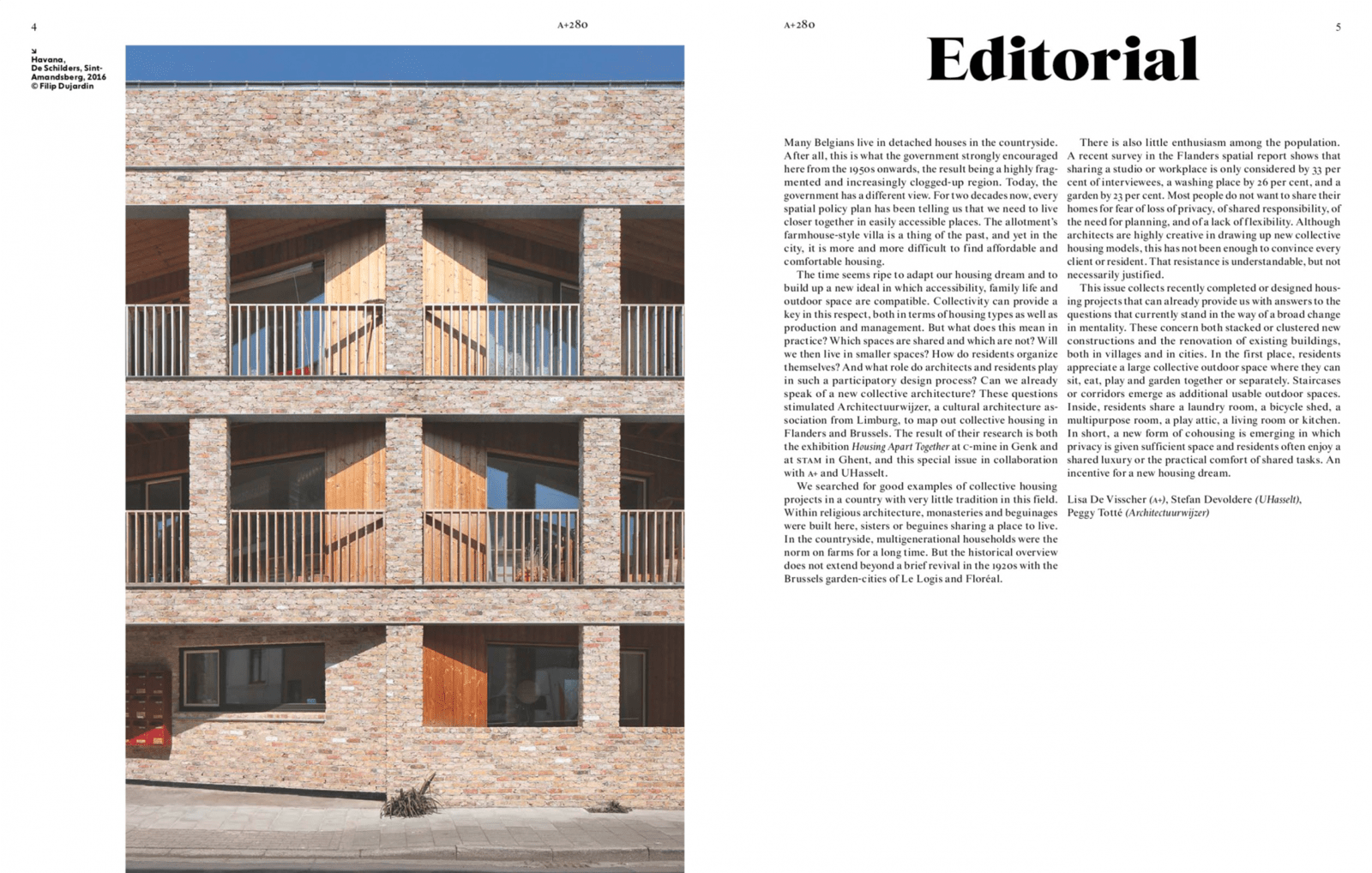
Many Belgians live in detached houses in the countryside. After all, this is what the government strongly encouraged here from the 1950s onwards, the result being a highly fragmented and increasingly clogged-up region. Today, the government has a different view. For two decades now, every spatial policy plan has been telling us that we need to live closer together in easily accessible places. The allotment’s farmhouse-style villa is a thing of the past, and yet in the city, it is more and more difficult to find affordable and comfortable housing.
The time seems ripe to adapt our housing dream and to build up a new ideal in which accessibility, family life and outdoor space are compatible. Collectivity can provide a key in this respect, both in terms of housing types as well as production and management. But what does this mean in practice? Which spaces are shared and which are not? Will we then live in smaller spaces? How do residents organize themselves? And what role do architects and residents play in such a participatory design process? Can we already speak of a new collective architecture? These questions stimulated Architectuurwijzer, a cultural architecture association from Limburg, to map out collective housing in Flanders and Brussels. The result of their research is both the exhibition Housing Apart Together at c-mine in Genk and at stam in Ghent, and this special issue in collaboration with a+ and UHasselt.
We searched for good examples of collective housing projects in a country with very little tradition in this field. Within religious architecture, monasteries and beguinages were built here, sisters or beguines sharing a place to live. In the countryside, multigenerational households were the norm on farms for a long time. But the historical overview does not extend beyond a brief revival in the 1920s with the Brussels garden-cities of Le Logis and Floréal.
more
There is also little enthusiasm among the population. A recent survey in the Flanders spatial report shows that sharing a studio or workplace is only considered by 33 per cent of interviewees, a washing place by 26 per cent, and a garden by 23 per cent. Most people do not want to share their homes for fear of loss of privacy, of shared responsibility, of the need for planning, and of a lack of flexibility. Although architects are highly creative in drawing up new collective housing models, this has not been enough to convince every client or resident. That resistance is understandable, but not necessarily justified.
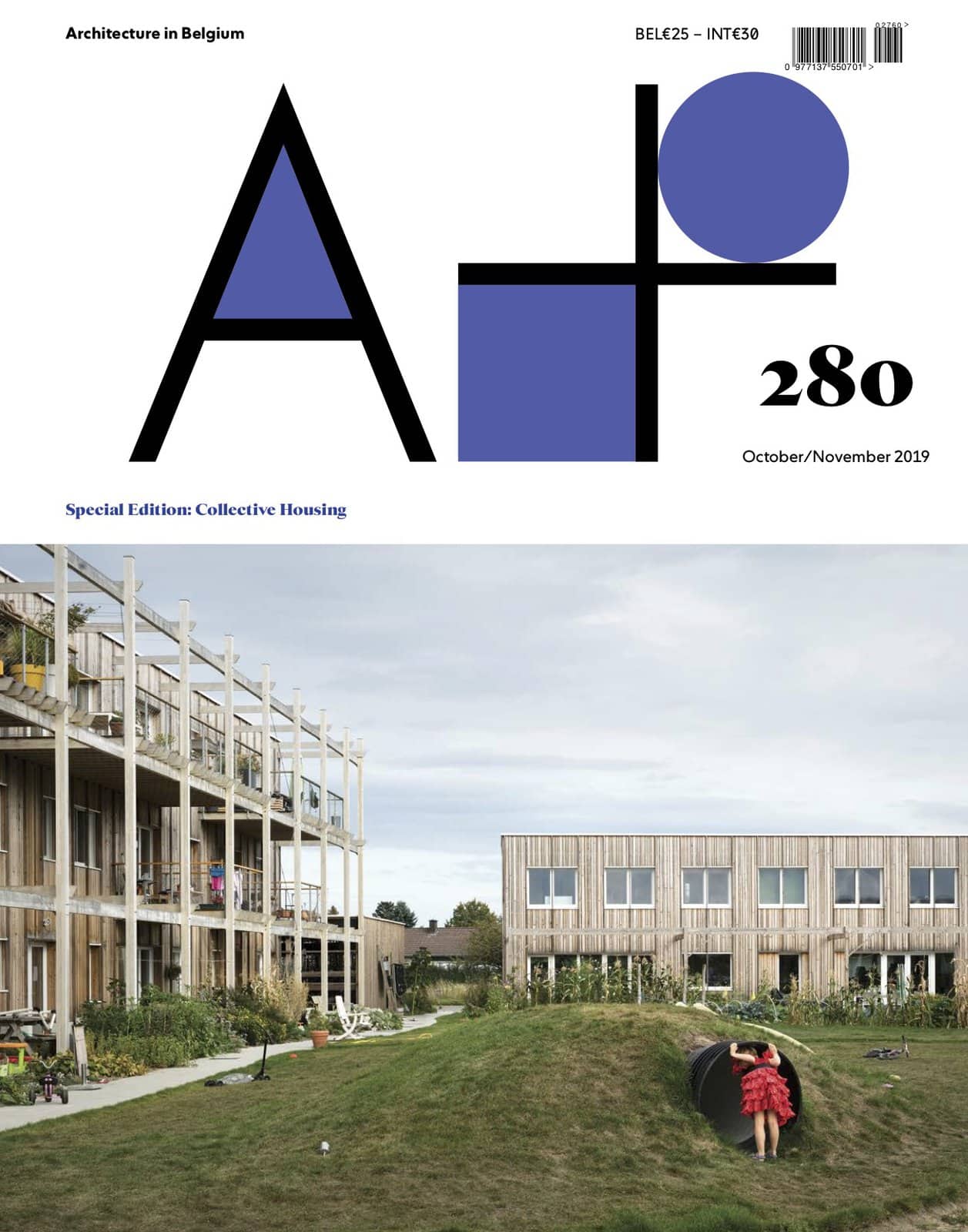
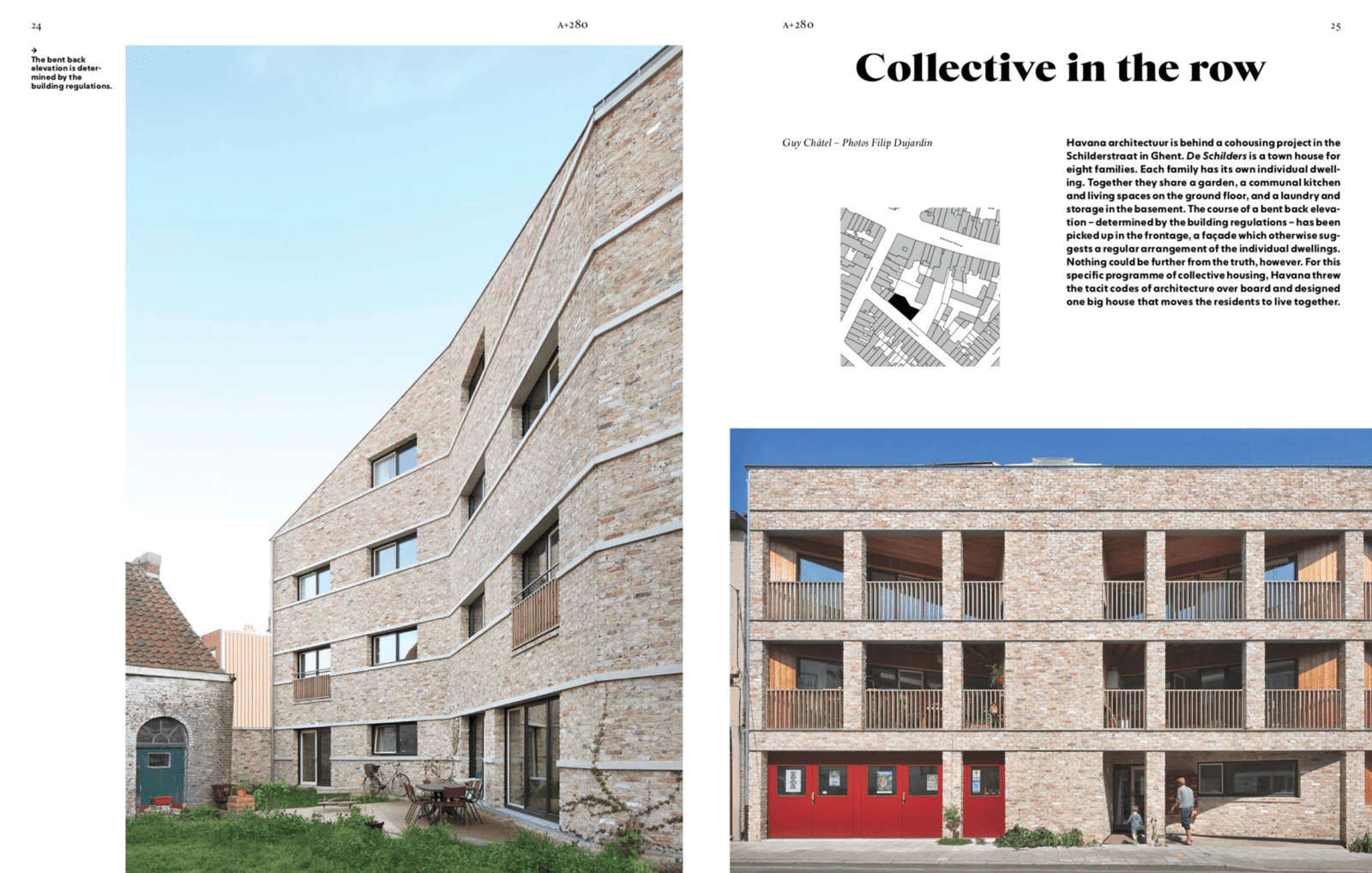
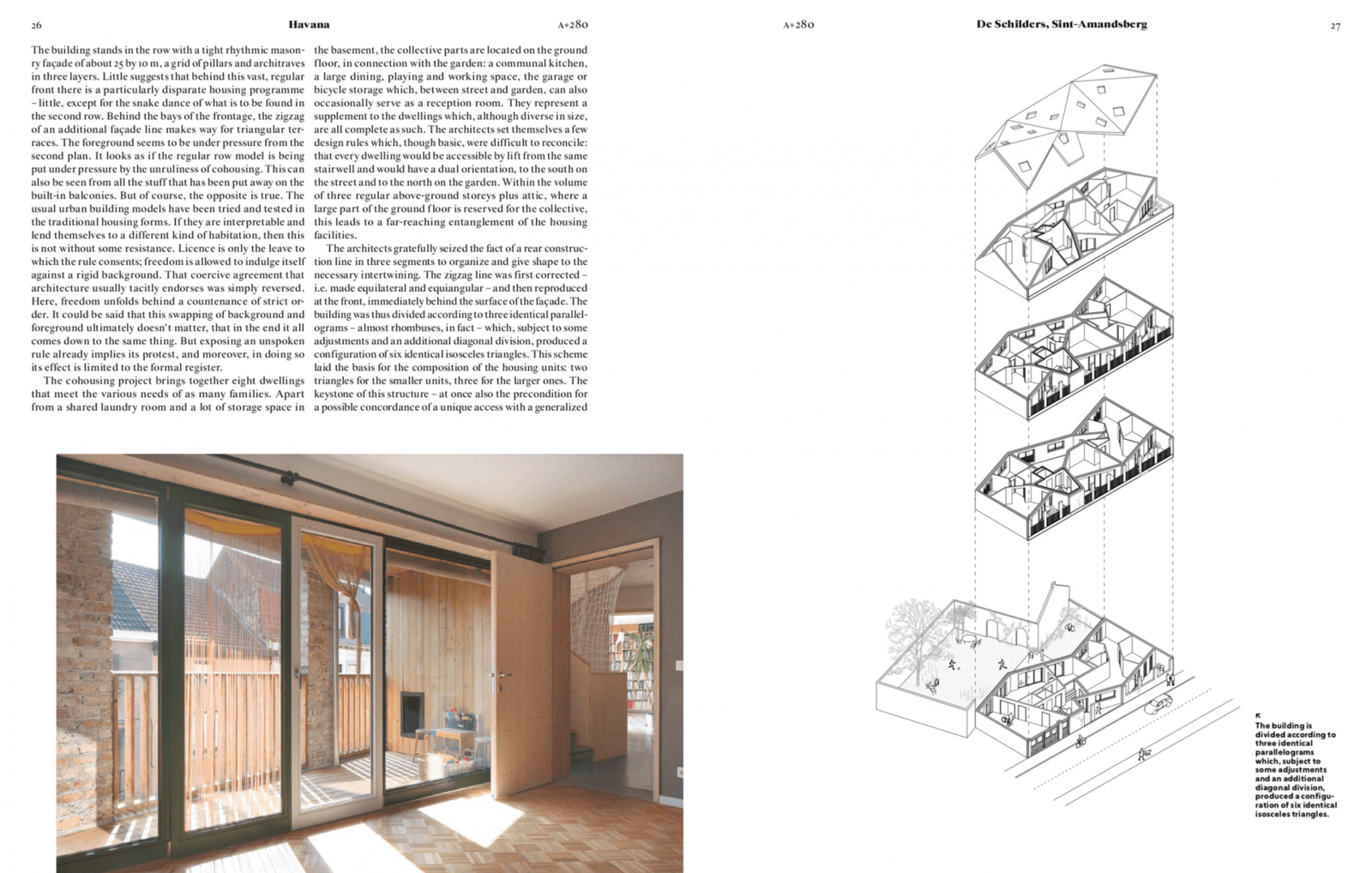
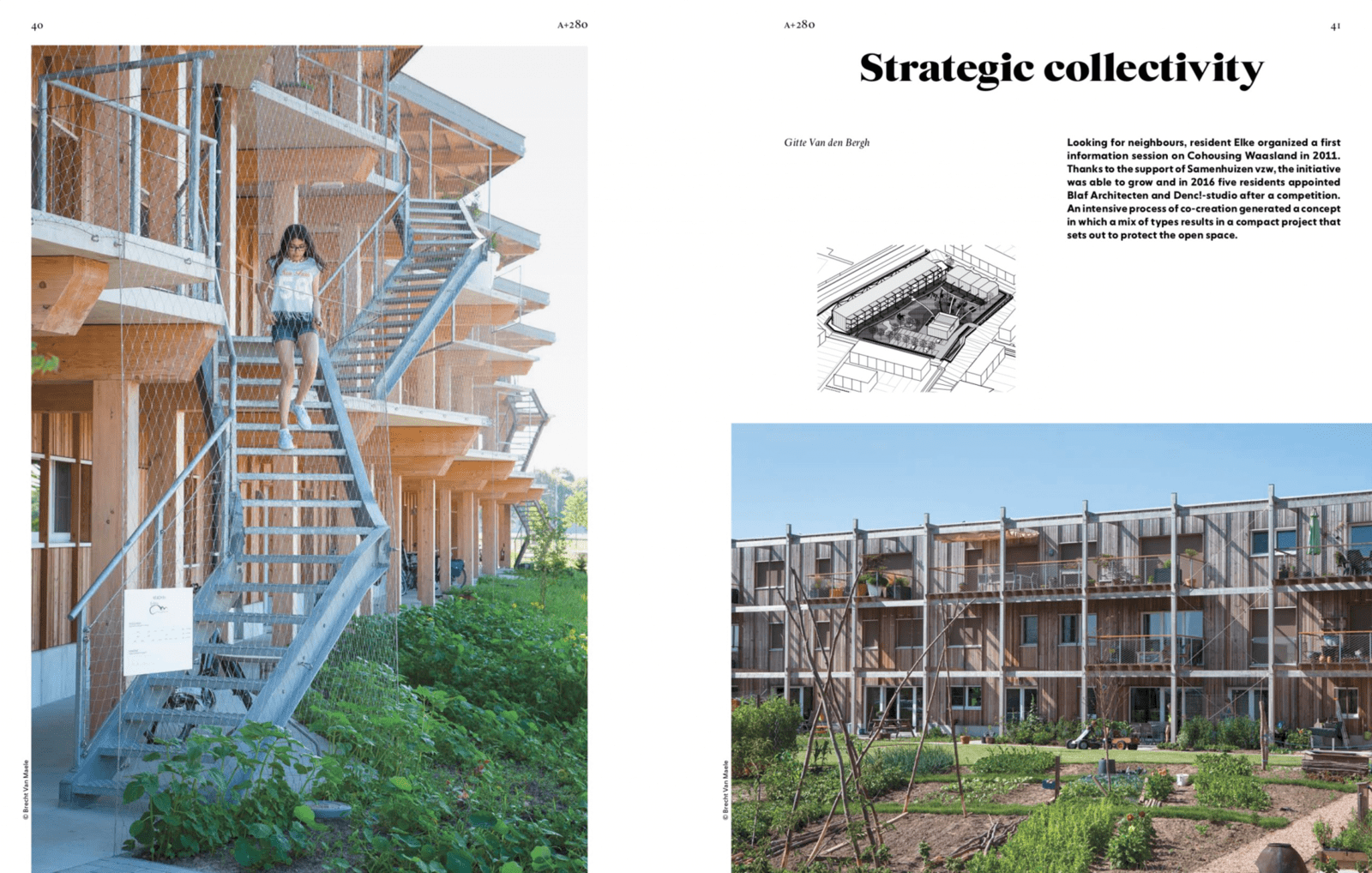
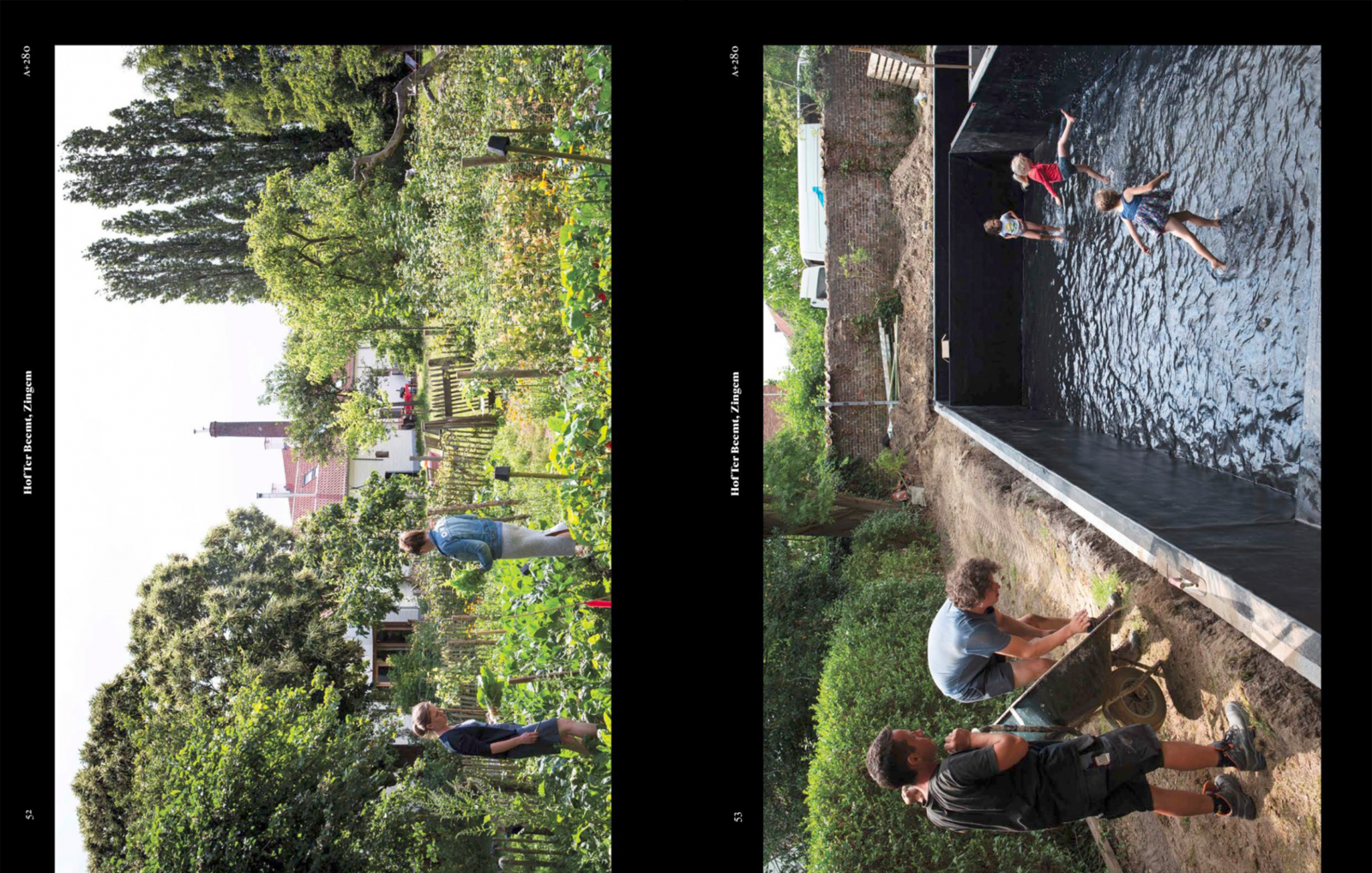
This issue collects recently completed or designed housing projects that can already provide us with answers to the questions that currently stand in the way of a broad change in mentality. These concern both stacked or clustered new constructions and the renovation of existing buildings, both in villages and in cities. In the first place, residents appreciate a large collective outdoor space where they can sit, eat, play and garden together or separately. Staircases or corridors emerge as additional usable outdoor spaces. Inside, residents share a laundry room, a bicycle shed, a multipurpose room, a play attic, a living room or kitchen. In short, a new form of cohousing is emerging in which privacy is given sufficient space and residents often enjoy a shared luxury or the practical comfort of shared tasks. An incentive for a new housing dream.
Table of contents
Editorial Lisa De Visscher, Stefan Devoldere, Peggy Totté
Opinion
Housing block: the helplessness to design the collective Erik Wieërs
Projects
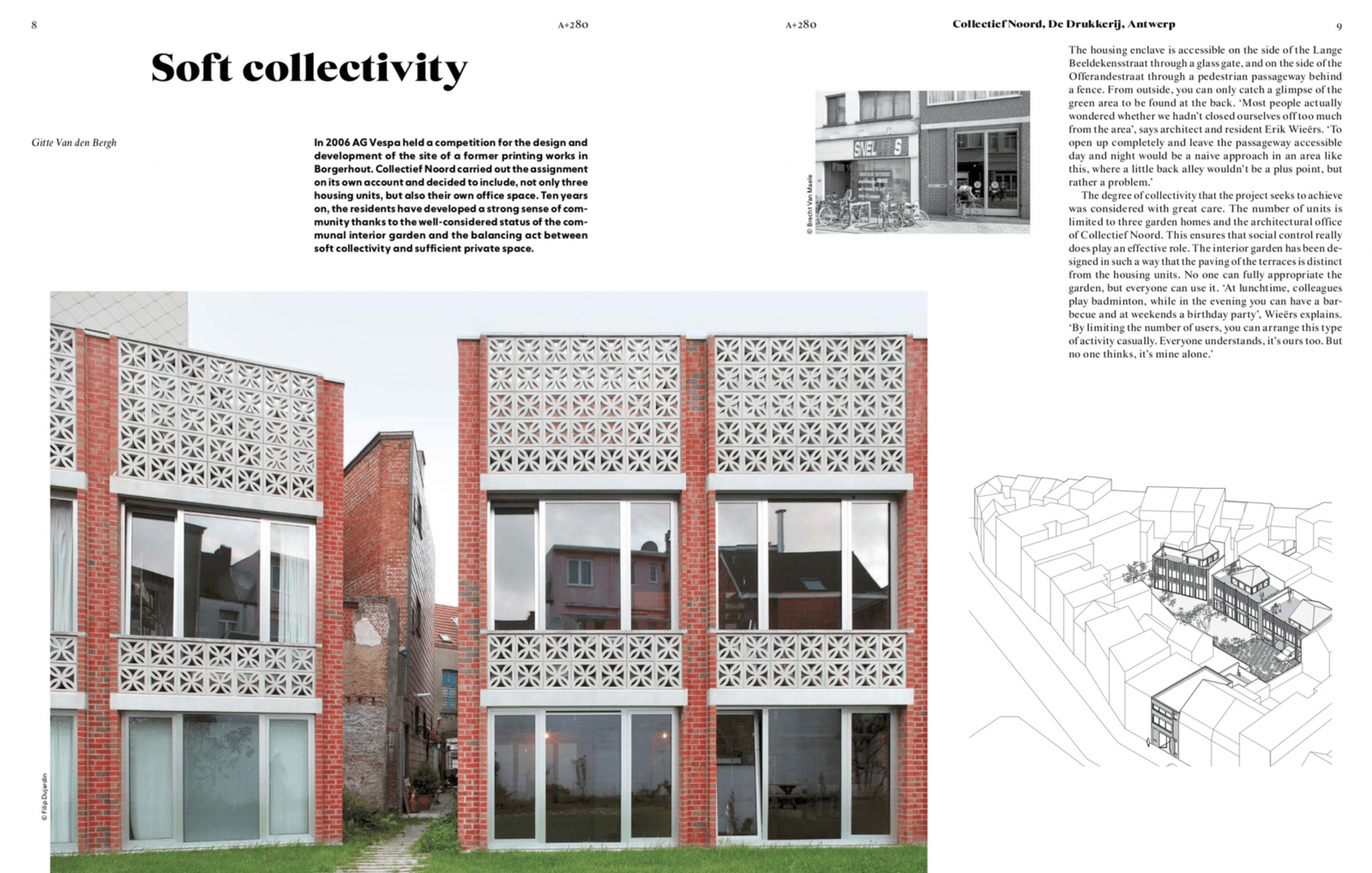
Collectief Noord, De Drukkerij, Antwerp Gitte Van den Bergh
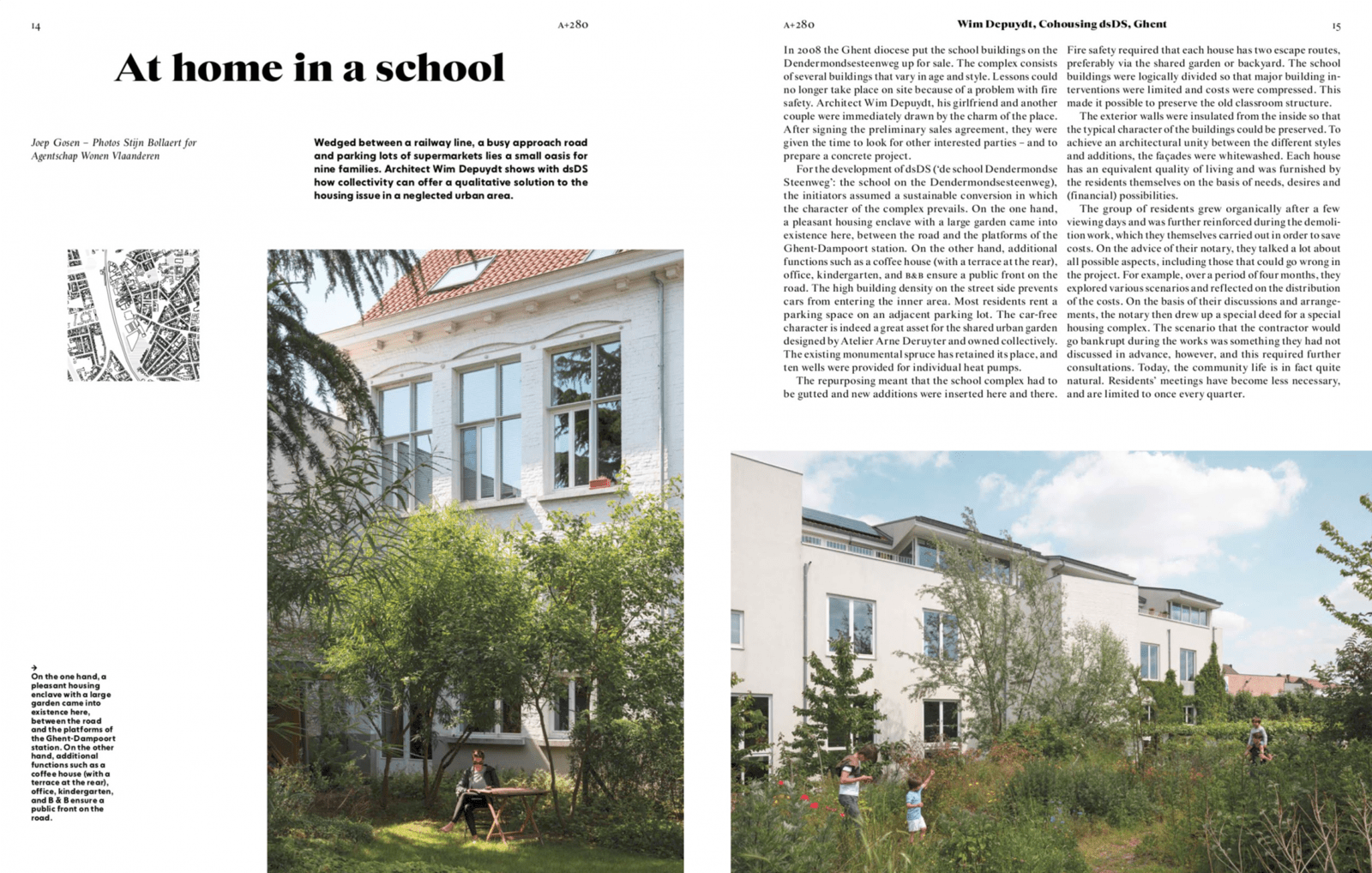
Wim Depuydt, Cohousing dsDS, Ghent Joep Gosen
Havana, De Schilders, Sint-Amandsberg Guy Châtel
stekke + fraas, Brutopia, Forest Peggy Totté
mvc – anno, Hof Ter Beemt, Zingem Sara Vermeulen
Denc!-studio – blaf, Waasland, Sint-Niklaas Gitte Van den Bergh
ectv, Jean, Sint-Amandsberg Jolien Naeyaert
URA, ’t Wisselspoor, Leuven Lisa De Visscher
Trans – MS-A – V+, Dockside, Molenbeek Pieter T’Jonck
Epoc, Tivoli, Laeken Véronique Boone
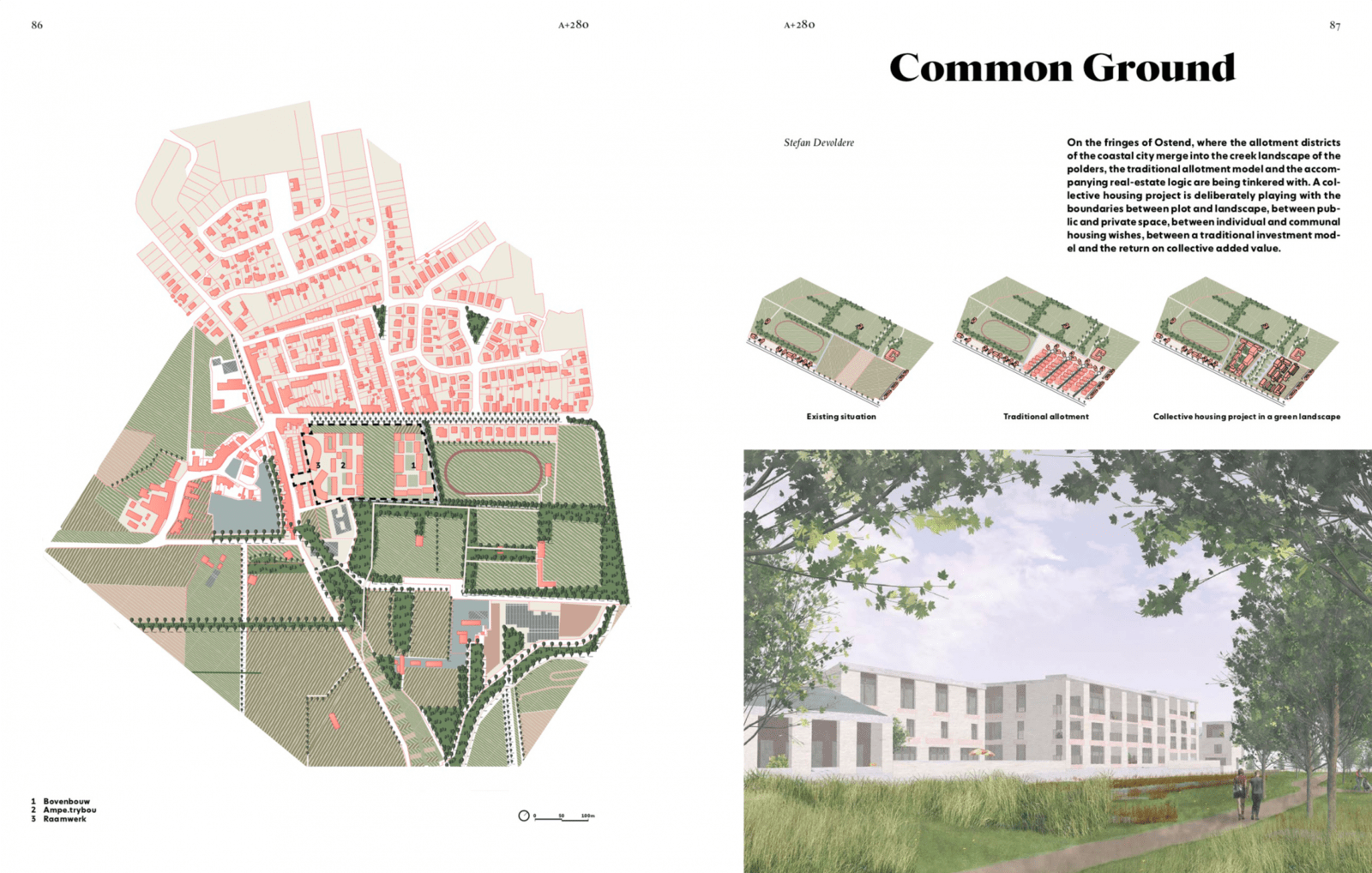
Bovenbouw, Zilverlaan, Ostend Stefan Devoldere
Photo essay Brecht Van Maele
Subjects
Collective housing as urban building stones Glenn Lyppens
Cohousing without community? Ruth Soenen
Cohousing: architects as programme and process directors? Pieter T’Jonck
Re-allotment dialogues Oswald Devisch, Barbara Roosen and Liesbeth Huybrechts
Cooperative and innovative dwellings in Zurich Peggy Totté
Interview
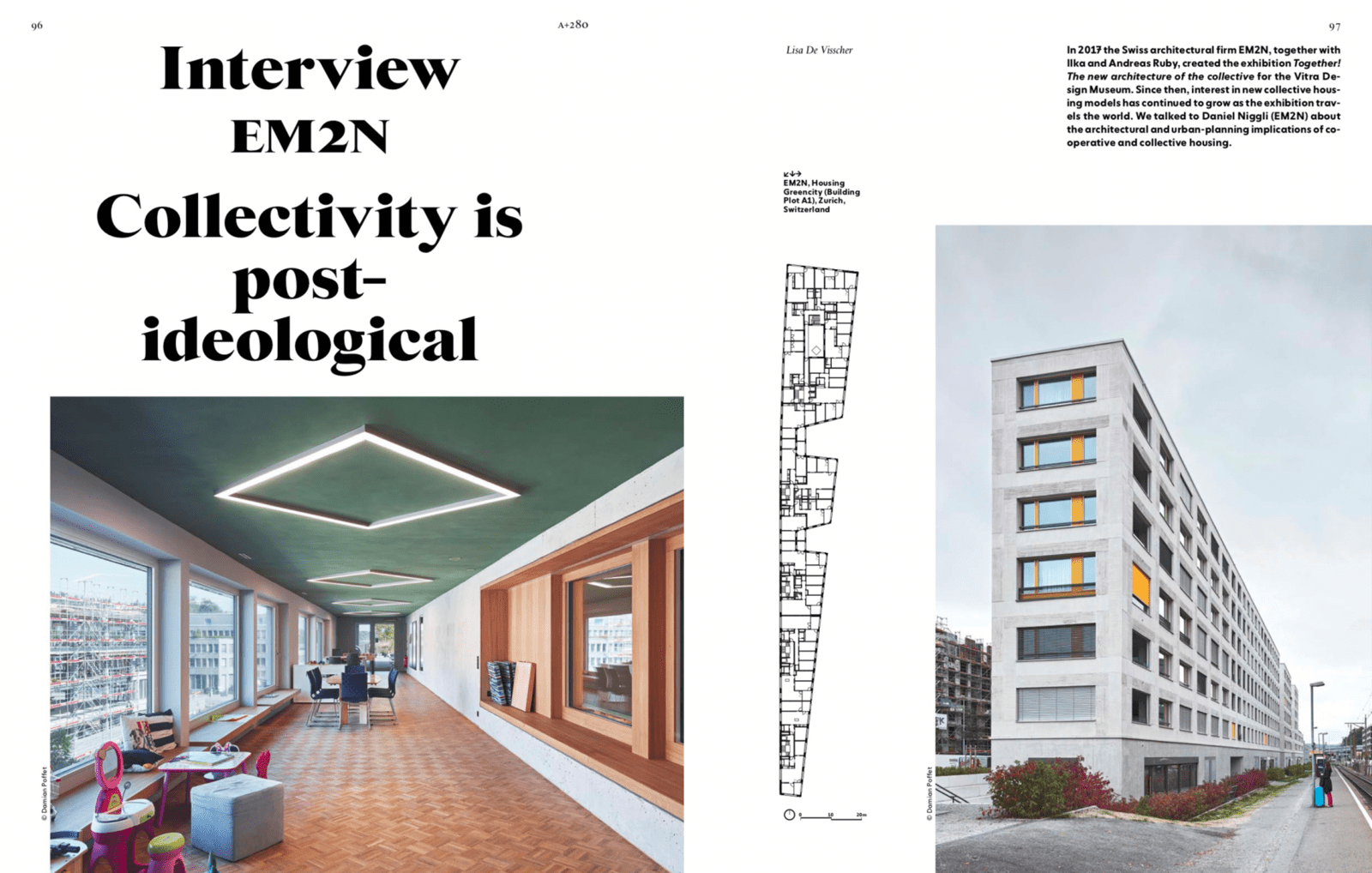
EM2N Lisa De Visscher
