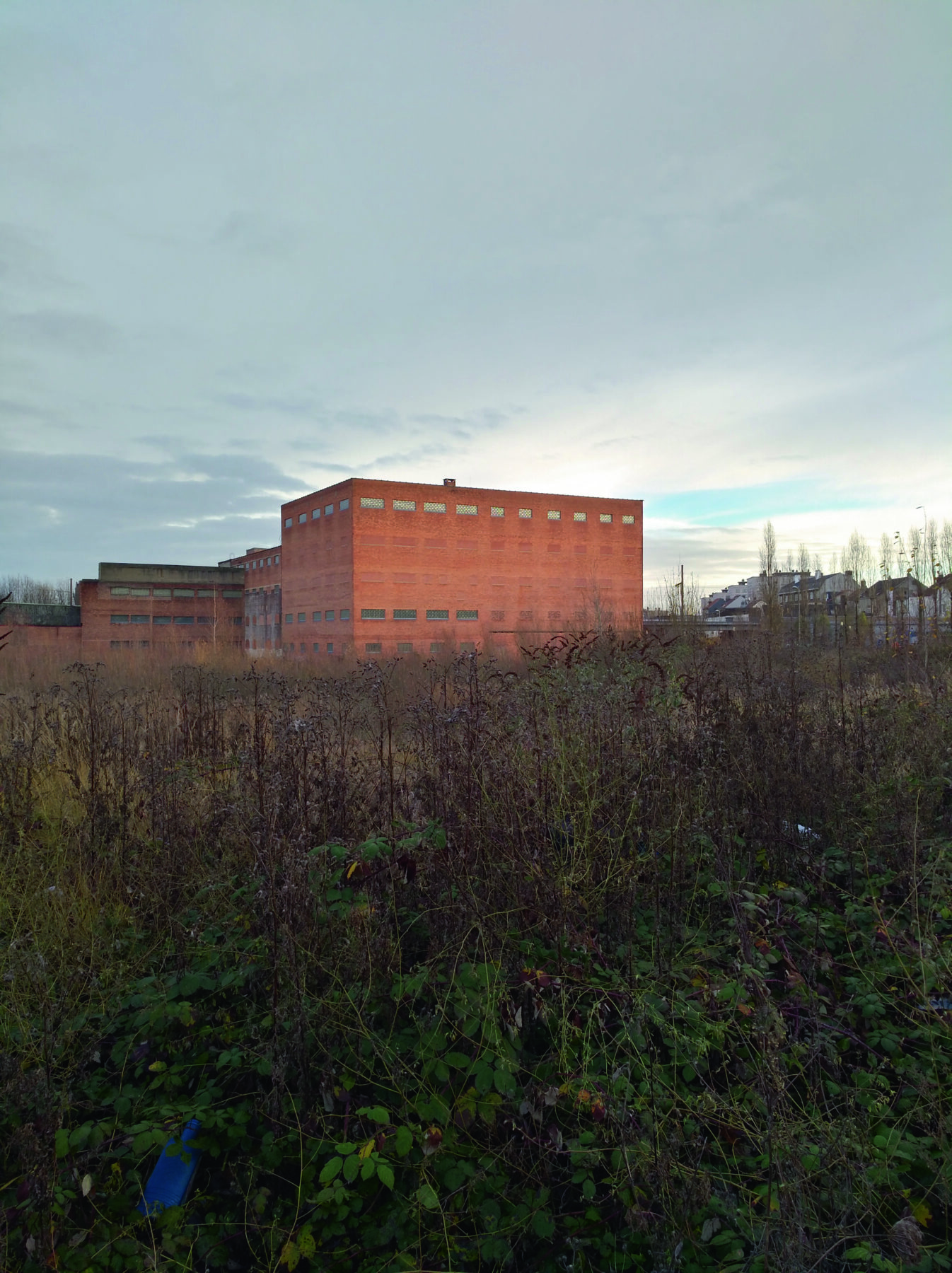
“Anyone walking along the quays in Brussels will come across the State Archives: a fascinating building. Without knowing its interior, internal organisation or designer, it is etched in our memory. It amazes us, seems iconic and yet ordinary. The anonymous building has probably undergone a series of construction and renovation phases. It is located on the Brussels-Charleroi canal, next to a vacant lot that creates distance. This makes the industrial building seem even more imposing and mysterious. It is constructed of orange brick: a single material. From a distance, it looks like a huge terracotta flower pot. The plain side façade – a blind façade – is filled with other bricks in different sizes, colours and combinations. Before we had even heard of the poetic concept of ‘palimpsest’, we had developed the idea of an unevenly tinted skin: a single body with many colour nuances that tell a story.”
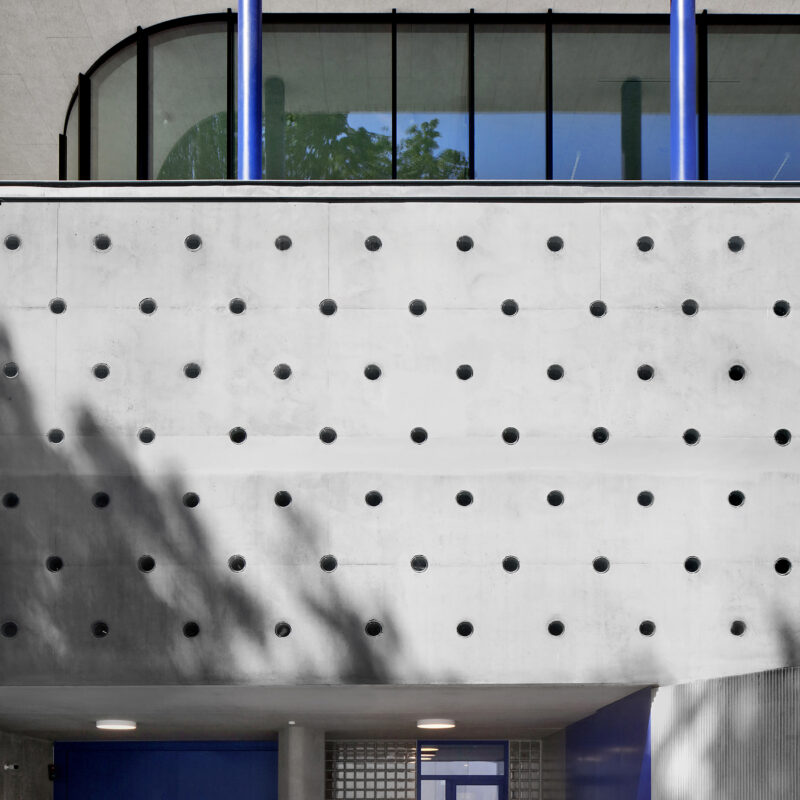
The buildings tell the story of the site not only through their volumes; the façades also evoke a sense of mystery and depth. There is an explicit link between the State Archives in Brussels and our project for the extension of the Ursuline school complex in Mechelen* (2011-2019). We deliberately emphasised this reference by using a single material with varied and specific jointing and by providing window openings with lintels and thresholds. In short, a building that is prepared for needs that will undoubtedly evolve through its use. We decided to disrupt the chronology of the building by referring to industrial archetypes. The new constructions make light work of the memory of local residents. It seems as if the added volumes are the original ones and may have been renovated several times, while the rest of the block was gradually built around them. In this way, Label distorts the truth and plays with the chronology of buildings.