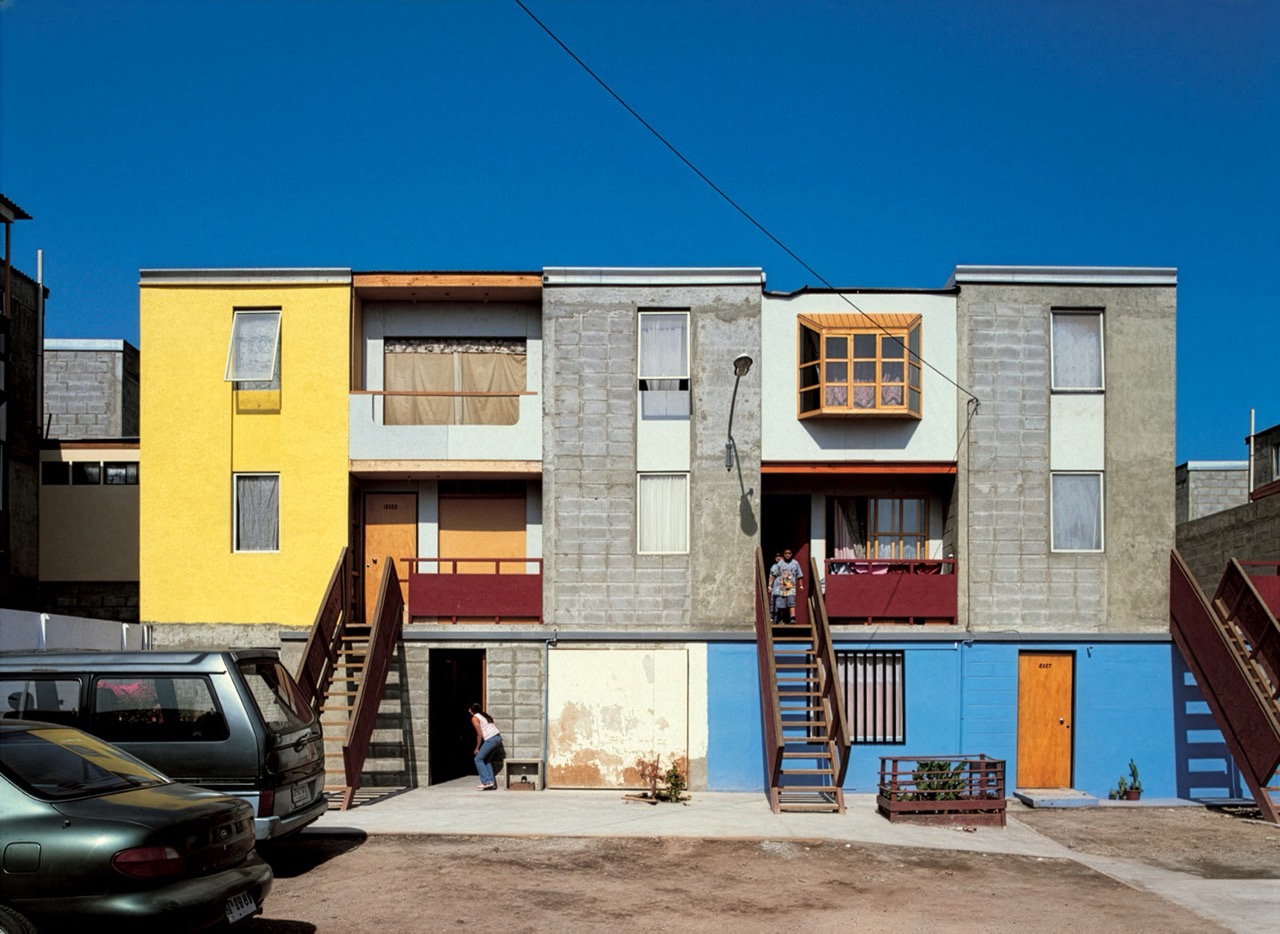
Our lives change faster than our homes. And yet architecture often continues to freeze idealized models, as if our needs were immutable. How can we inhabit a changing world, where individual singularities and social evolutions are disrupting the certainties of modernism? Bold projects – from Mulhouse to Santiago – have tried to invent flexible housing that can evolve with residents. But behind the promise of freedom lie some real constraints, technical, economic and political. What if true flexibility lay not only in the plans, but in the way we think about access to housing?
Although the open plan, presented by Le Corbusier in 1927 as one of the five main principles of modern architecture, already suggested the possibility of substantial modifications being made to a building over time, the subject of fluctuating needs and uses in architecture only gained in importance with the emergence of critical approaches to modernism. In a paper published in 2019, we traced the history of this matter from the 1960s onwards, focusing on the work of Team X and other architects of the time.1 This work, which covered both architectural proposals and broader reflections on desirable forms of society, confronted the modernist legacy with two of its major blind spots: impermanence and singularities. The impermanence referred to here is that of societies, which became increasingly apparent with the technological advances of the modern era. The singularities are those that these societies are irrevocably made up of and which led to the rejection of architectural proposals based on idealized models of individuals and social groups. A symbolic moment: in 1974, the Smithsons acknowledged, in a text written by Alison Smithson2, the failure of their Robin Hood Gardens group housing project, completed two years earlier, among others due to a housing concept considered too universal and standardized and neglectful of singularities. This self-critical text concluded, in a way, their critique of architectural modernism, begun two decades earlier. 1 Xavier Van Rooyen and Michaël Bianchi, ‘Housing the Multitude: Struggling with Impermanence and Singularities’, The Plan Journal 4, no. 1 (2019). On this subject, see also the PhD thesis by Xavier Van Rooyen, Architecture indéterminée: Architectures et théories de l’indétermination depuis les années 1960 (PhD diss., University of Liège, 2021). 2 Alison Smithson, ‘The Violent Consumer, or Waiting for the Goodies’, Architectural Design 5 (1974): 274–79.