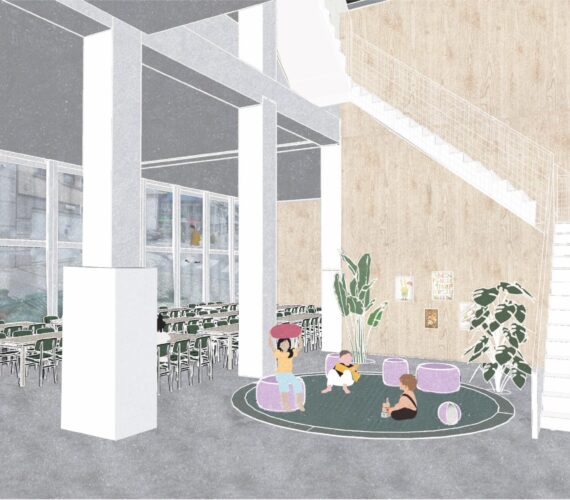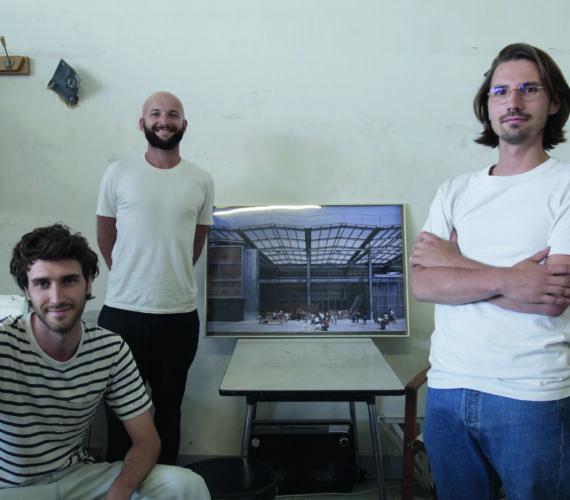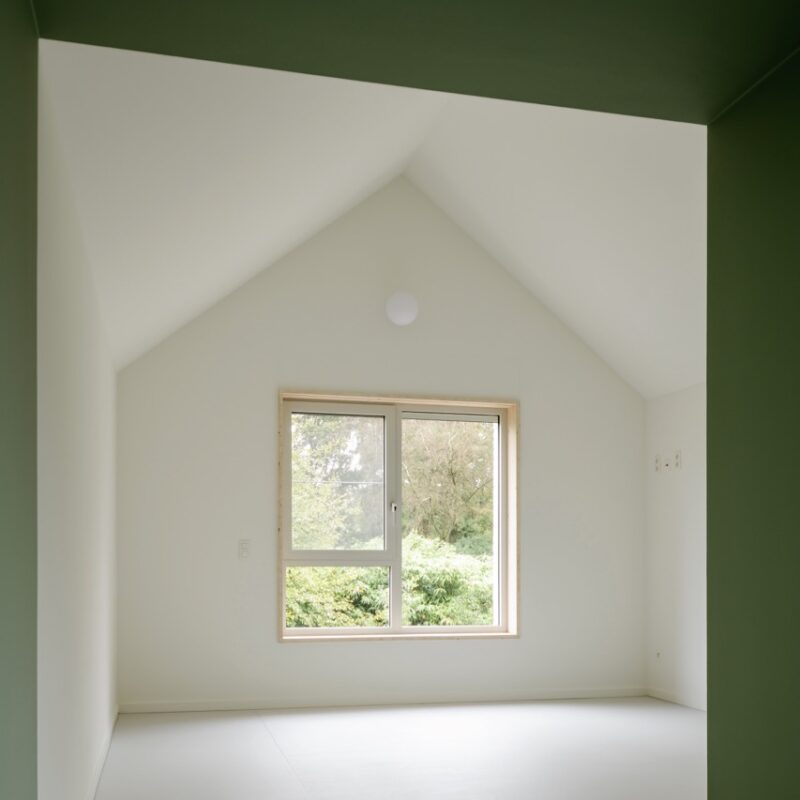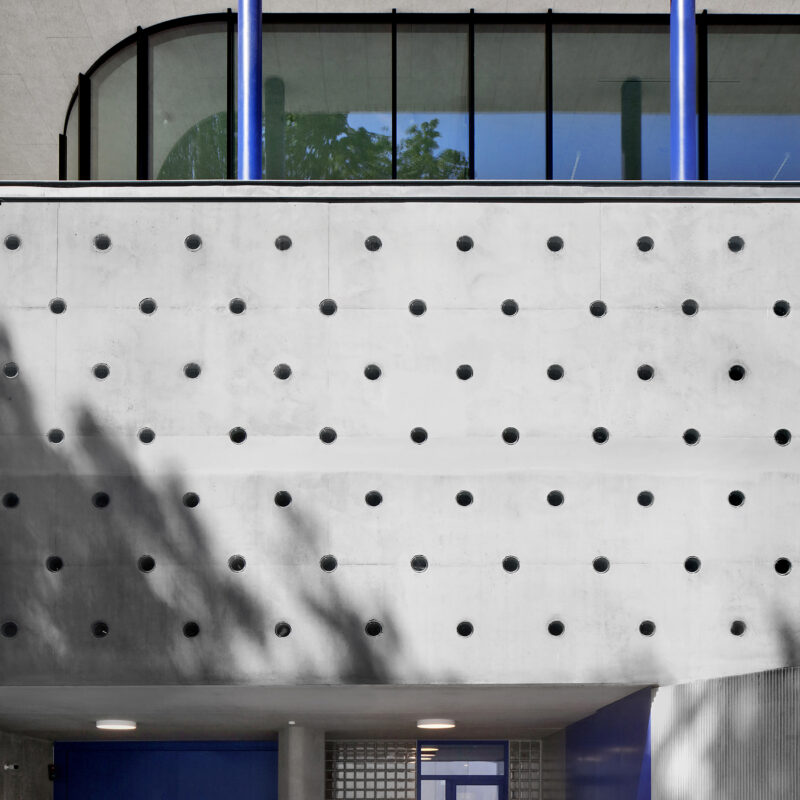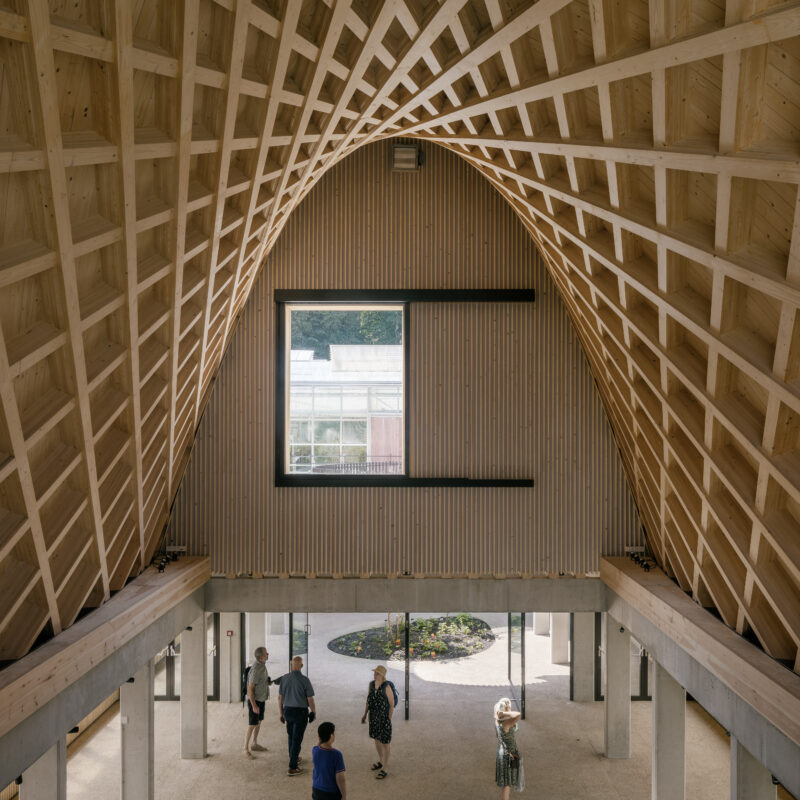
In renovating Technicum 4 for the departments of Architecture and Urban Planning, and Art, Music and Theatre Studies, Ghent University has opted not only for radical preservation and reuse, but also for provocative generosity. The team led by Havana, Karuur and Wim Cuyvers has opened up the machine hall to the city in a theatrical manner, following in Magnel’s footsteps.
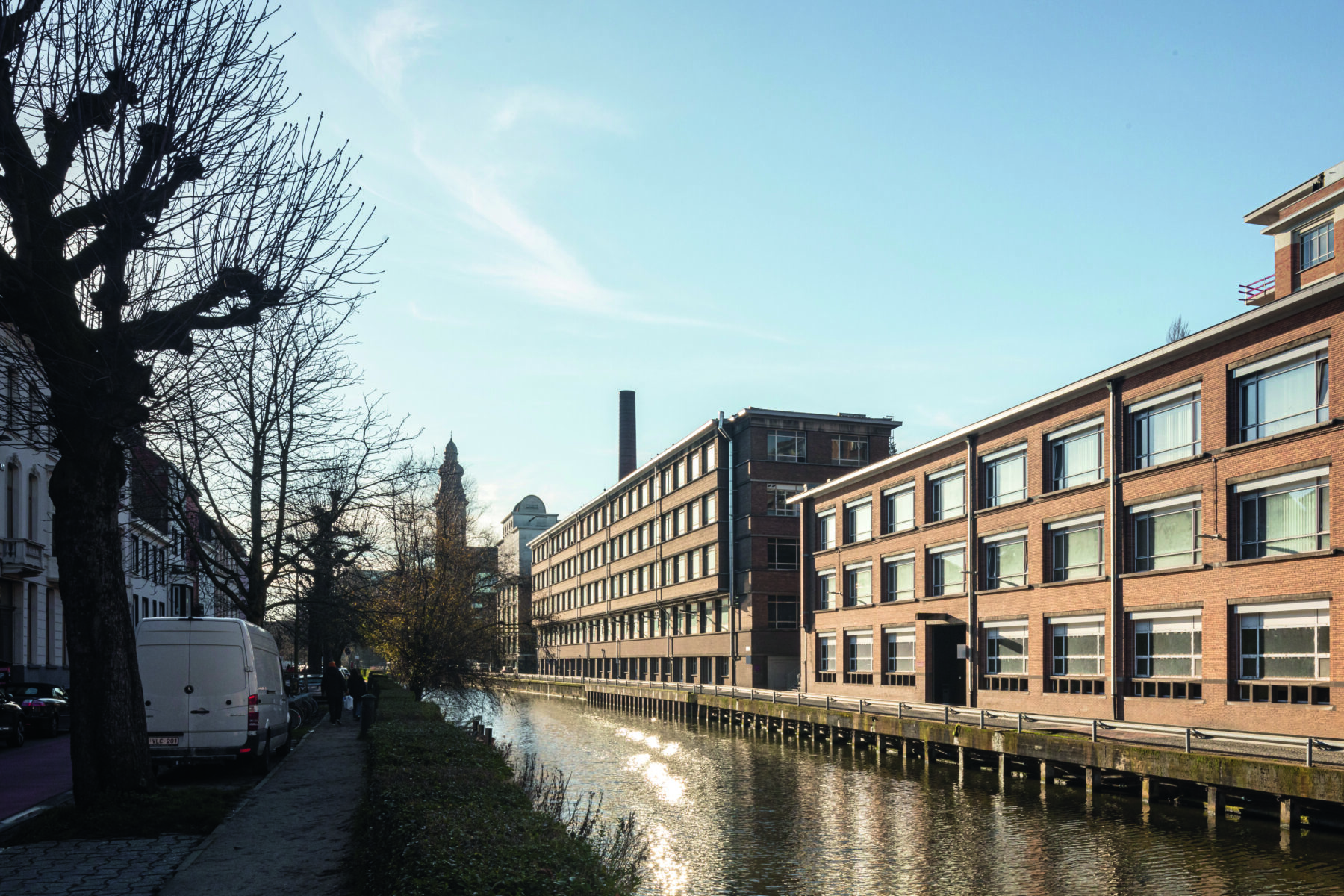
The confluence of the Leie and Scheldt rivers in Ghent, once a marsh, occupies almost the entire city centre. The Muinkschelde is one of the waterways needed for this. On one bank, discreetly behind a row of chestnut trees, the stately facades of residential houses rise up. The other bank is the steep flank of the Blandijnberg, with the De Vooruit arts centre at the lowest end and St Peter’s Abbey at the highest end. Both buildings turn their graceful backs towards the Scheldt. Near the abbey there are still gardens and vineyards, but most of the flank is taken up by a densely built-up university campus. Factories used to stand there, and it still looks like it. The buildings in the middle are called ‘Technicum’: business blocks in long, orange, horizontally jointed brick with offices, laboratories and classrooms, arranged according to ascending height lines. They are named after the former professors Cloquet, son of, and Magnel, pioneer of prestressed concrete and pride of the university. The renovation of the campus has been ongoing for many years. The final piece will be Technicum 4, the longest of the five, which hides a hall of equal length with a sawtooth roof behind its Scheldt wing, one floor higher. After that, the adjacent Technicum 3 will be demolished to give the campus some breathing space. The renovation contract for Technicum 4, for the departments of Architecture and Urban Planning, and Art, Music and Theatre Studies, was awarded last year through an open call by the Flemish Government Architect.