When an architect considers taking flight, that is one thing. Actually doing so is quite another. We cannot say for certain that Voorspoels and Daem actually did it; it was rather their client who took the plunge. Though it was not a flight to be far apart from one another, no. They dreamed of staying in a simple wooden cabin. Ultimately, it turned out to be slightly less modest in size, but all the more a place for the family to come together. What could be more beautiful than seeing a flock of birds flying together, on their way to promising destinations? The sea became the landscape in which they built their nest. Sint-Idesbald, to be precise.
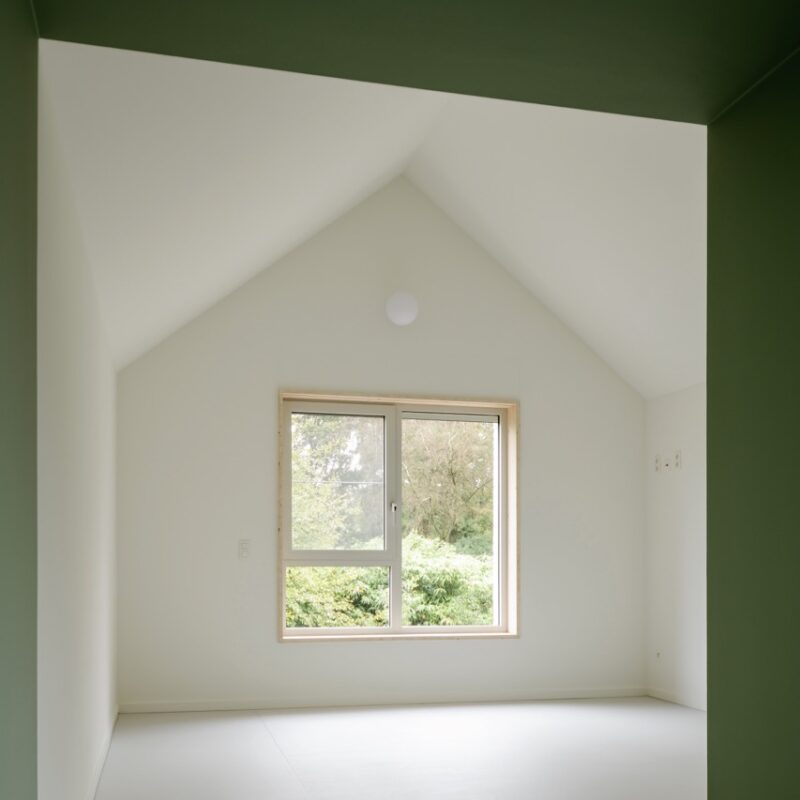
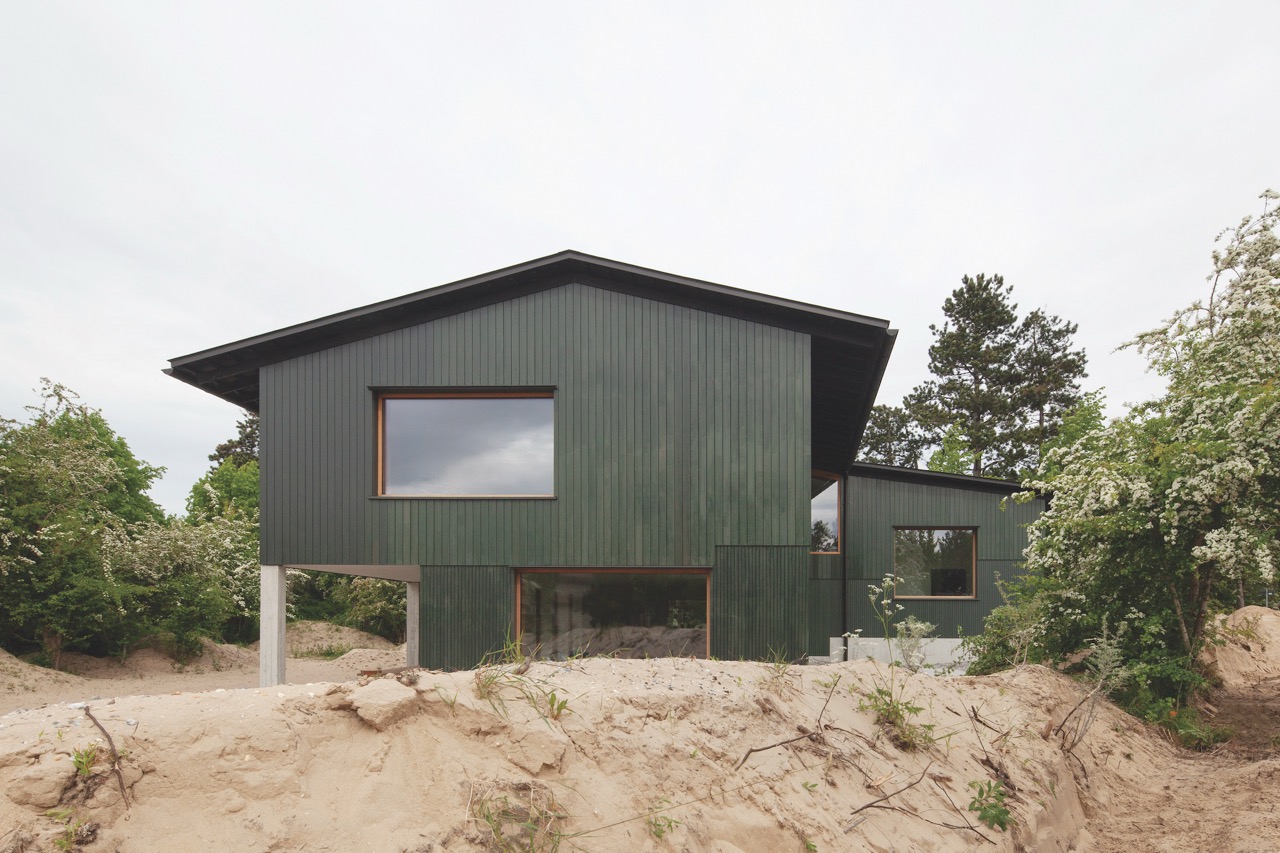
Somewhere in a small neighbourhood amongst the dunes, it is not a white house that appears, but a green hut. The building’s layout was inspired by that of its nearest neighbour; nestled and sheltered amongst the dunes, it moves in harmony with the existing sandy terrain. Situated on a corner where several streets converge, passers-by feel the urge to slow down for a moment and walk around the house. Not to peek inside, but rather out of wonder, as the house reveals itself step by step. From the inside, it creates a sense of closeness, giving residents the feeling that the neighbourhood extends right up to their kitchen table. Not as a voyeur, but as a companion. A unique experience made possible in part by the difference in level with the higher street frontage. Starting with the covered entrance area on the ground floor, the concrete plinth descends in a stepped pattern. This creates a sense of layering, enhanced by the precise composition of the slatted cladding that winds in two layers around the exterior walls.