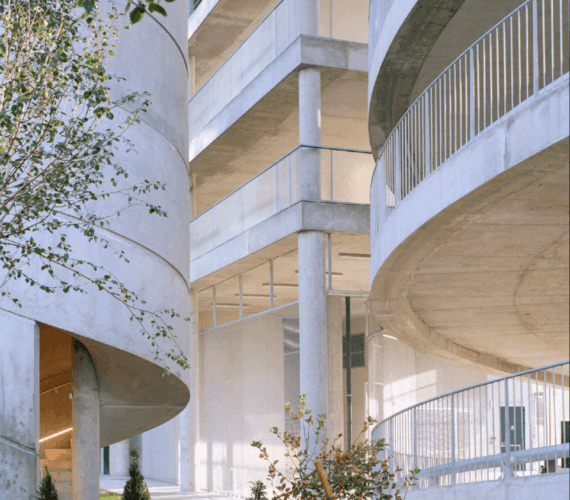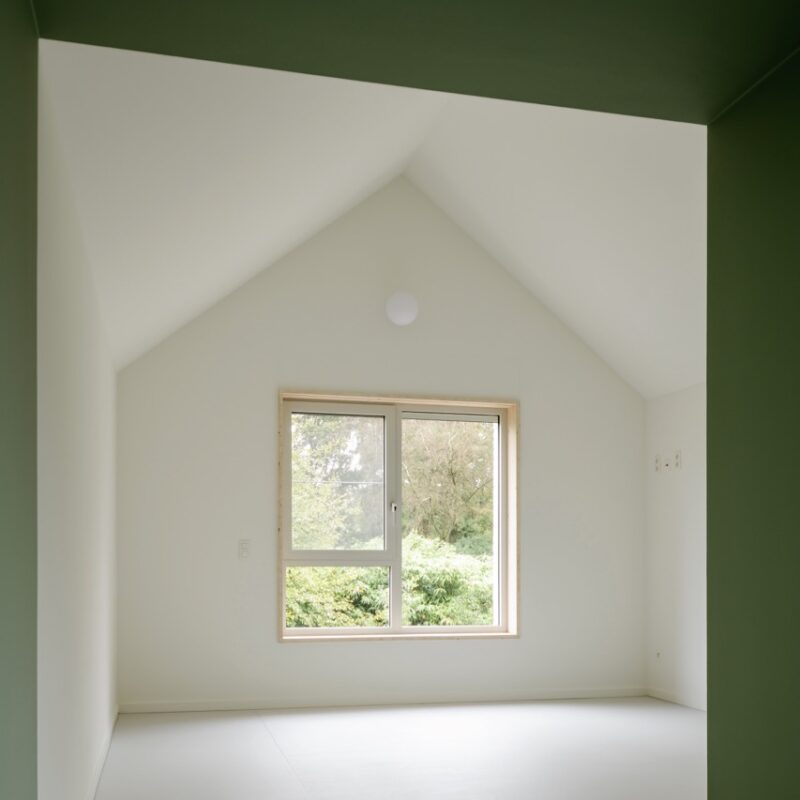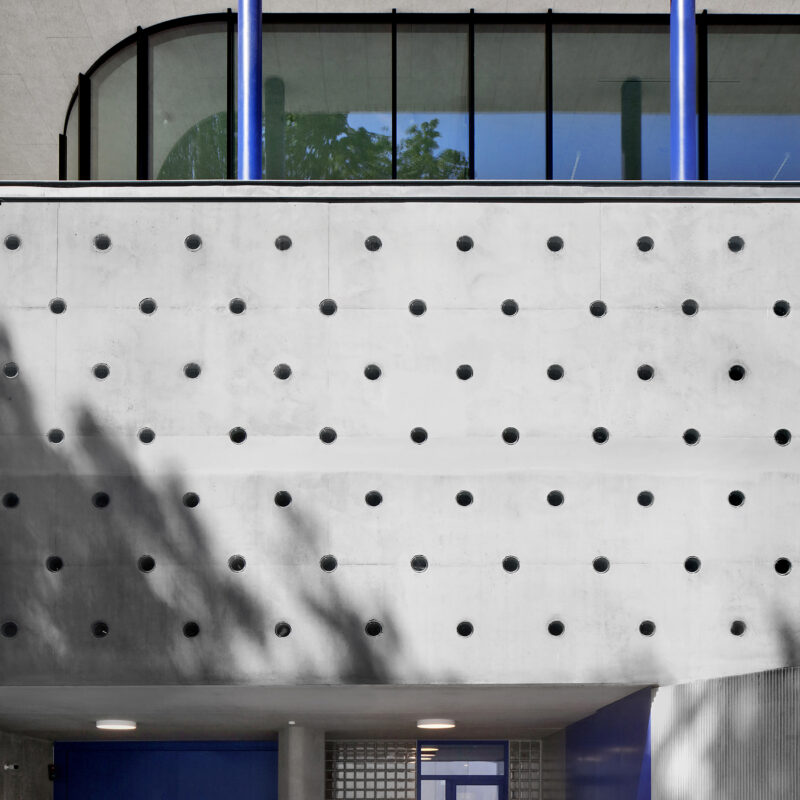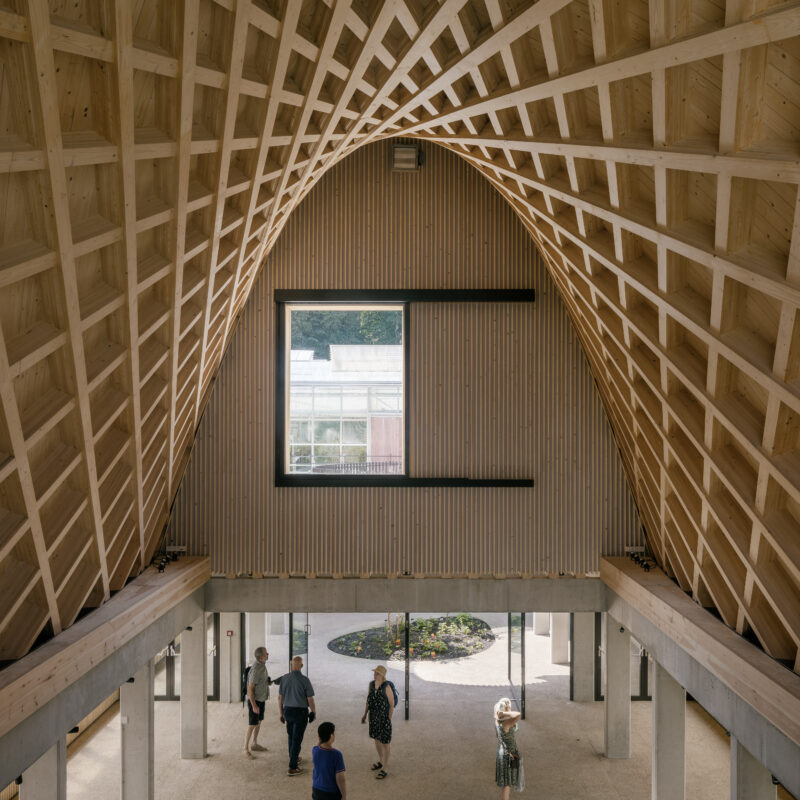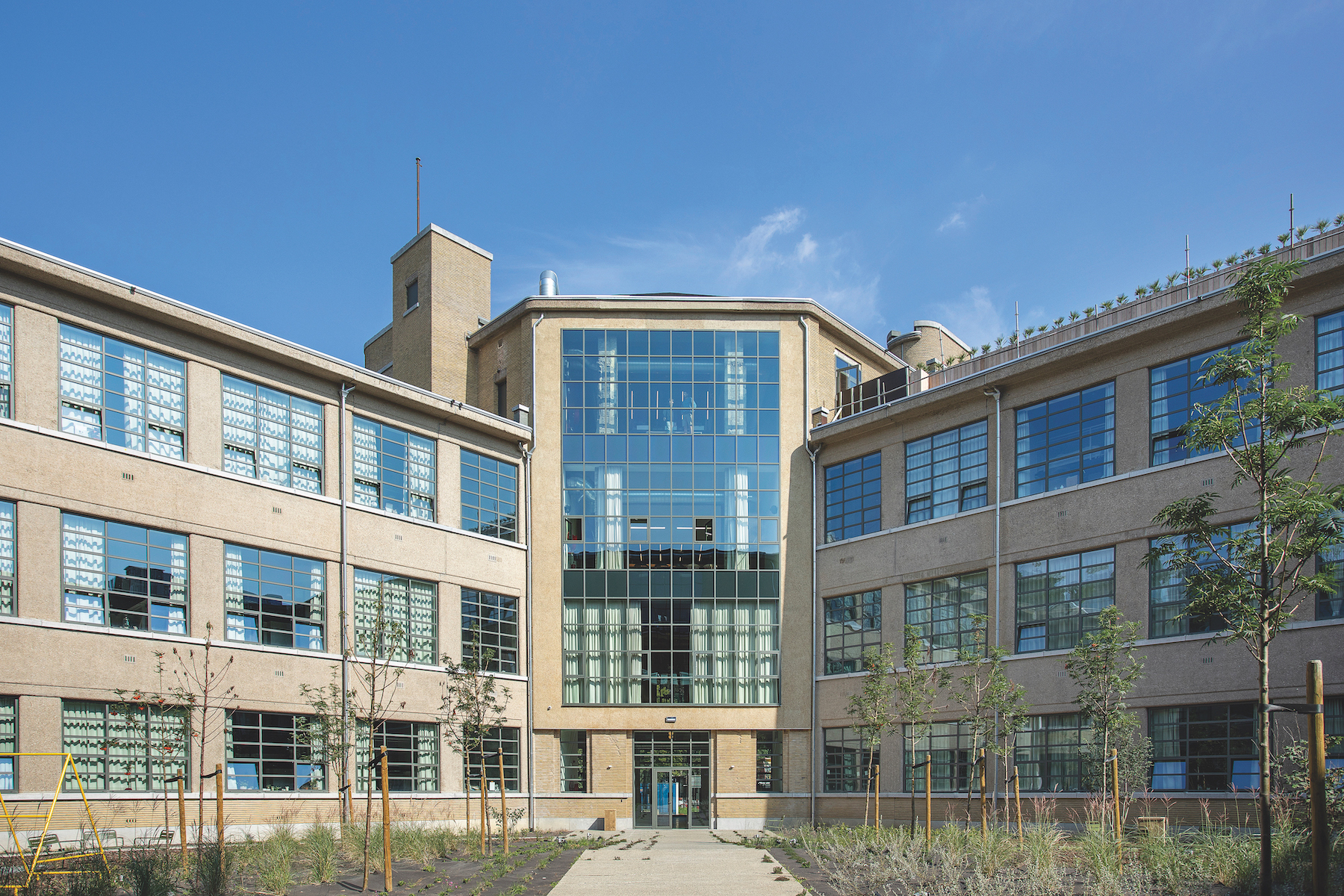
For the past twenty years, sociologists such as Monique Eleb have been shedding light on the profound contemporary changes in the concept of home and the inevitable domestic transformations that result from them. In Liège, firmly embracing this shift, the Arc project is experimenting with new forms of cohabitation on a large scale. The architects at Artau have skilfully incorporated a co-living programme into one of the ‘ocean liners’ of Val-Benoît on behalf of the developer Life. It is a project that inspires enthusiasm for its architectural accuracy, but leaves us with a bitter question: should we leave housing 2.0 in the hands of developers?
This is a site that has attracted wild ambitions for decades. When it was inaugurated in 1938, Val-Benoît heralded a promising future for Walloon industry.
The University of Liège (ULiège) would train its best engineers in mechanics, metallurgy and mining there, and their reputation would extend beyond our borders. On the former abbey grounds it acquired, ULiège envisaged architecture that would match its boldness: Puters, Moutschen, Duesberg and Burton were invited to design buildings that were as efficient as they were elegant. They invoked the spirit of the Bauhaus, Le Corbusier and Dutch modernism in large structures which, both in terms of their size and their extensions, evoked austere ocean liners moored along the Meuse. The campus’s glory was short-lived: the Second World War caused damage that reconstruction would never be able to repair. The Sart-Tilman campus, which was built in 1967, led to the gradual emptying of Val-Benoit. A new chapter then began: Val-Benoit became a star of Urbex, a transgressive urban exploration practice that involves exploring and photographing abandoned buildings. Various websites, each more fascinating than the last, provide remarkable documentation of the past splendour of these modern buildings, as well as the last traces of their former uses: test tubes, measuring devices and furniture designed especially for scientists.