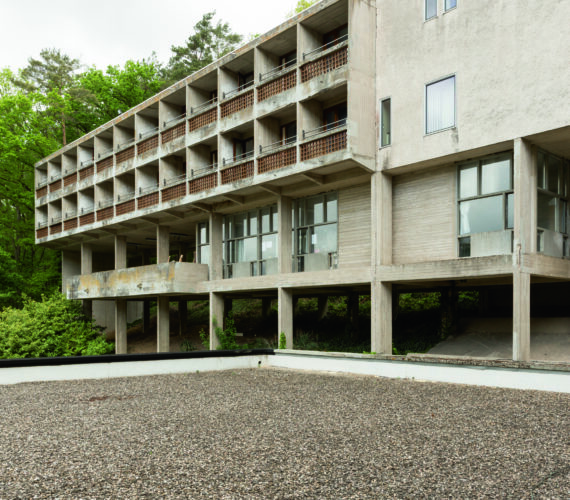
It all began on 24 June 1983 at the Furka Pass in the Swiss Alps, at an altitude of 2,429 metres, not far from the Rhone Glacier, with a performance by James Lee Byars. From the following summer until 1996, Marc Hostettler, a Swiss publisher and gallery owner, invited 63 artists to the old Hotel Furkablick (1893). During the short period in the summer when the mountain pass was open, the hotel was transformed into an artistic laboratory, a place where both permanent and ephemeral works of art were created. 1 In addition to Panamarenko, who moved into the annex and created his first ‘flying backpacks’ there, works by Daniel Buren, Marina Abramović and Ulay, Richard Long, Per Kirkeby and Lawrence Weiner, among others, were also on display. In the late 1980s, Rem Koolhaas added a restaurant and kitchen (connected to a special service robot), an entrance hall and a viewing terrace to the hotel. 1
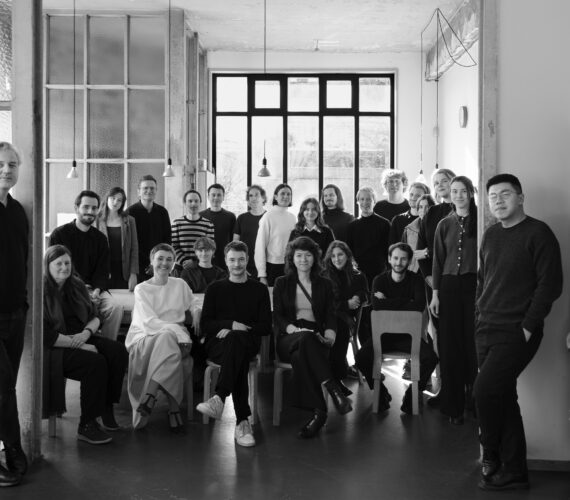
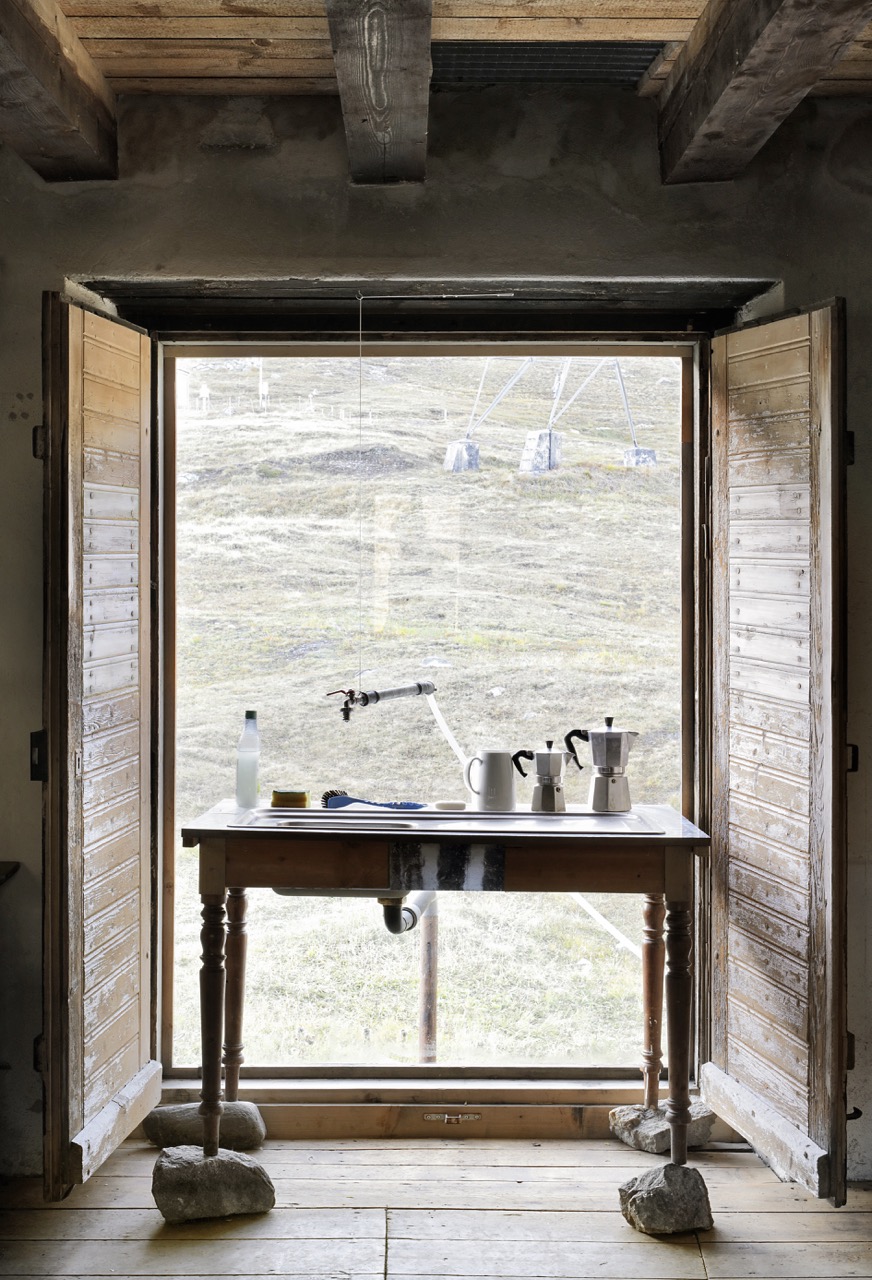
A decline in interest in domestic tourism and the harsh winter in this high-altitude area led to the closure of Hotel Furkablick. The new owner, the Alfred Richterich Stiftung, now preserves and protects this piece of Swiss heritage. Since 2022, the former annex of the hotel has been available to Jan De Vylder’s Architecture an(d) Attitude chair at the Swiss Federal Institute of Technology (ETH) Zurich. Jan De Vylder and Inge Vinck have set up a residency programme there. Architecture students can stay there for ten days to observe and research, and to get to know the space and the materials. Aspent two summer days in this special residence and spoke with the initiators.