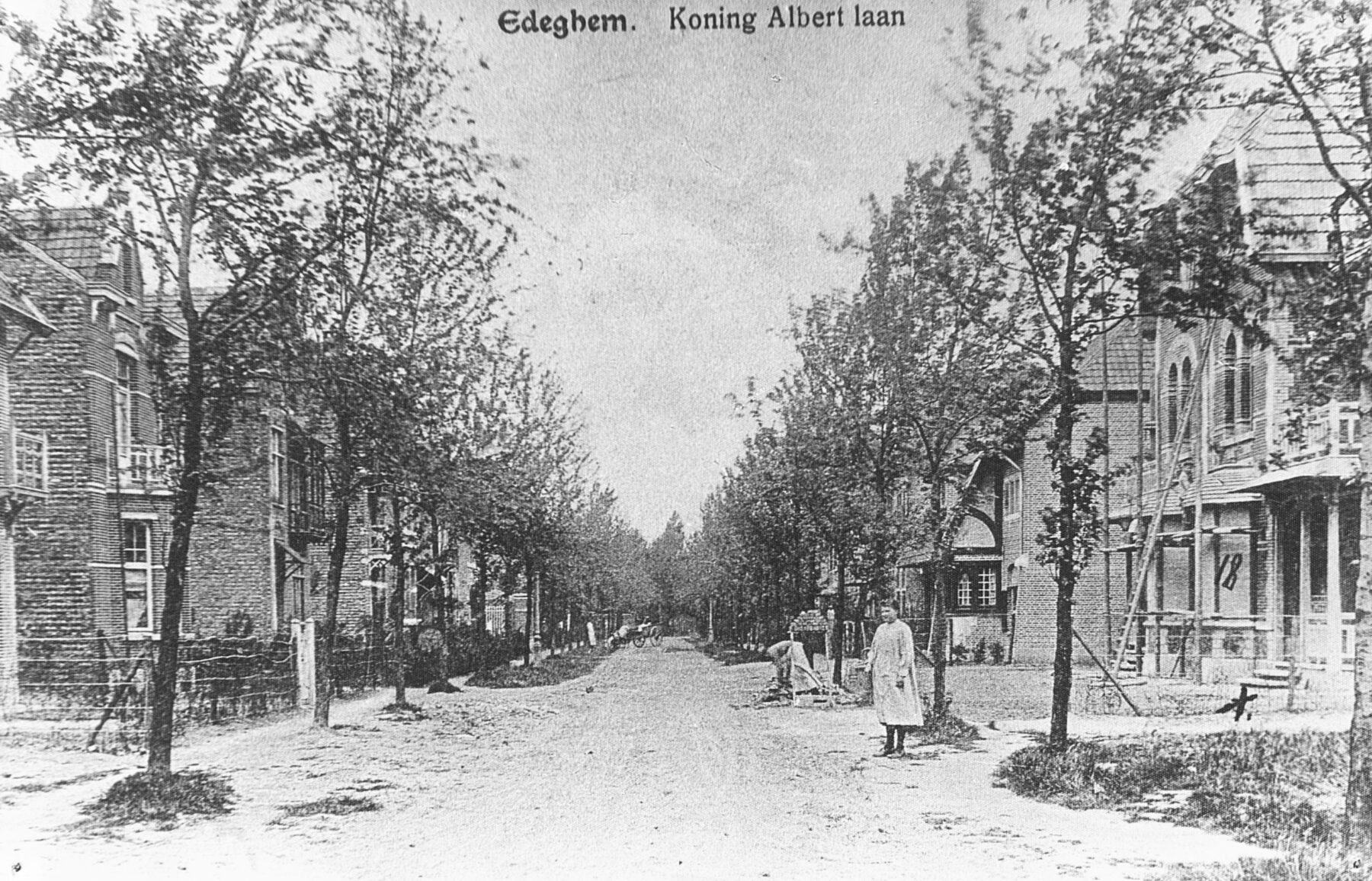
In early 20th-century Antwerp, a new generation of architects was actively seeking ways to ensure architectural quality in a predominantly private construction sector. They began to explore diverse and often hybrid roles, ranging from architect-contractor to architect-developer, blurring the boundaries between design, commerce, regulation and social engagement. A look back at the architectural practice of this progressive youth sheds new light on current discussions aimed at establishing a culture of construction and promoting spatial quality in both the public and private spheres.
In recent decades, the introduction of institutions such as the role of master architect, accompanied by various forms of competitions and instruments – whether at federal or municipal level – has been ‘locally and internationally perceived as the ultimate expression of a flourishing Baukultur’1. Nevertheless, criticism has recently grown, arguing that the revival of Belgian architecture was mainly due to strong public commissions – while most of what is being built (in the private sector) was not taken into account. One may well ask whether, in these circumstances, one can really speak of a “flourishing Baukultur “. Moreover, quality mechanisms that work well in the public sector cannot simply be transposed to private construction. Because even if it can be argued that public competitions are ‘more than just a competition”, they remain fundamentally based on the idea that they improve quality by putting architects in competition with each other. In general, the design team that wins the contract is the one that manages to “sublimate the client’s dream as much as possible”2 through the most convincing conceptual study. Ultimately, the culture of public competitions confirms the position of architects as a kind of liberal artist working autonomously in their studios in the hope that their design work will indeed find its place in the outside world. Quality is guaranteed by generating choice, and often the societal value of the work as a whole far exceeds its economic weight. 3 1 Maarten Van den Driessche, “Het omcirkelen van een lege plaats: ‘bouwheer” worden, kwaliteit verwachten’, in: Maarten Liefooghe and Maarten Van den Driessche (eds.), Meer dan een wedstrijd: De Open Oproep in een veranderende bouwcultuur (Brussels: VAi and Team Vlaams Bouwmeester, 2021), 55 2 According to a quote from the last interview with bOb Van Reeth, “Afscheid van Vlaams Bouwmeester bOb Van Reeth”, in Een Bouwmeester bouwt niet: 1999-2005, ed. Jan De Zutter (Brussels: Vlaams Bouwmeester, Ministerie van de Vlaamse Gemeenschap, 2005), 31 3 Peggy Deamer and Kane Rendell, eds., Architecture and Labour (Abingdon: Routledge, 2020)