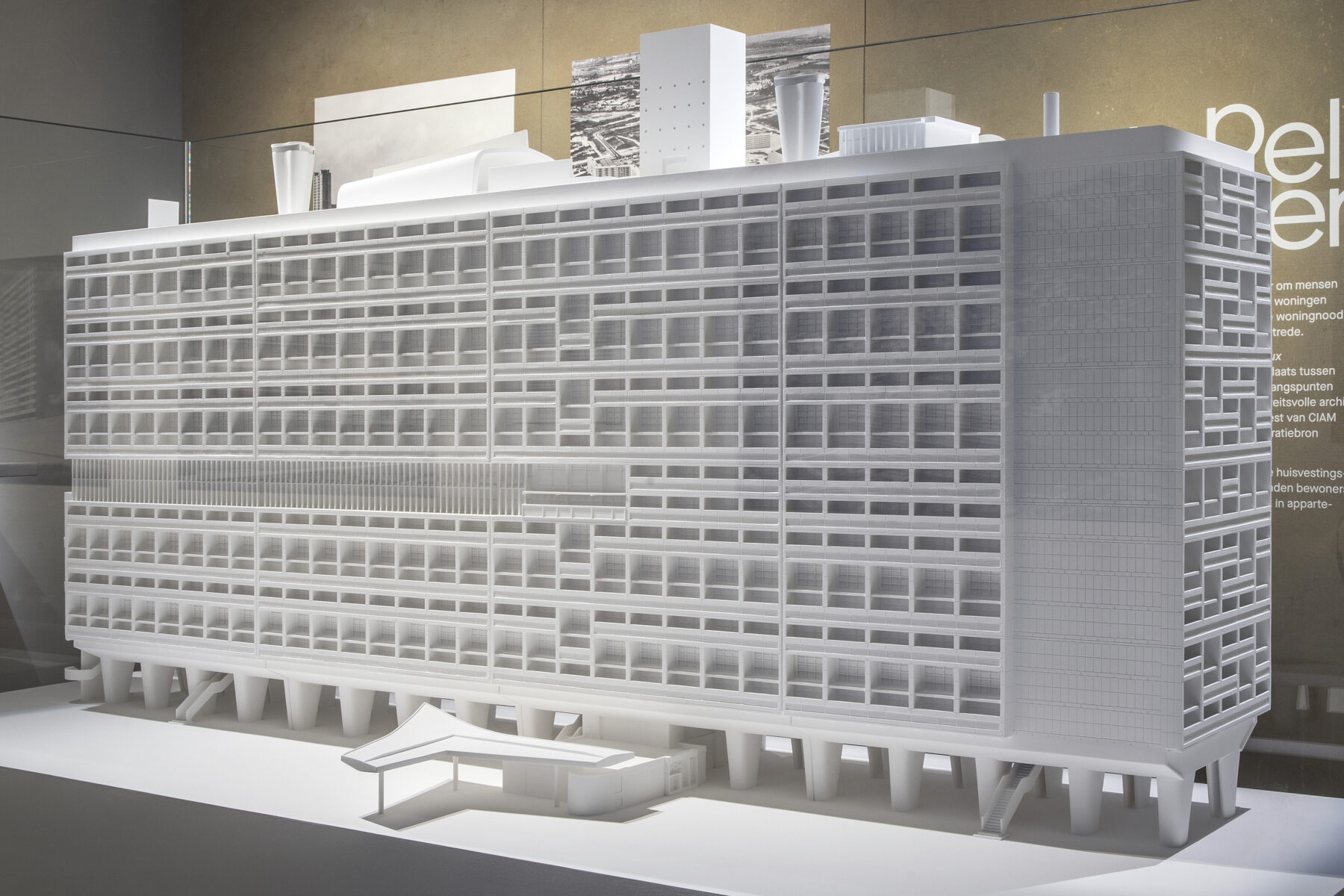
A city skyline is more than just the sum of its buildings. It is not even really a ‘line’, but rather a plane or a shape: a unique, often iconic silhouette that largely determines our image of a city. The exhibition Skyline. High-rise buildings in the Low Countries at the City Museum in Ghent explores the evolution and significance of such an urban horizon in the Low Countries, using Ghent and Rotterdam as case studies.
The exhibition in the Bijloke Abbey first shows the rich history of (European) high-rise buildings. It begins with the Egyptian pyramids, which were the tallest structures for thousands of years and were only surpassed in the Middle Ages by Gothic cathedrals. Thanks to the invention of printing in the 15th century, Renaissance artists began to depict their cities. Their city portraits are rarely an objective representation of the city as it was at the time, but rather an expression of a subjective narrative about the city.