When I was a student, there were still textbooks circulating that illustrated brickwork patterns. However, there was no mention of this at university, because around 1980, brickwork had become a possible but not very socially acceptable (half-brick) façade cladding. Since then, brick has regained popularity, but still as cladding, not as a ‘building block’. Neither architects nor bricklayers have a thorough understanding of the expressive and constructive qualities of brickwork.
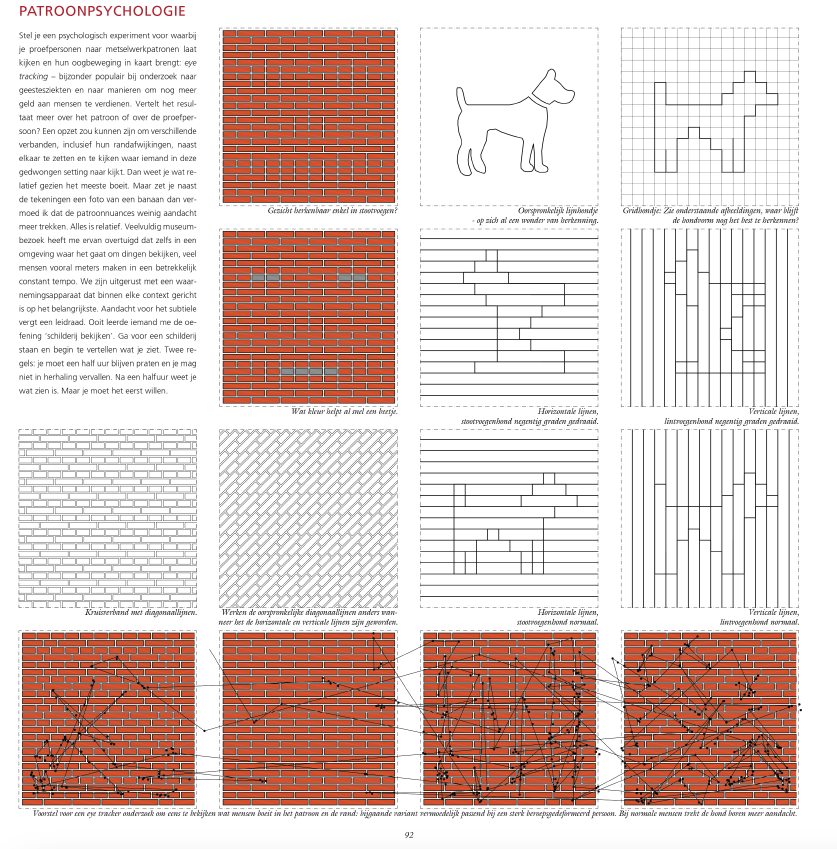
Koen Mulder’s The Zinderend Oppervlak (The Shimmering Surface) is a heroic attempt to fill this knowledge gap. If this book demonstrates one thing, it is that a brickwork bond is more than just a way of stacking bricks. It is a way of thinking, and even an aesthetic. After all, every bond defines a complex relationship between construction and image. It is primarily determined by a specific stacking pattern. This results in image-defining ‘chain lines’, the imaginary lines that run along layer upon layer of heads placed on top of each other. Each stacking also requires different solutions for corners and window openings. And then there is the interplay of the joints: recessed, slanted, flat, light or dark, cut, thick or thin… Even a simple brick with a 4:2:1 ratio allows for countless bonds.