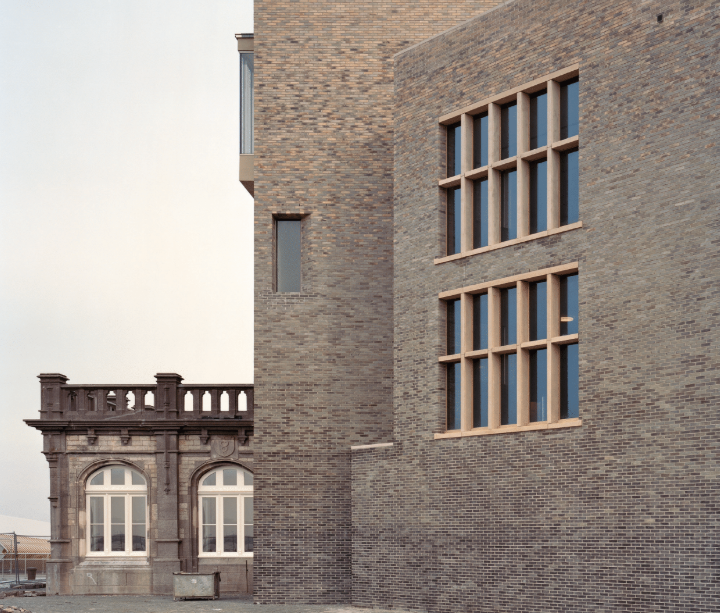
Some buildings are so much a part of the landscape that no one can imagine a time when they did not exist. Few people know, for example, that the Steen in Antwerp was once an isolated building among the port warehouses. It was only when noAarchitecten transformed the fort into a visitor centre and cruise terminal that the people of Antwerp realised that this building was an essential part of the identity of ‘their’ city. These changes sparked a storm of protest, even though noA was merely adding another chapter to a long history of transformations. The protests have long since died down. The building is even becoming one of the favourite meeting places for walkers.
The transformation of the Steen was the subject of an Open Oproep procedure in 2016. At the time, the project designers racked their brains to find a way to integrate the new programme into a monument marked by a succession of historical episodes. Indeed, the Steen was not built in one go. Its oldest part – the fortifications next to the city wall – dates back to the 8th century. It still forms the basis of the Steen’s south and west façades. The walls were subsequently raised using lighter-coloured natural stone. In the 16th century, the ‘De Mol’ house was incorporated into the fortress. At the time, the city was already growing so rapidly that the city walls were demolished and the fortified castle was converted into a prison, and later into a sawmill and barracks.