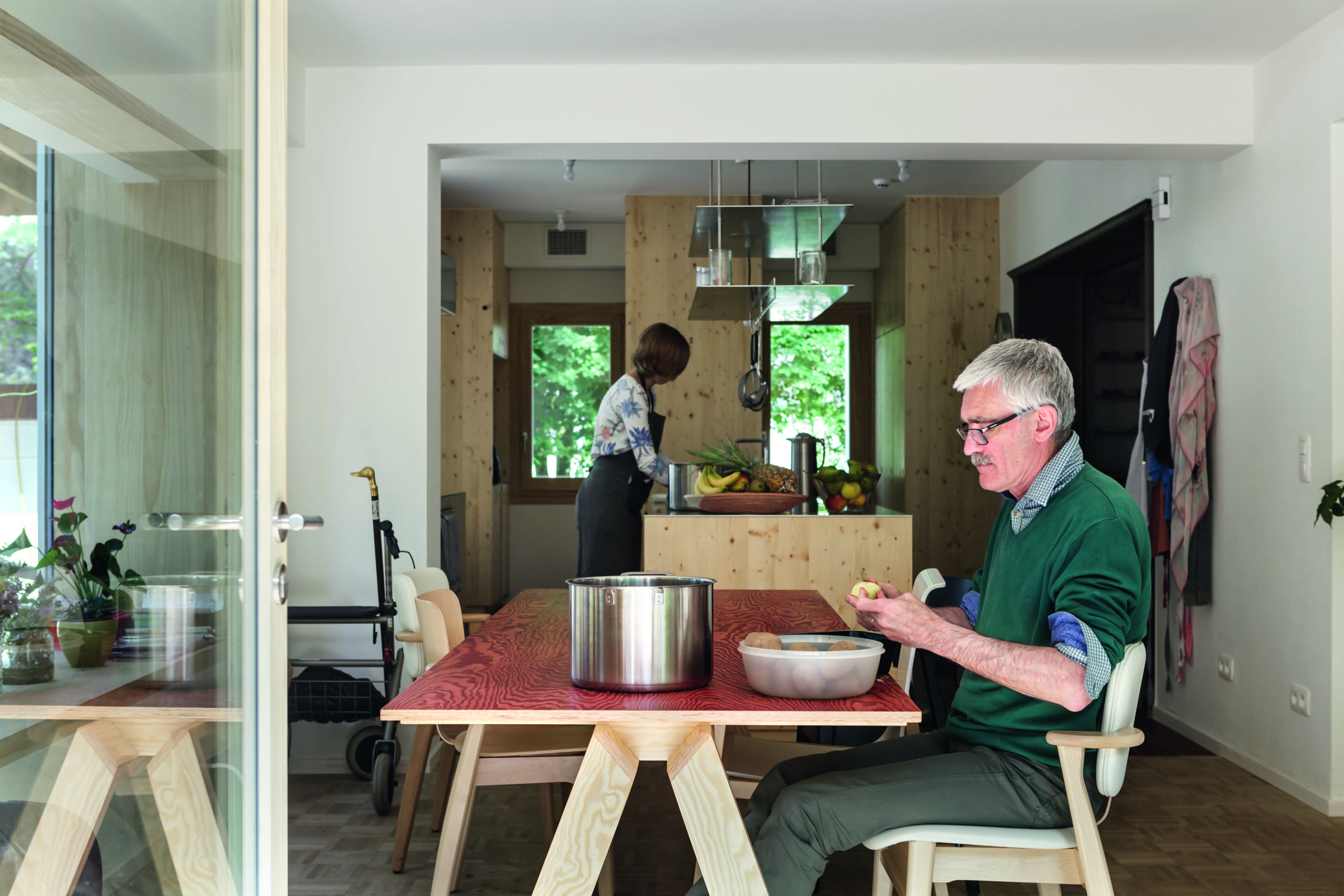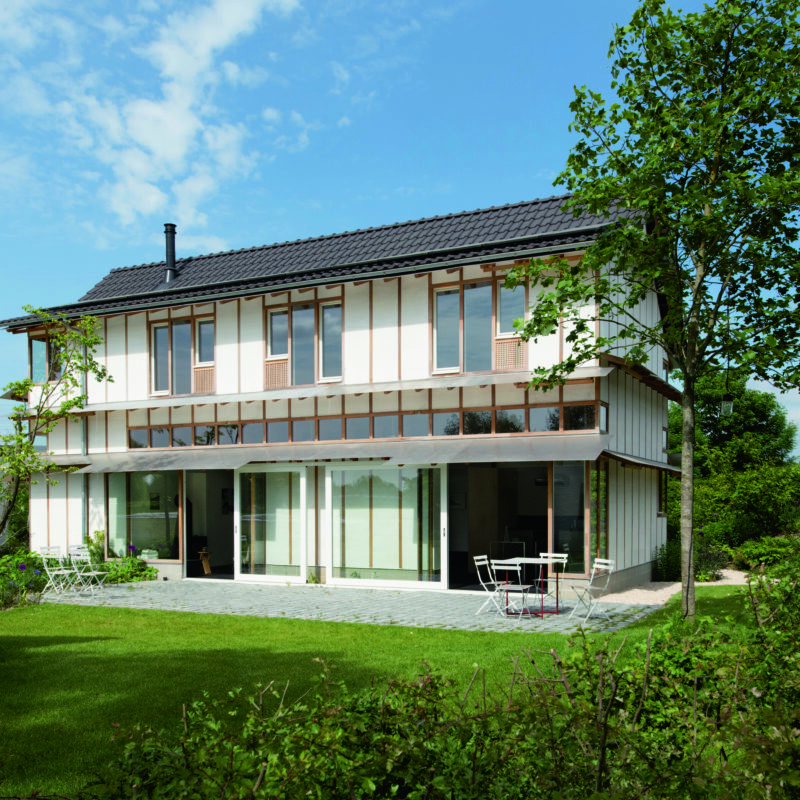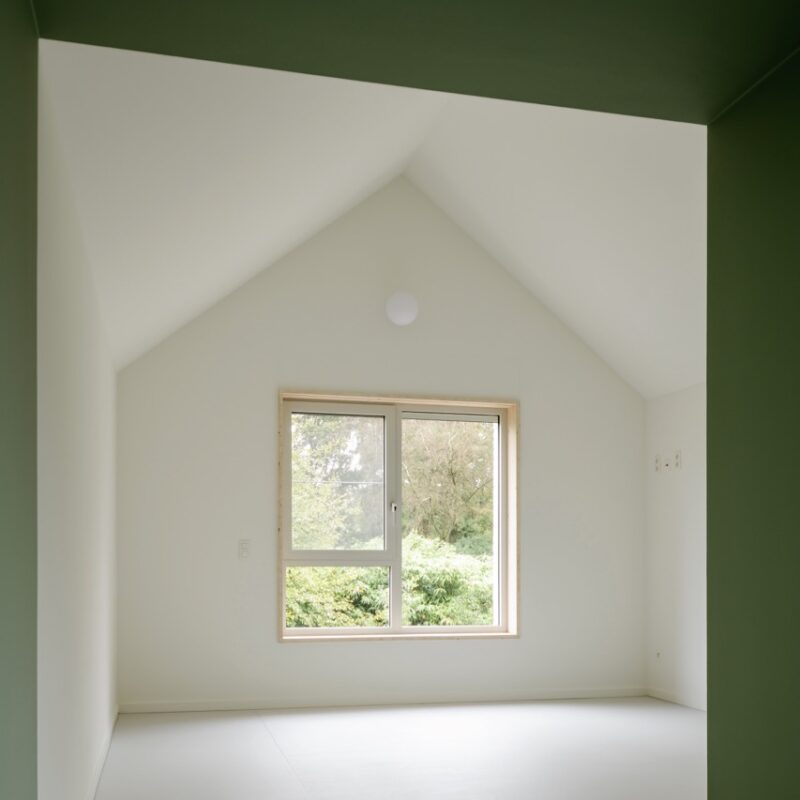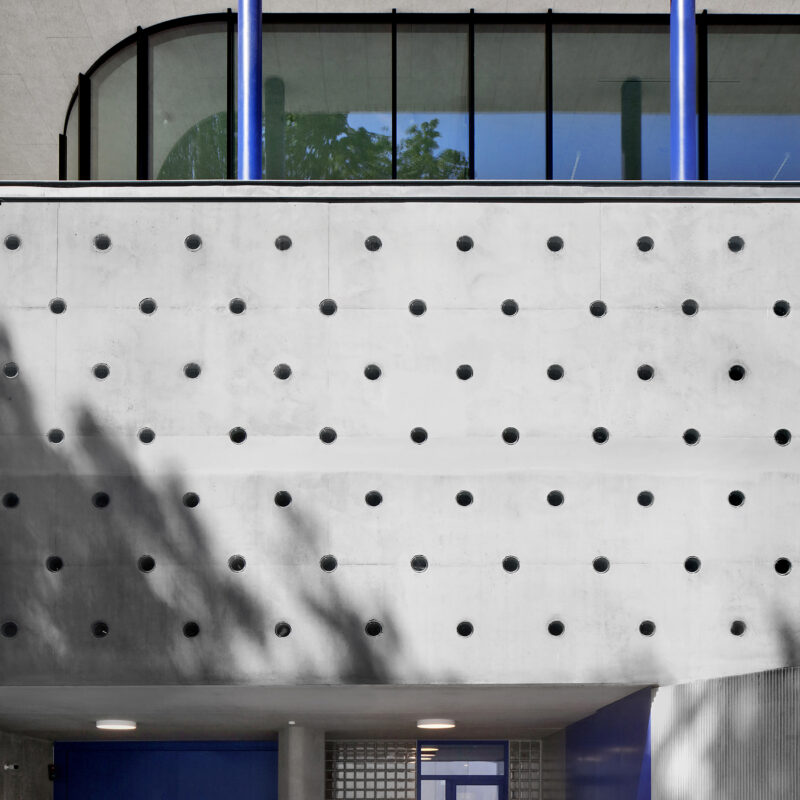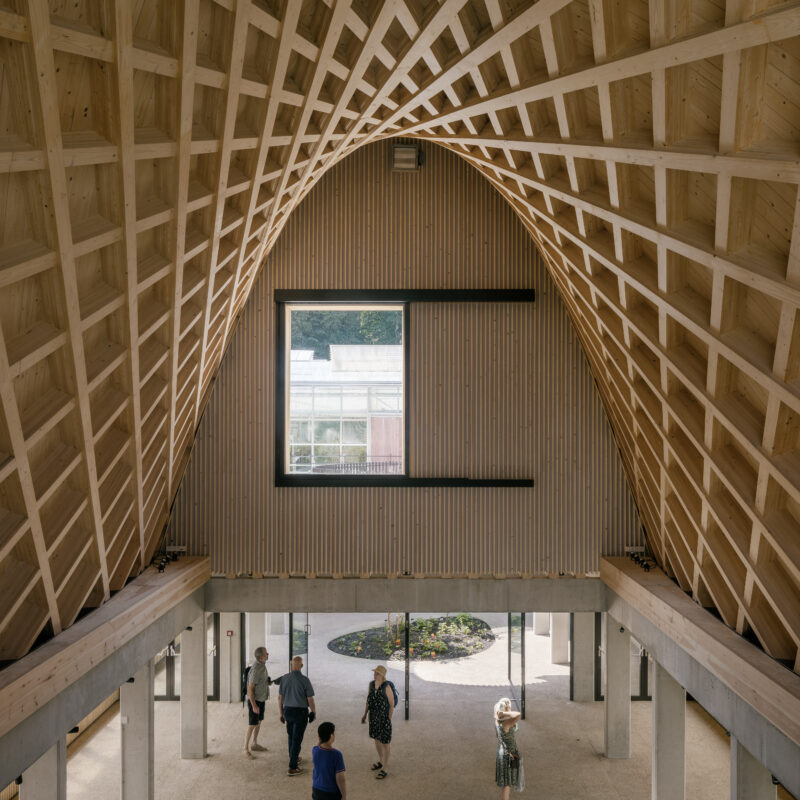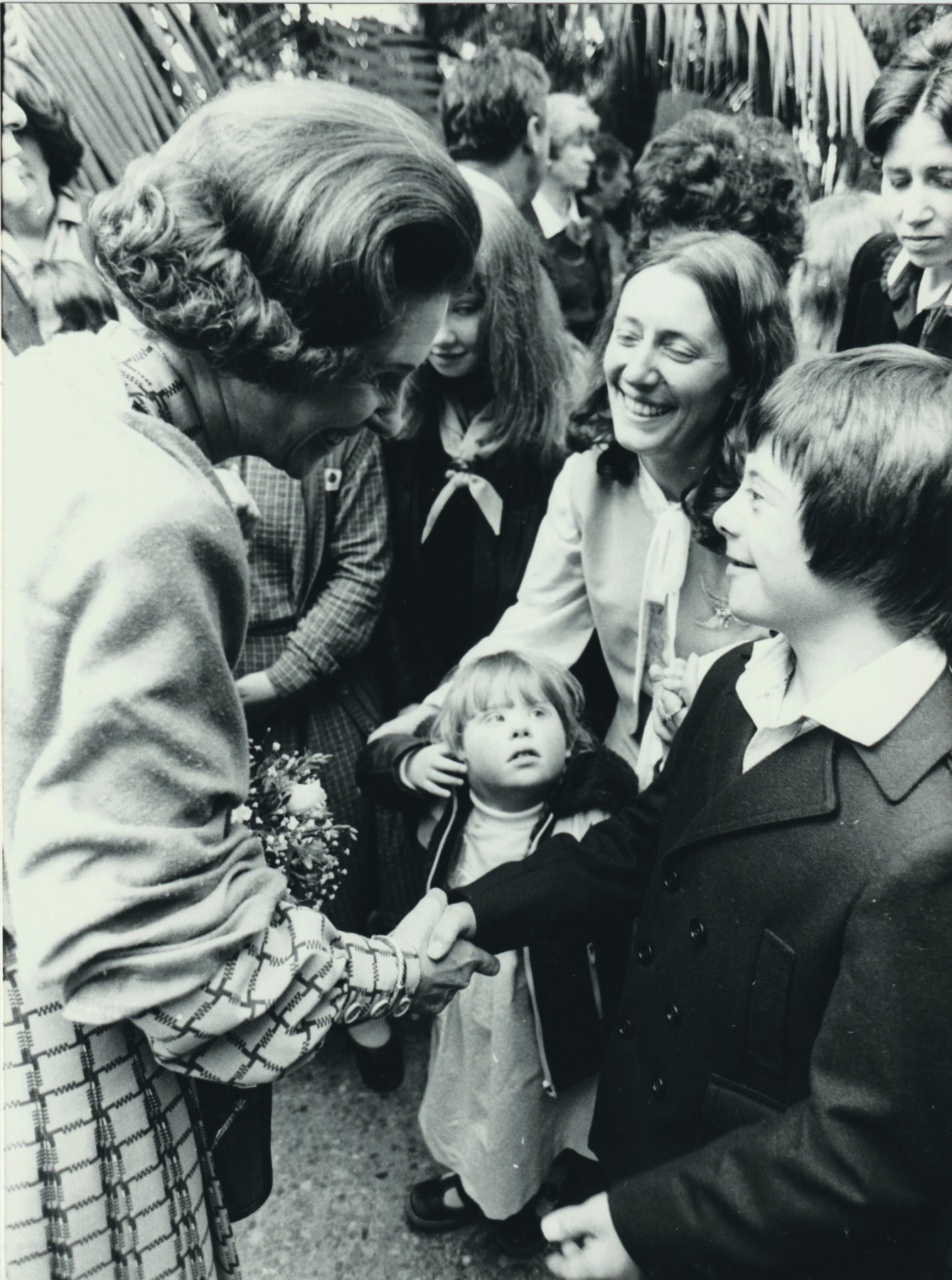
Fifty years ago, Paul and Wivina Demeester founded the Monnikenheide ‘care landscape’ in a forest on the outskirts of Zoersel. The first two buildings provided temporary accommodation for young people with mental disabilities. In 1980, a centre for adults and a house where people with disabilities could live independently followed. From 1994 onwards, the enclave grew rapidly, with designs by the cream of Flemish architects. Monnikenheide thus developed into a socially and architecturally groundbreaking experiment in enabling people with disabilities to lead a full life on their own terms. Living in Monnikenheide. Care, inclusion and architecture, a book edited by Gideon Boie, documents the unique approach to care and architecture that this project represents.
Monnikenheide came about as a result of a confrontational incident. Paul and Wivina Demeester’s first child had Down syndrome. Doctors predicted that he would spend his life in institutions. The parents refused to accept this: they wanted a ‘normal’ life for their child, in a warm, homely atmosphere. This led to the creation of the first home, not only for their son but also for other children. As they grew up and the parents gained a better understanding of the residents’ needs, new ideas began to take shape. In the 2000s, the organisation built two houses in the centre of Zoersel where people with disabilities could live independently, just like everyone else.