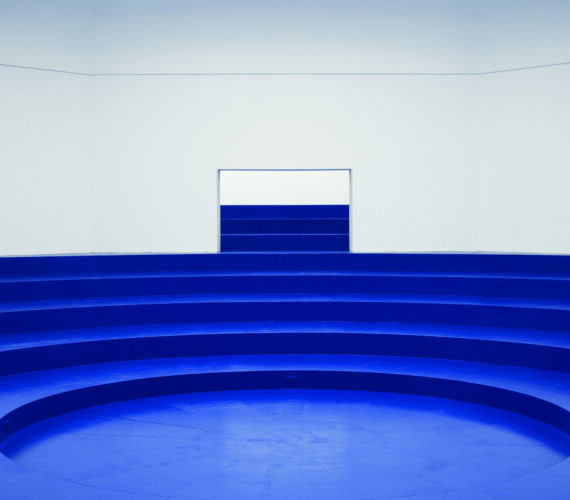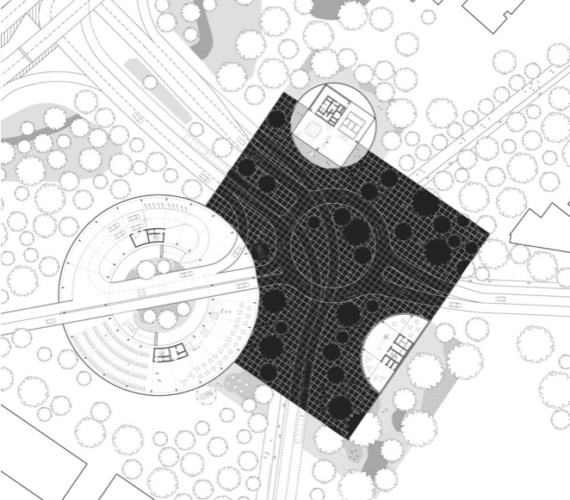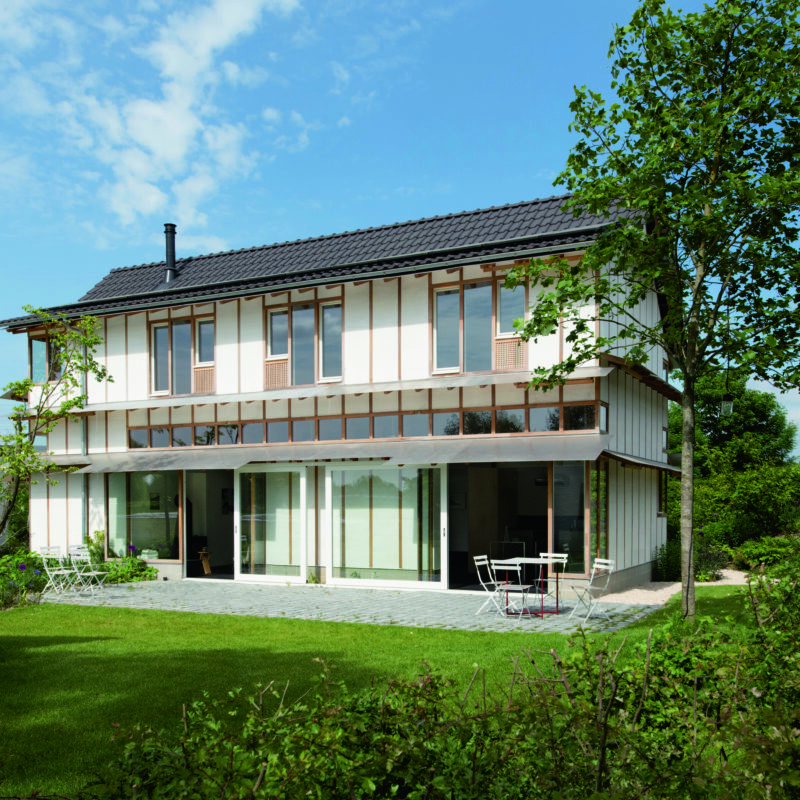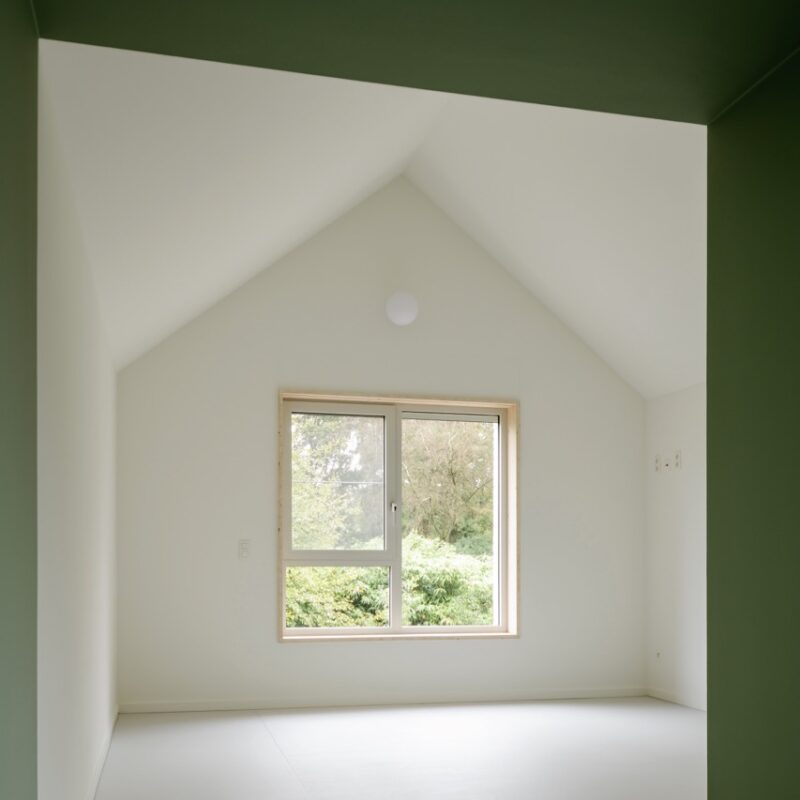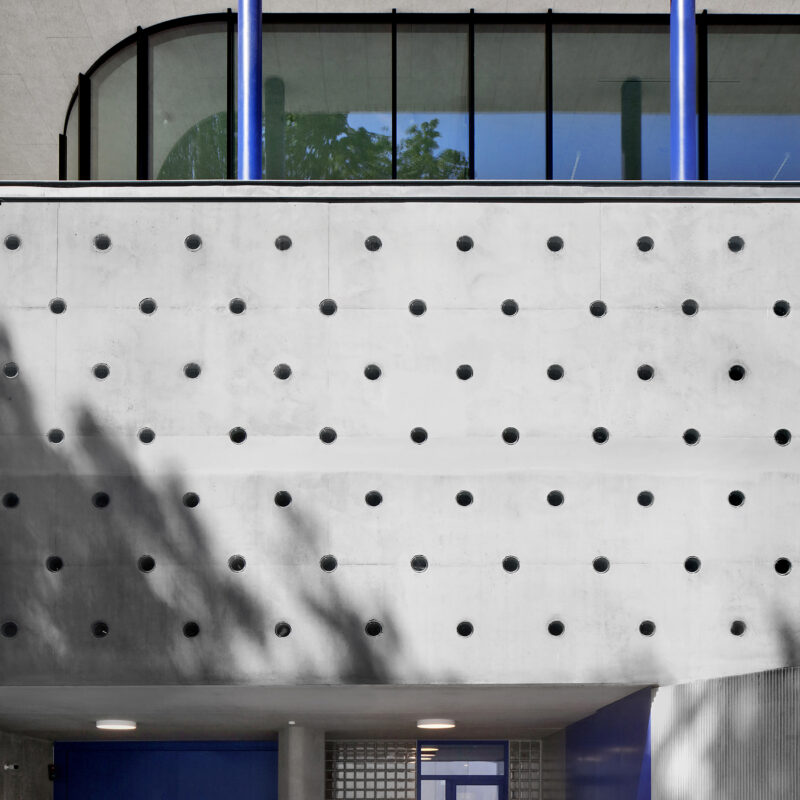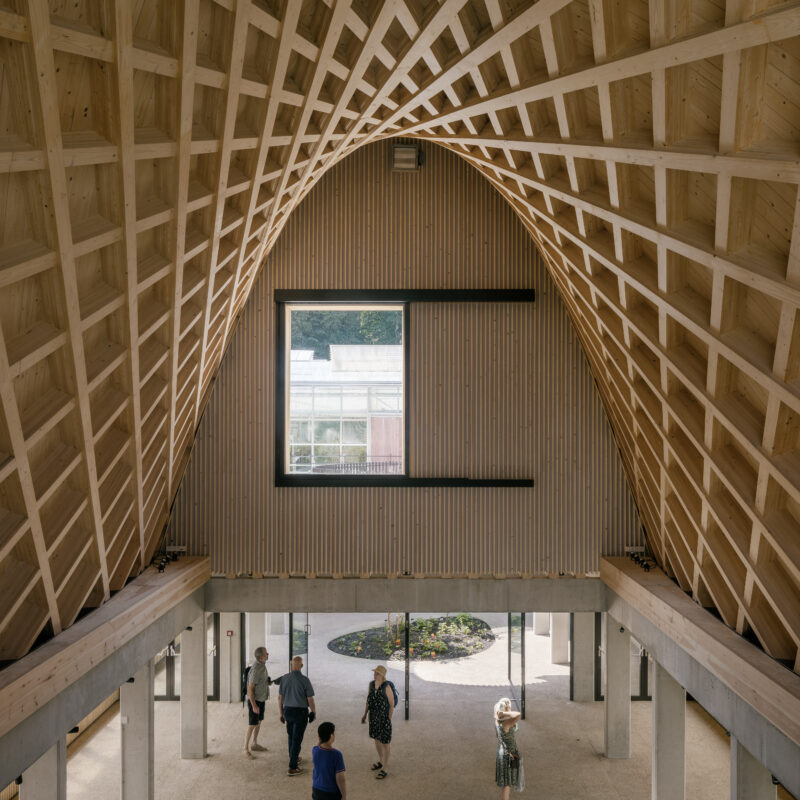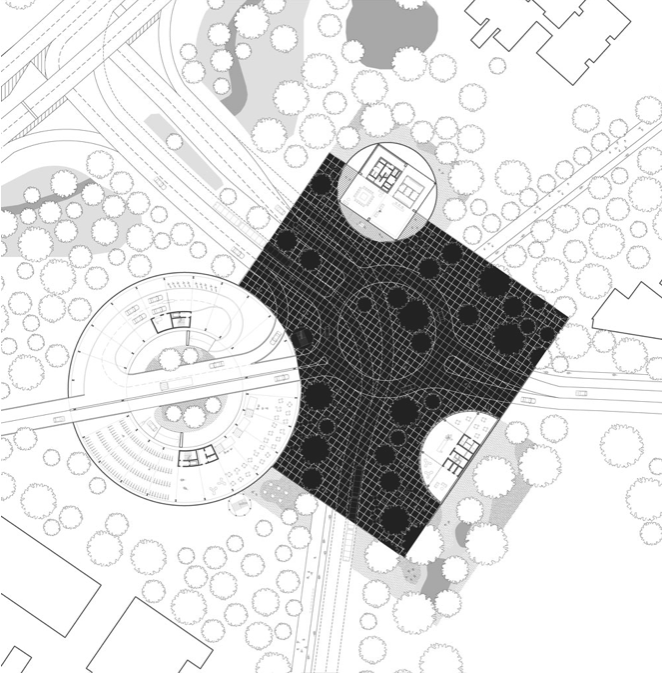
This issue of A presents an intriguing series of circular buildings that have been designed and built. Compiling this kind of collection gives us a better understanding of the architecture of round buildings. We see libraries, schools, healthcare and wellness facilities returning to the circle because it offers a good overview, but also because it creates connection and cohesion. In this sense, their layout clearly references the symbolism of the circle. Pieter T’Jonck explains: ‘Circles are purely geometric shapes that lend themselves to many purposes and interpretations. They bring coherence where chaos might otherwise reign.’
When no cultural context or spatial planning programme immediately leads to the circular form, this type of plan could well be perceived as a reckless, extreme, almost absurd gesture on the part of its author. Indeed, why choose a circular shape for a home or office? Christophe Van Gerrewey explores this question as well as the supposed lack of functionality of the circle as an unlikely plan. He addresses a series of architectural questions raised by the circle. Léone Drapeaud also questions the monumental and absolute dimension of the circle, and commands respect for the architect’s coherent structural exercise aimed at bringing a conclusive logic to a figure that – at first glance – does not lend itself to it. Gideon Boie, for his part, criticises the rejection of the environment inherent in the logic of the circle. “The beauty of forms can have a particular usefulness,” he writes, “but when this formalism becomes radical through the use of a geometric form, there is no longer any connection with the context.”