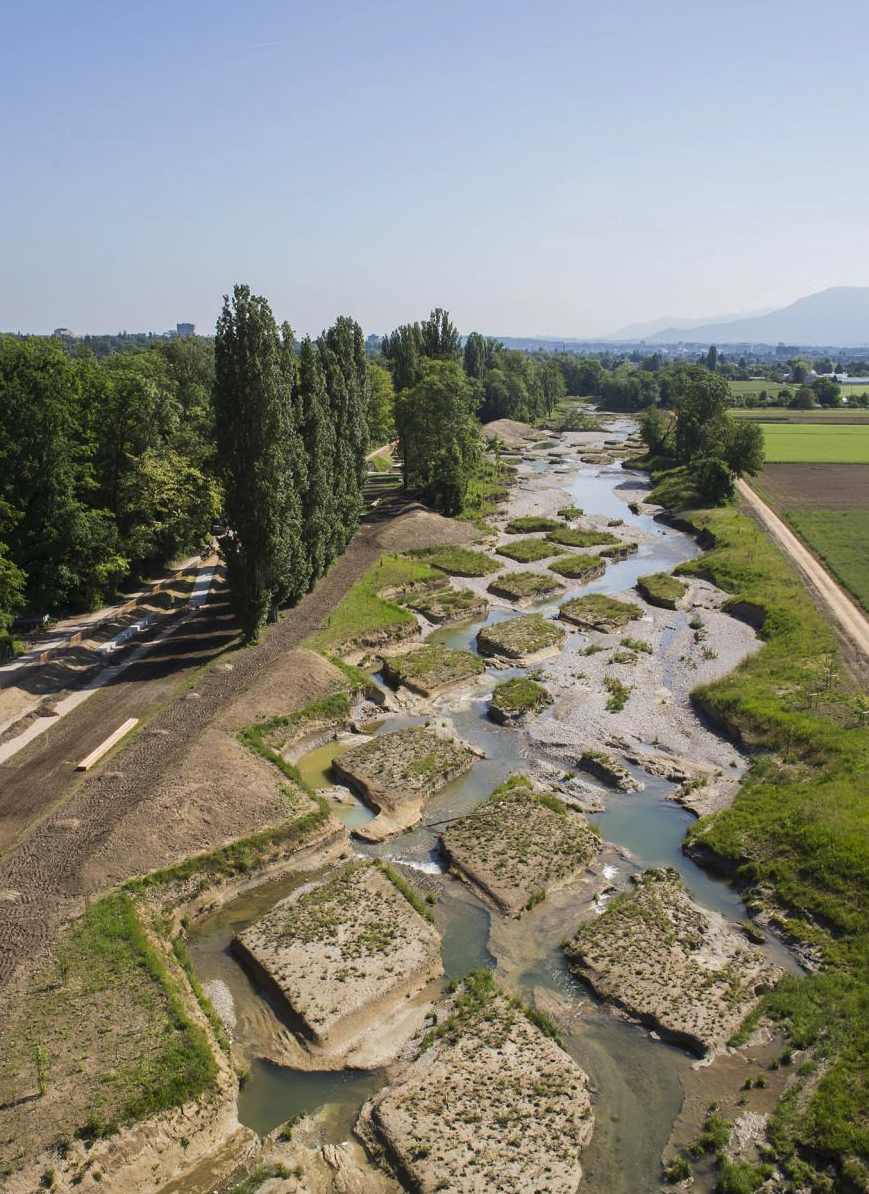
“You know, they straightened out the Mississippi River in places, to make room for houses and livable acreage. Occasionally the river floods these places. ‘Floods’ is the word they use, but in fact it is not flooding: it is remembering. Remembering where it used to be. All water has a perfect memory and is forever trying to get back to where it was.” Taken from a lecture given more than thirty years ago in New York by author and Nobel Prize winner Toni Morrison, these few sentences are now more relevant than ever: water flows where, depending on the topography and climate, it is most appropriate. Whether dammed, drained, diverted or straightened, natural watercourses often end up regaining the upper hand.
At the 18th Venice Architecture Biennale, which began last month, curator Lesley Lokko presents the “Laboratory of the Future”, featuring projects mainly designed by architects of African origin. Climate change, and by extension our management of water, is one of the most hotly debated topics, with architecture, urban planning and landscaping being key to sustainable solutions. Several national pavilions have addressed water management, notably the Netherlands with Plumbing the System and Denmark with Coastal Imaginaries, while Finland and Germany have installed dry toilets as a political statement. While it is an understatement to say that water is omnipresent in Venice, the severe flooding in northern Italy in May and the unmistakable presence of MOSE, the bright yellow flood defence system designed to protect the City of the Doges from seawater, remind us once again of the current emergencies.