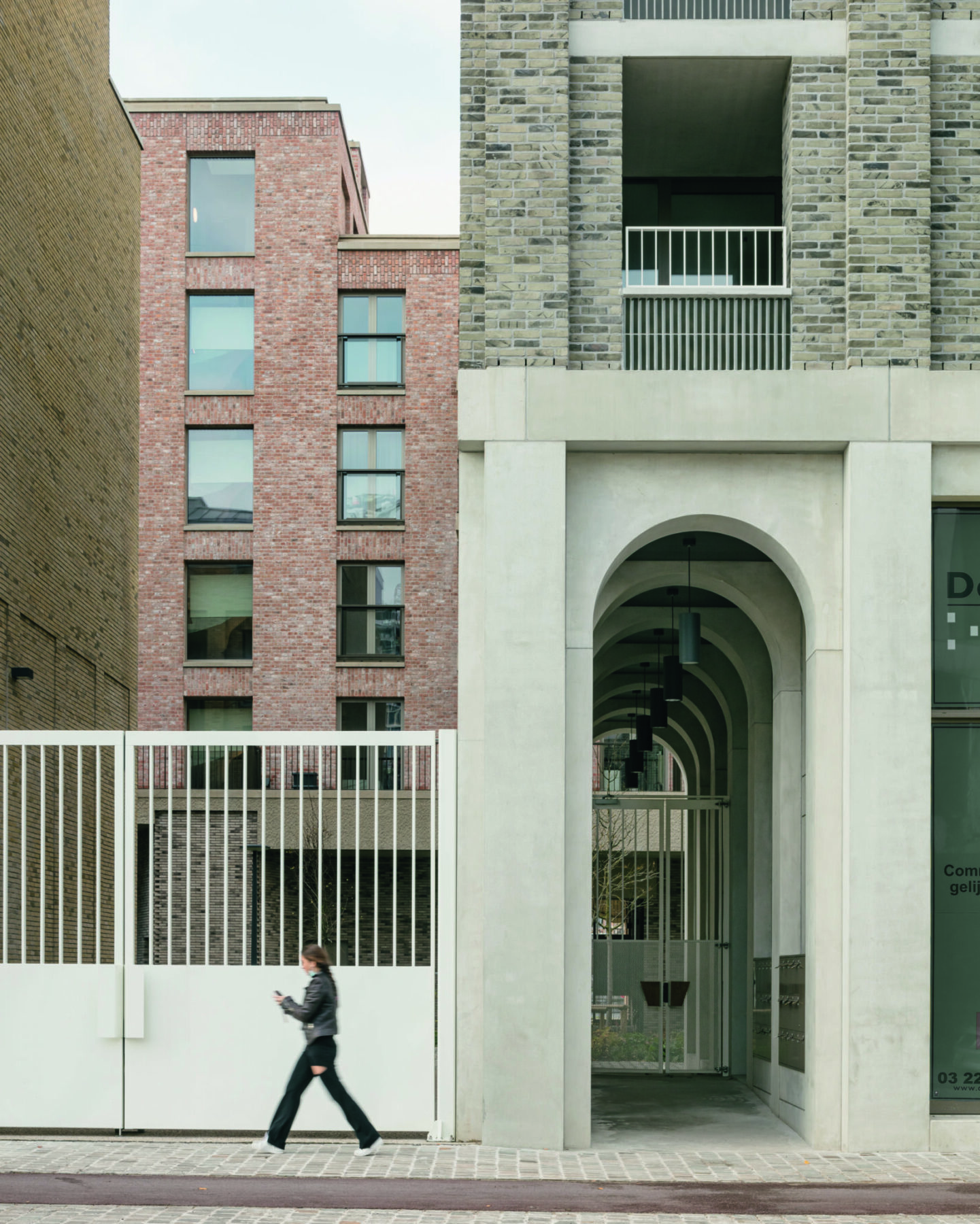
Brick is everywhere. Not only in our stomachs, or anchored in the identity of our local building traditions, it is also literally the most widely used building material, both structurally and architecturally, for our cities, churches and housing estates, and has been since the Middle Ages. From the 19th century onwards, the Industrial Revolution accelerated the production and use of brick. Population growth and the rapid expansion of cities demanded more building materials than ever before. Thanks to its small size, ease of handling, modularity and local production, brick was ideally suited to this construction boom.
Whereas in the 19th and early 20th centuries brick was an ambassador of craftsmanship and, thanks to complex brickwork patterns and detailing, the aesthetic carrier of the prevailing architectural styles, in post-war Belgium it suddenly played a much more functional role. Industrial production, the rise of concrete, the introduction of cavity walls, the roll-out of land parcelling and increasing regulation recalibrated the role of brick, both structurally and culturally.