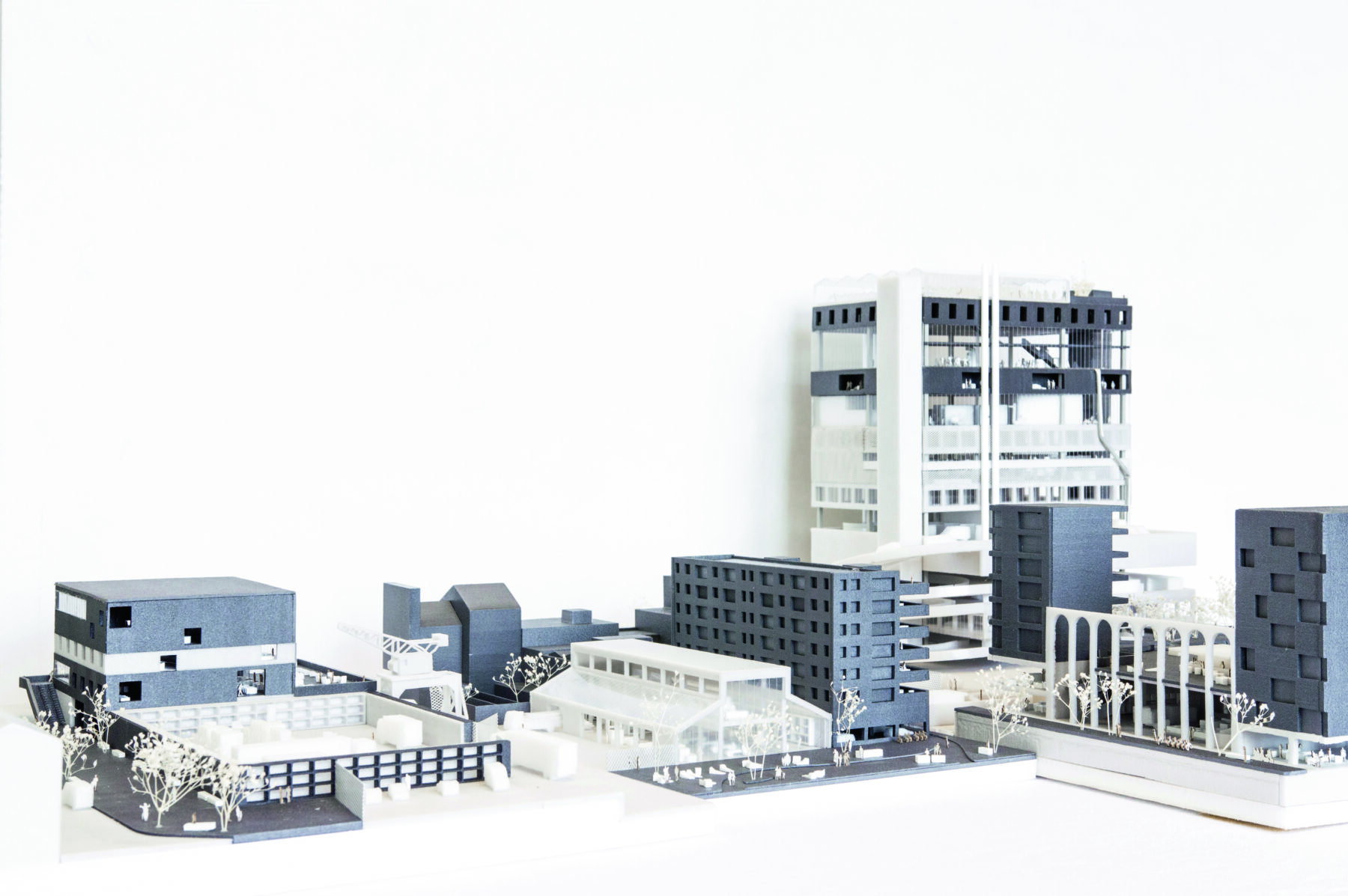
In Belgium’s major cities, countless traces of 19th-century industries remain right between residential areas. Living conditions there were often precarious. It is therefore understandable that after the Second World War, policymakers wanted to separate living and working. However, they went too far: industry was banished to industrial estates far outside the built-up areas. In Flanders in particular, they are scattered across the landscape like confetti. After all, every municipality invested money in them, because industry brought in revenue and employment. The call to turn the tide, to lure industry back into the city and mix it with housing, is growing louder. There are good reasons for this: it promotes climate resilience, biodiversity, urban diversity and employment, and reduces traffic congestion. Brussels was the frontrunner, but Kortrijk and Ghent are also experimenting with the idea.
The spread of industry, like the suburbanisation of housing, seemed to be a solution to the poor urban environment. However, like suburbanisation, it is a space-consuming strategy, with collateral damage such as an overloaded road network and (too) expensive utilities. The excessive paving that results from this also causes climate and environmental damage. It is also rarely circular or sustainable: industrial zones consist mainly of disposable architecture: buildings that are suitable for only one purpose. This was rarely the case for 19th-century factories, which, thanks to their solid structure, are now eagerly being converted into lofts.