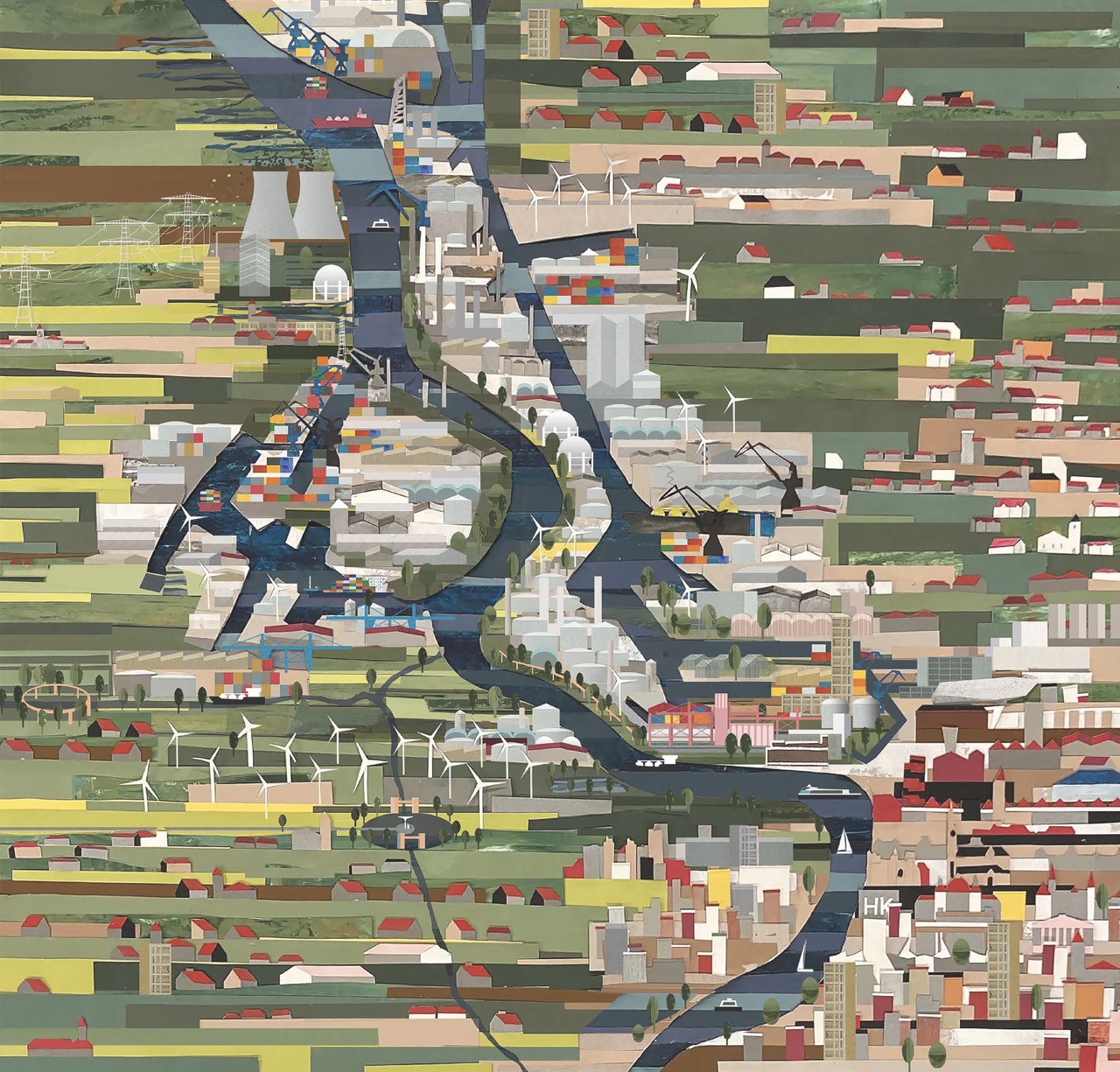
We are at the dawn of a new era: a post-fossil-fuel future, in which we are independent of oil, natural gas, coal and lignite. Society as a whole must become circular and climate-neutral. Industry and shipping can act as catalysts in this major transformation. What would the Port of Antwerp – a global hub for goods and energy flows and Europe’s second-largest port – look like if it operated fossil-free and carbon-neutral? That is what nine students from the Rotterdam Academy of Architecture explored during an urban planning semester studio last academic year.
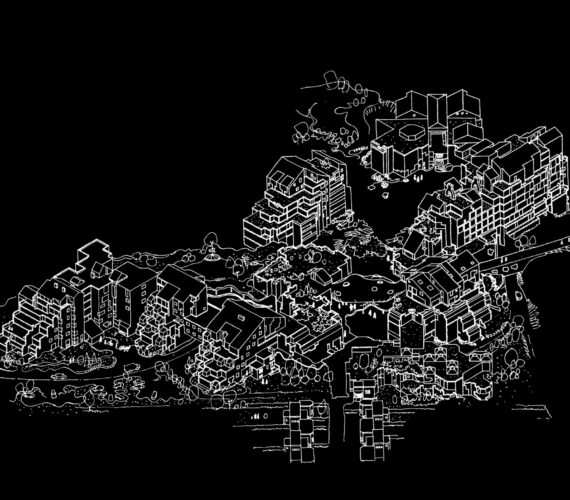
The students first explored what a post-fossil fuel port, based on renewable energy and circular raw materials, might look like. In doing so, they not only outlined scenarios for phasing out existing goods flows in which fossil fuels still play a significant role today. They focused primarily on existing innovative companies and knowledge clusters to foster the growth of circular initiatives, pluralistic projects and ecological structures with high spatial-economic efficiency.