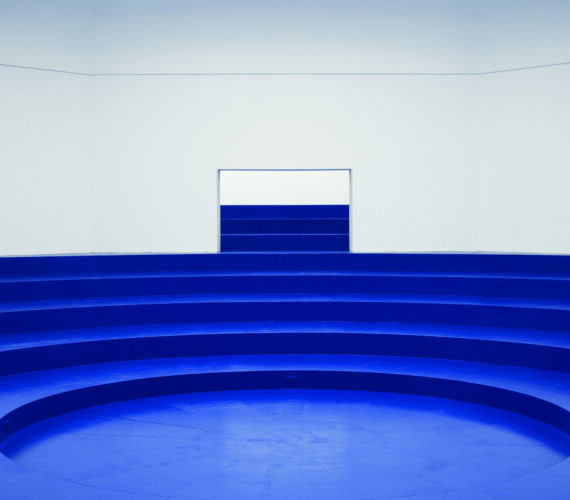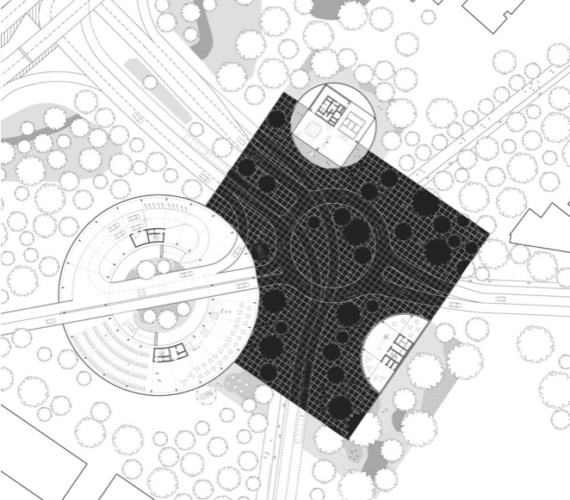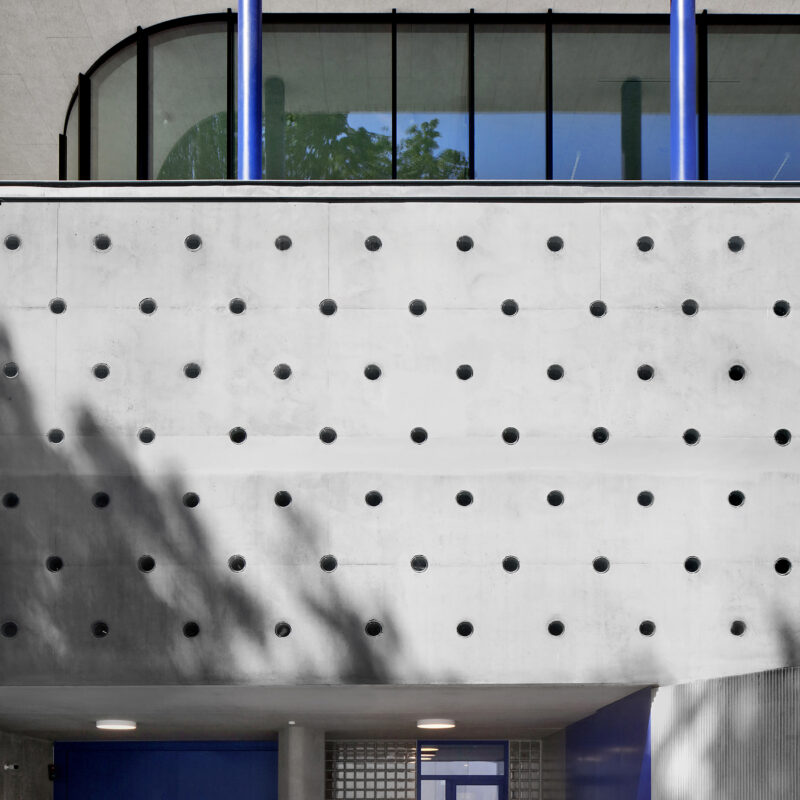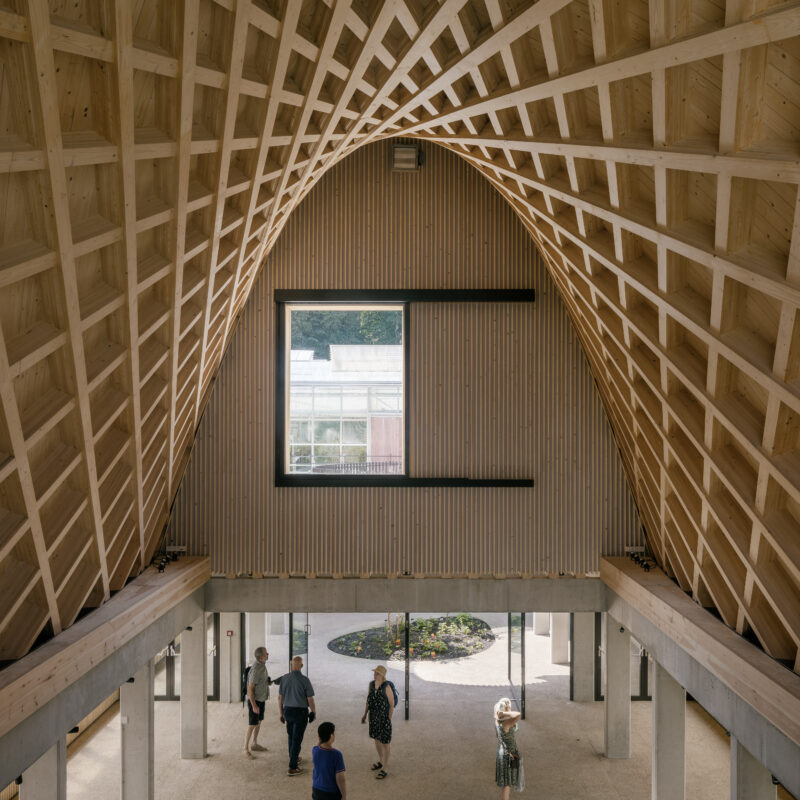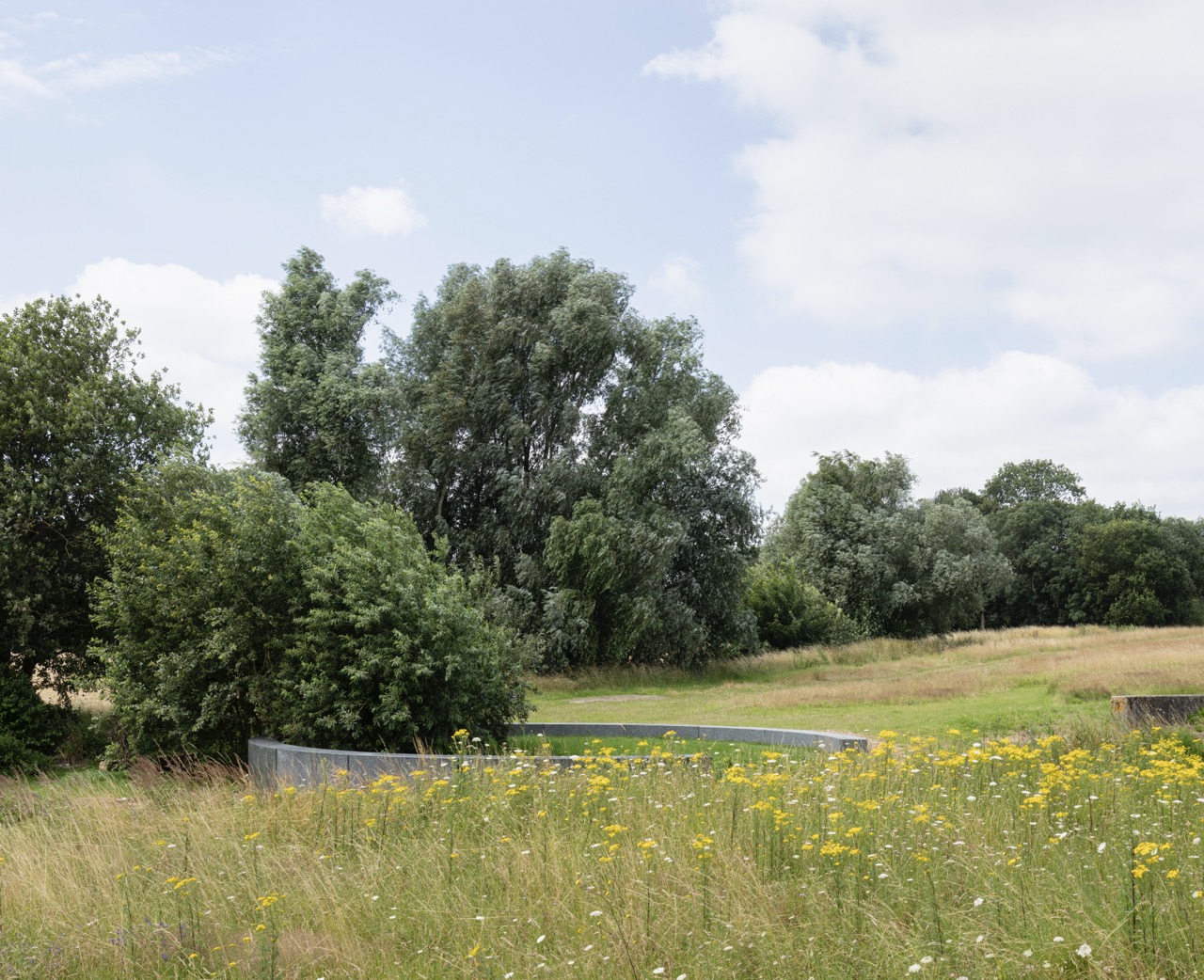
A circular floor plan is highly rational and, for that very reason, borders on madness. If anything remains of the architect as an author who draws plans, rather than as a manager or editor who chairs meetings or directs processes, then the circle is the concentrated emblem of that activity. The circle symbolises the extremes of design: circular buildings are both self-evident and absurd. The circle is the pinnacle of the enchantment of geometry – the purest expression of the belief in form and the importance of form for every design.
It is no coincidence that Robin Evans opened his 1995 book The Projective Cast. Architecture and Its Three Geometries with the statement that geometry – the branch of mathematics concerned with shape, size, positions of figures and properties of spaces – has an ambiguous reputation and is associated with both idiocy and intelligence. Evans quotes from Joseph Conrad’s 1907 novel The Secret Agent. One of the minor characters is Stevie, a feeble-minded but innocent young man who spends his days ‘well-behaved and quiet at a wooden table’, ‘drawing circles, circles, circles; countless circles, concentric, eccentric; a fascinating jumble of circles which, by their intricate multiplicity of repeated curves, uniformity of form, and disorder of intersecting lines, suggested an image of cosmic chaos, the symbolism of mad art reaching for the unimaginable’.