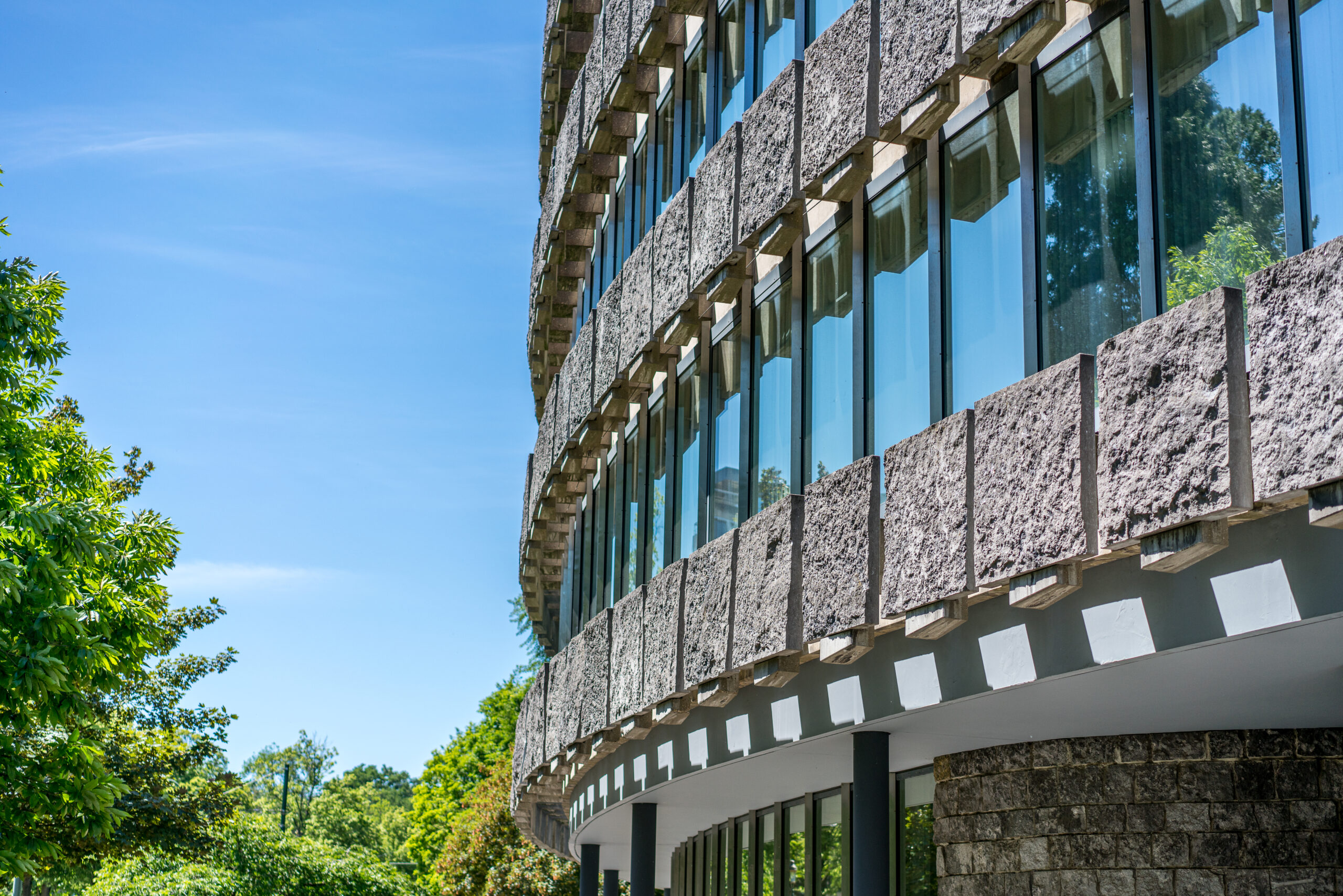
At first glance, 20th-century modern architecture has little affinity with the circular plan. This is surprising in itself, given that Émile Kaufman, the great architectural historian, saw the work of revolutionary French architects such as Claude Nicolas Ledoux and Étienne-Louis Boullée as the foundations of a new modern tradition based on autonomy. In the work of these 18th-century architects, the circle is not a trivial shape. Even more so than other powerful geometric figures (such as the square, pyramid or sphere), it is imbued with radicalism, monumentality and equality.
While circular designs were already beginning to appear in 20th-century architecture, this was largely in the work of designers on the fringes of the modern movement, such as Gunnar Asplund, whose design for the Stockholm Library is considered the high point of his 1920s neoclassicism. For others, the circle appeared for structural reasons, as was often the case in the work of Italian engineer Pier Luigi Nervi (and, with him, in the series of sports palaces he designed). It also allows a programme to be brought together in a very compact way under an umbrella roof, as in Buckminster Fuller’s Dymaxion house. Nervi also built the Biosphere in Montreal in 1967, but all in all, circular or spherical buildings remain rather rare in the 20th century.