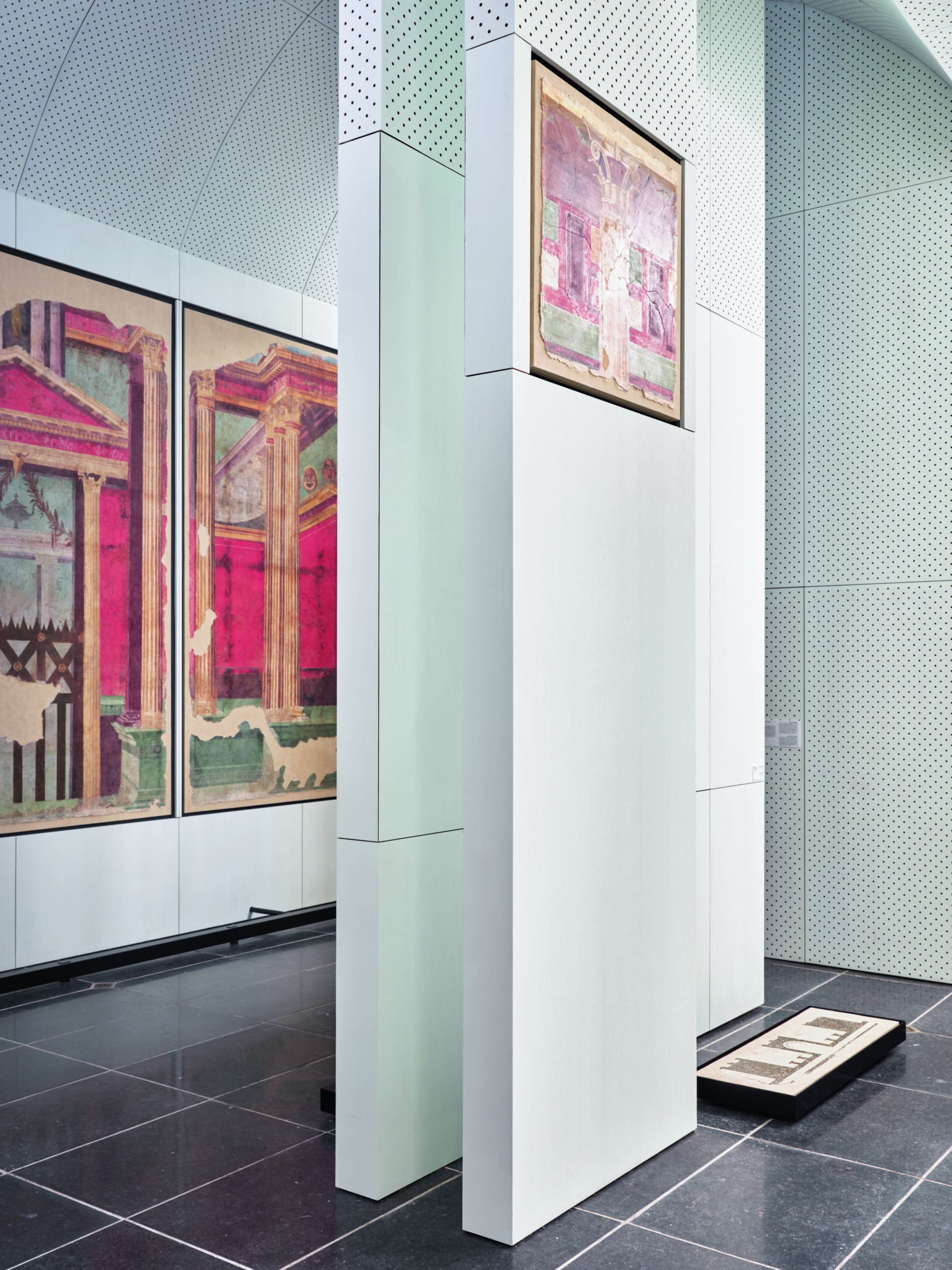
In Morlanwelz, there are two sources of pride: the carnival and the Roman frescoes. While the former has been a fixture for over a century, the latter have just been returned to the public after three years of restoration. Designed by the SNCDA studio and artist Richard Venlet, the new scenography of the Royal Museum of Mariemont has once again brought this masterpiece back to life.
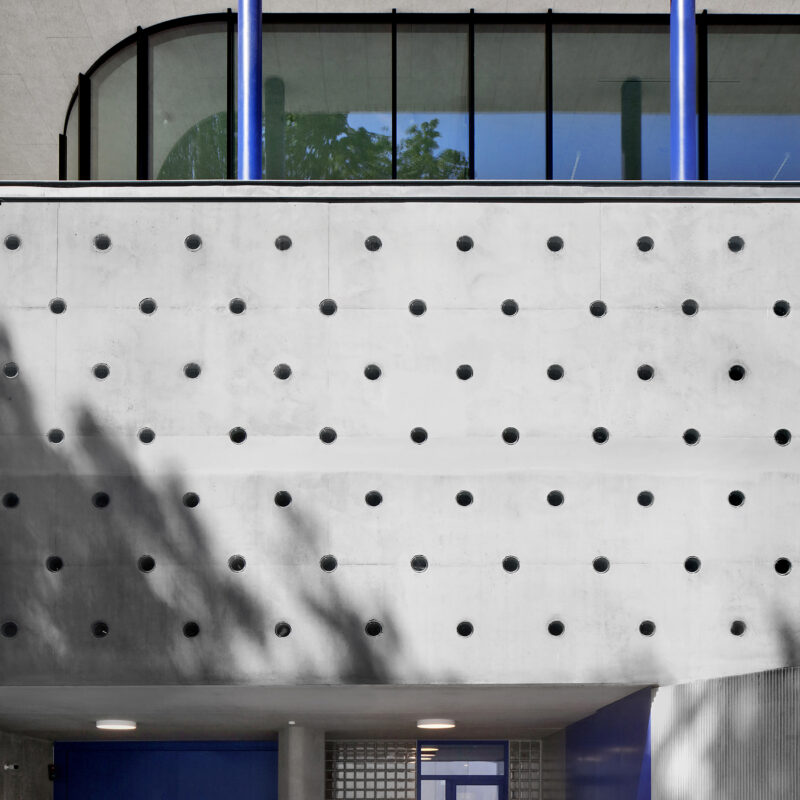
The Boscoreale frescoes owe their name to the Roman village at the foot of Vesuvius where they were discovered at the end of the 19th century. Hidden under a thick layer of ash from the volcanic eruption, the frescoes survived the centuries and ended up at the Mariemont estate when its wealthy owner acquired it in 1903. When the château burned down in 1960, the fire once again spared the frescoes. When architect Roger Bastin rebuilt what would become the Royal Museum of Mariemont fifteen years later, a pavilion was specially designed to house the eight panels that make up the pictorial ensemble. But as the years passed, Bastin’s architecture, all concrete and light, proved unsuitable for the optimal conservation of the works. In 2021, a call for tenders was launched to redesign the pavilion’s scenography.