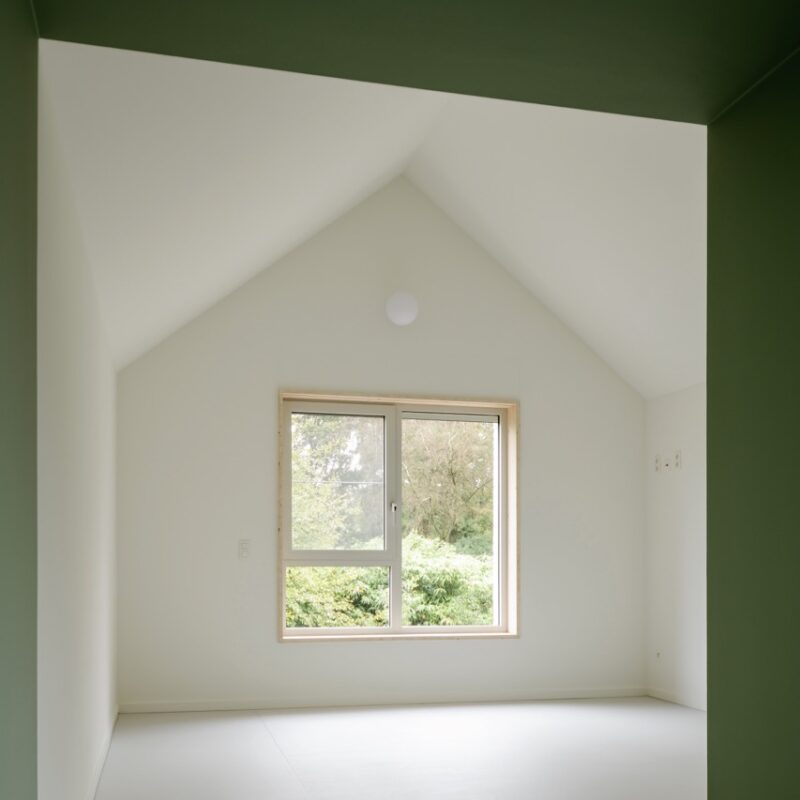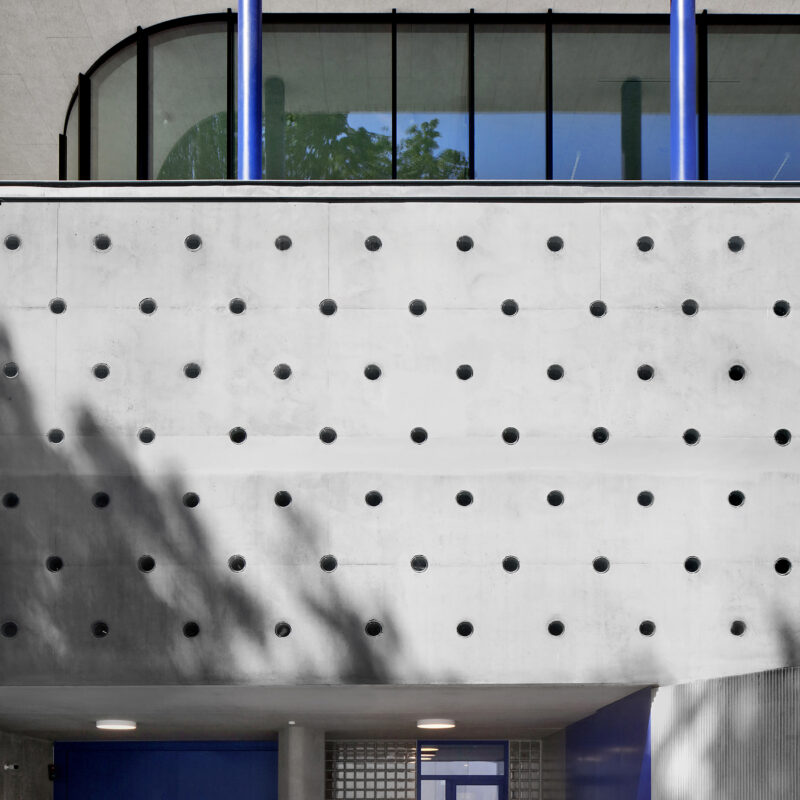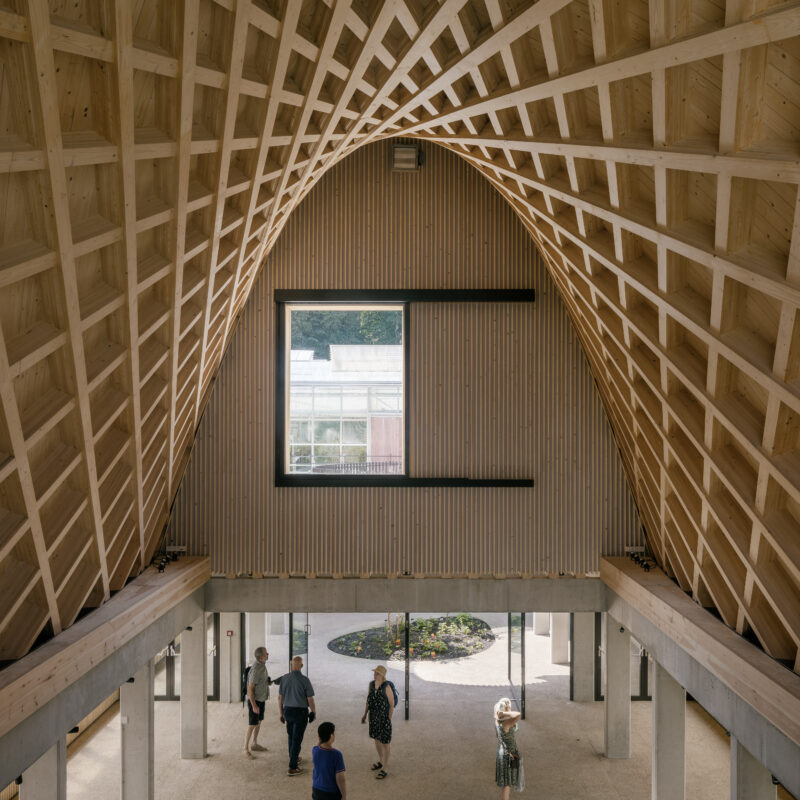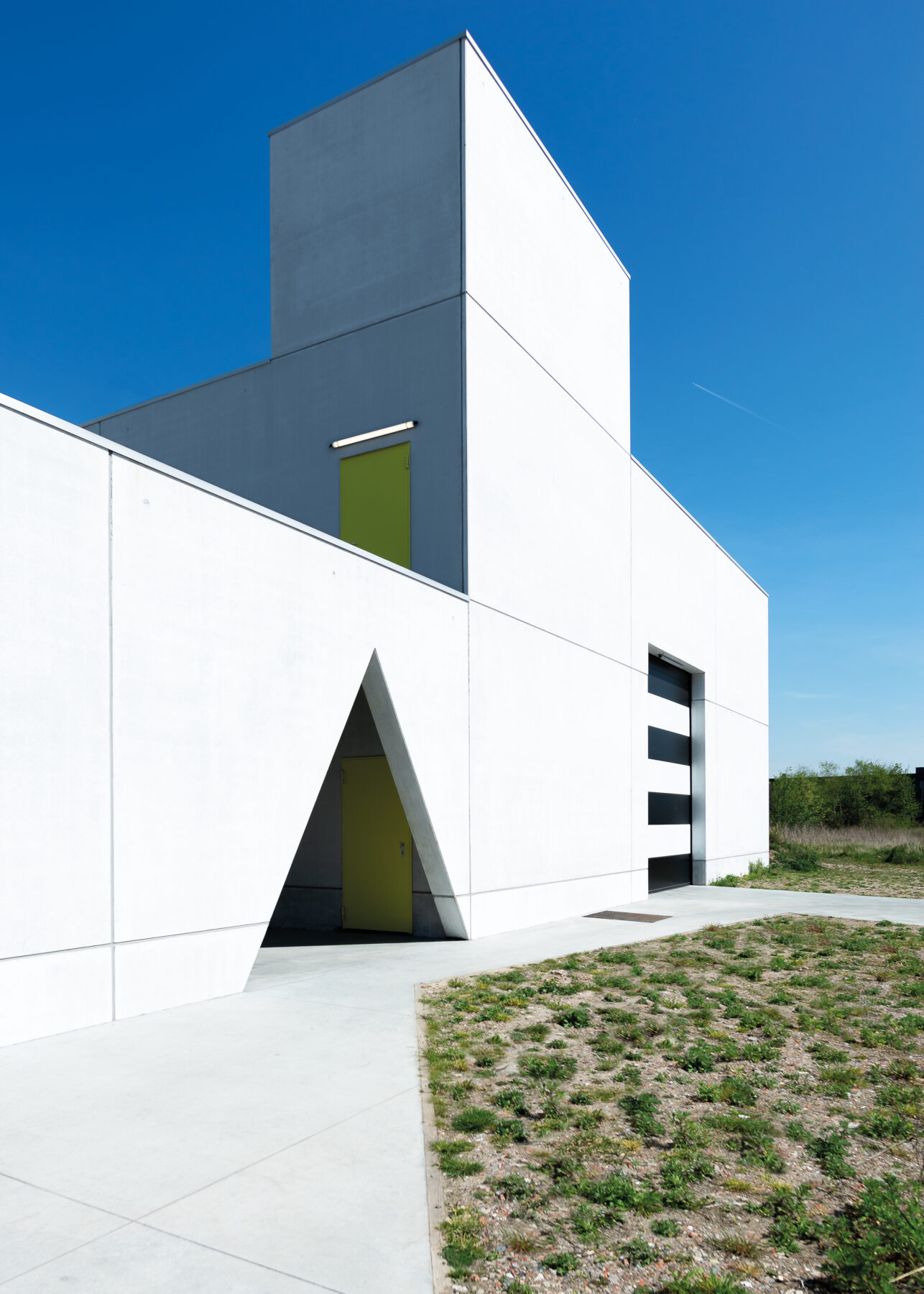
Sandwiched between the Rabot, Wondelgem and Tolhuisdok, lies Wondelgemse Meersen. Until recently, this marshy area near the port of Ghent had been untouched by human intervention. When drawing up a development plan in 2012, the city authorities saw it as the ideal location for light industry. Local businesses would be able to benefit from large plots of land just a stone’s throw from the city centre. However, with the emphasis on accessibility and surface area, the architectural requirements remained unambitious, resulting in a landscape of hyper-functional but generic structures. Büro Juliane Greb, meanwhile, had its own approach to the issue. Its coffee roasting factory/warehouse is a refreshing exercise in the search for a space of freedom that allows for a technical mission.
Juliane Greb graduated from RWTH Aachen University in 2011. That same year, the Swiss magazine werk bauen wohnen devoted an issue to the architectural scene in Ghent, where the city was portrayed as a breeding ground for rising talent in the world of architecture. This issue attracted Juliane Greb to Belgium, where she worked for four years at De Vylder Vinck Taillieu before joining the Osar team in Antwerp. Her participation in a competition for 27 apartments in Munich marked the beginning of her own practice. San Riemo, designed in collaboration with Anne Femmer, Florian Summa and Petter Krag, won the Deutsche Architekturmuseum (DAM) annual architecture prize in 2022. In 2017, Petter Krag joined the fledgling Greb office, based in both Germany and Belgium, on a full-time basis.