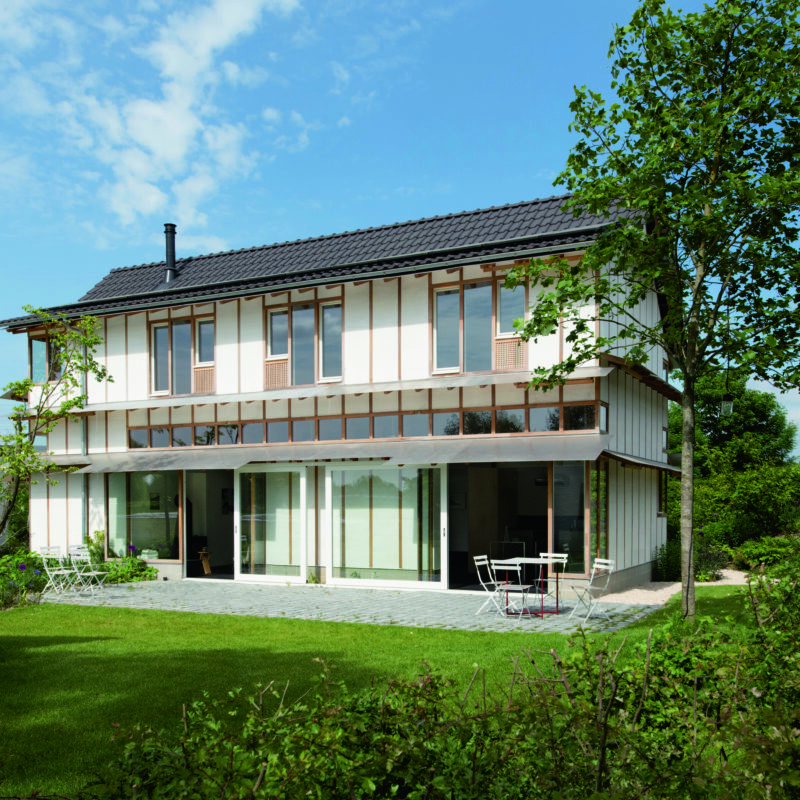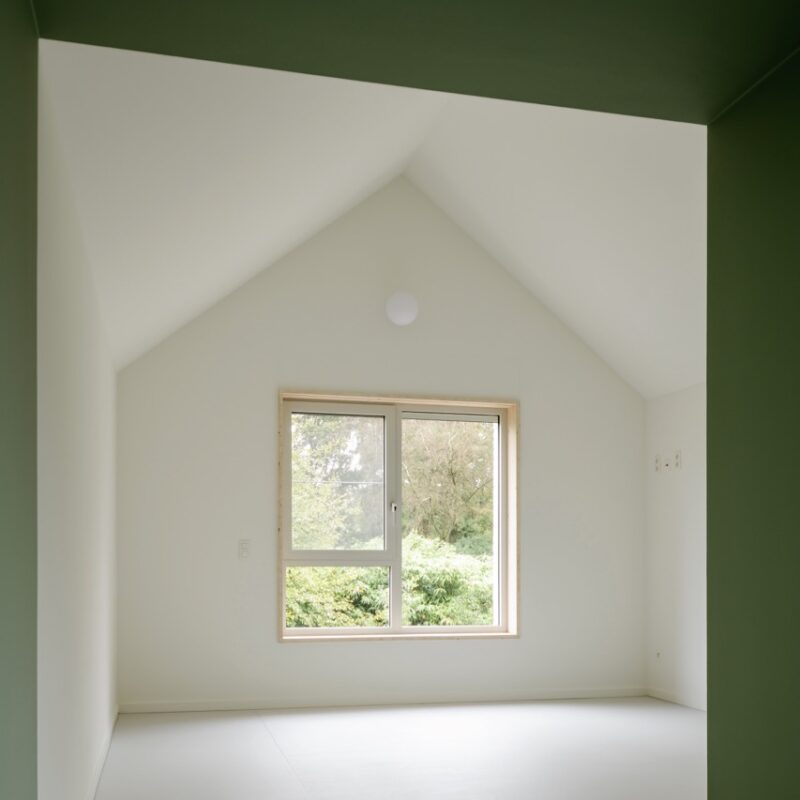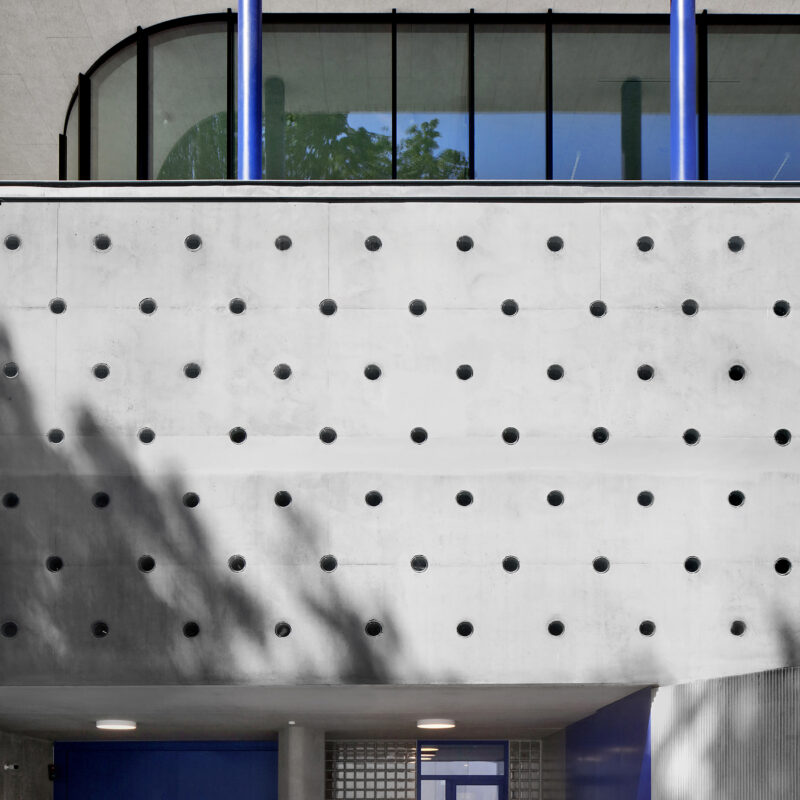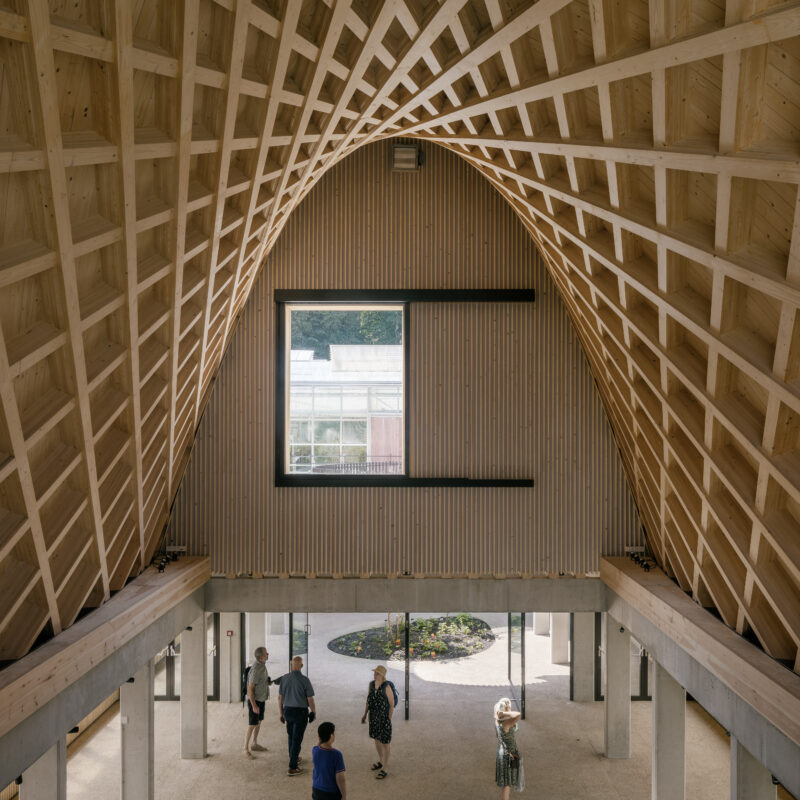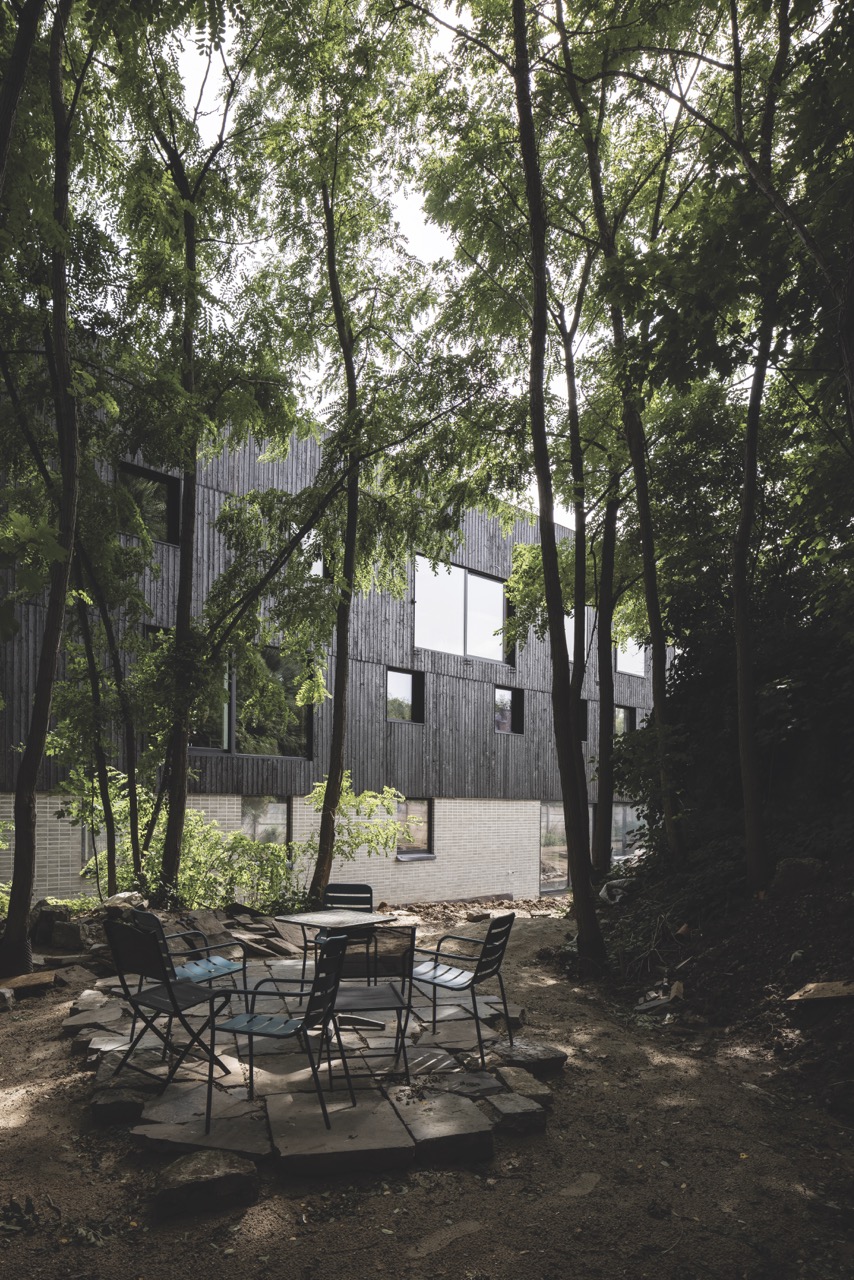
In the heart of a small island in Namur, a few pedal strokes from the station via the RAVel cycle path, lies a small, elongated building. In intimate dialogue with its surroundings, between walls and remnants of nature, it offers above all a new way of living. With this fine example of compact and simple group housing, Specimen explores how architecture can serve a neighbourhood project. 1 1 The cohabitation project in Namur consists of a solid base comprising shared spaces. Above, in a wooden structure, are bright duplex dwellings.
The conversation begins with the history of the plot. From Specimen’s offices, you can see its contours. Originally owned by the CPAS, which was refused permission by the local council to build a housing complex that was too dense, the land was in danger of falling into the hands of local developers. In the end, it was purchased by a group of families who wanted to continue living in the city and were therefore willing to live in a “compact” environment and share facilities. Chosen to advise them on the development of the project, Specimen ended up joining the group as a buyer. One of the partners even plans to live there himself. This solidarity between architects and residents was one of the factors in the project’s success, as is often the case in similar initiatives.