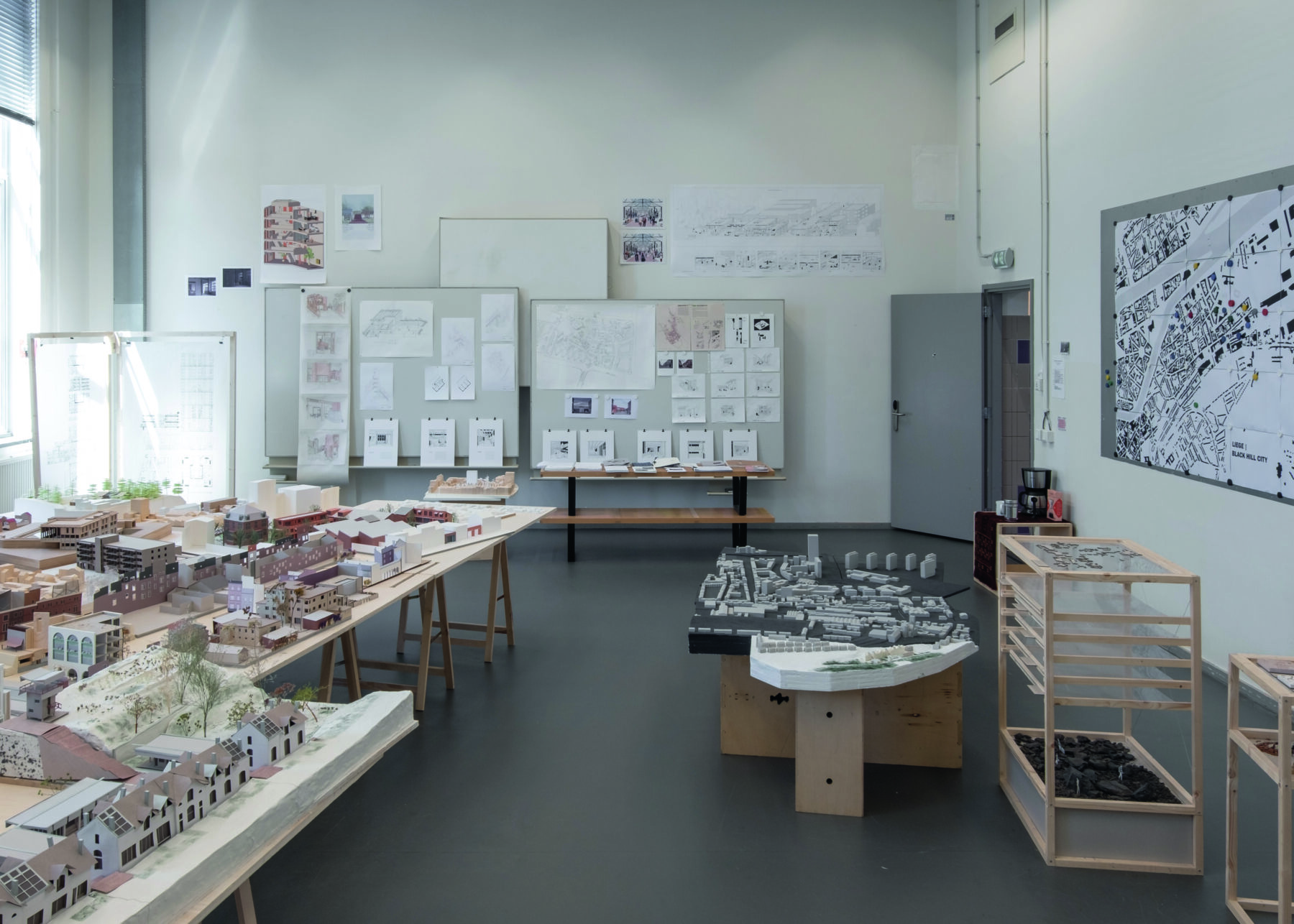
‘Where to build?’ and ‘What to keep?’: these are the central questions in the Urban Architecture design programme at Delft University of Technology. This year, the graduation studio focused these questions on Bressoux and Droixhe, two complex neighbourhoods in Liège.
The urban landscape of Liège has been shaped as much by nature as by man. Infrastructure winds its way through a valley, and although Liège is de facto a post-carbon city following the decline of the mining and steel industries, the banks of the Meuse remain occupied by car traffic. Our study area was located on the right bank, on either side of the Atlas Bridge. It is the axis of a park, a relic of the 1930 World’s Fair. Only half of Groupe EGAU’s modernist city in the park remained standing. Surrounding it is the everyday city of building blocks, split lengthwise by a railway line. To the south, the city meets a wooded hillside, with a vast field of allotments on the plateau above, before the suburbs begin.