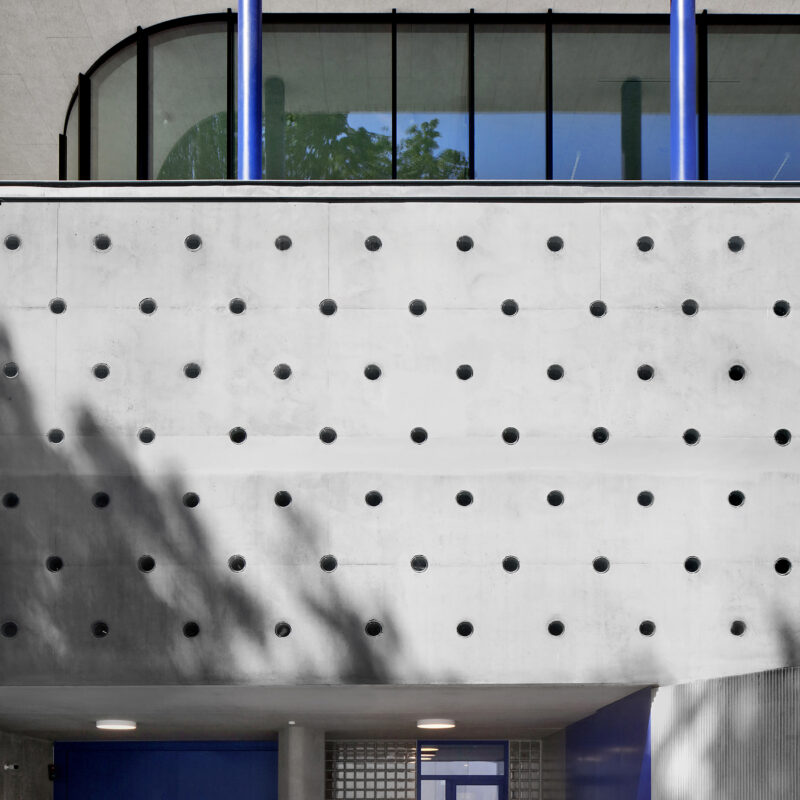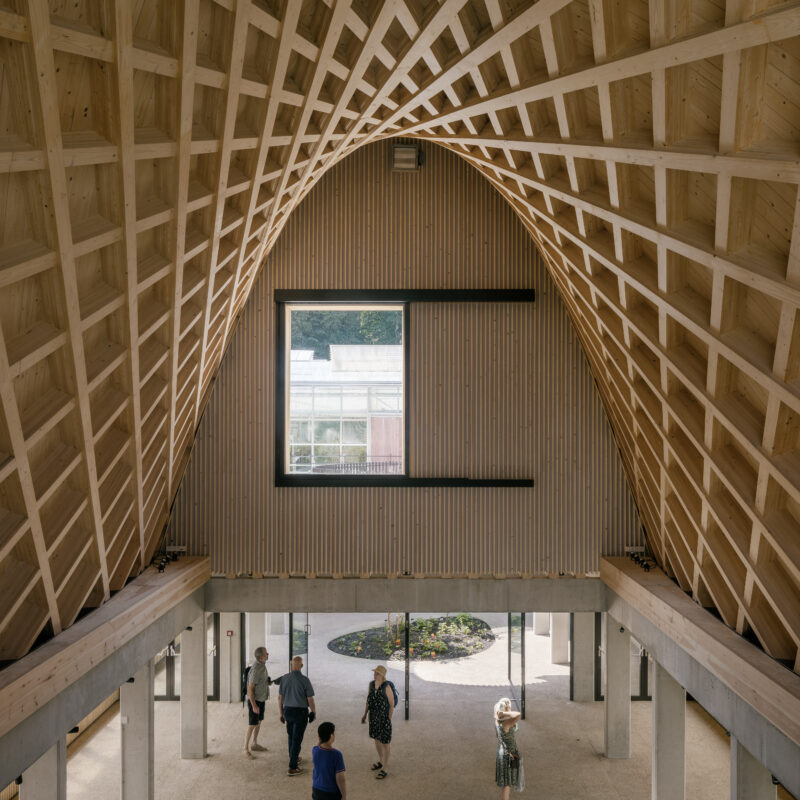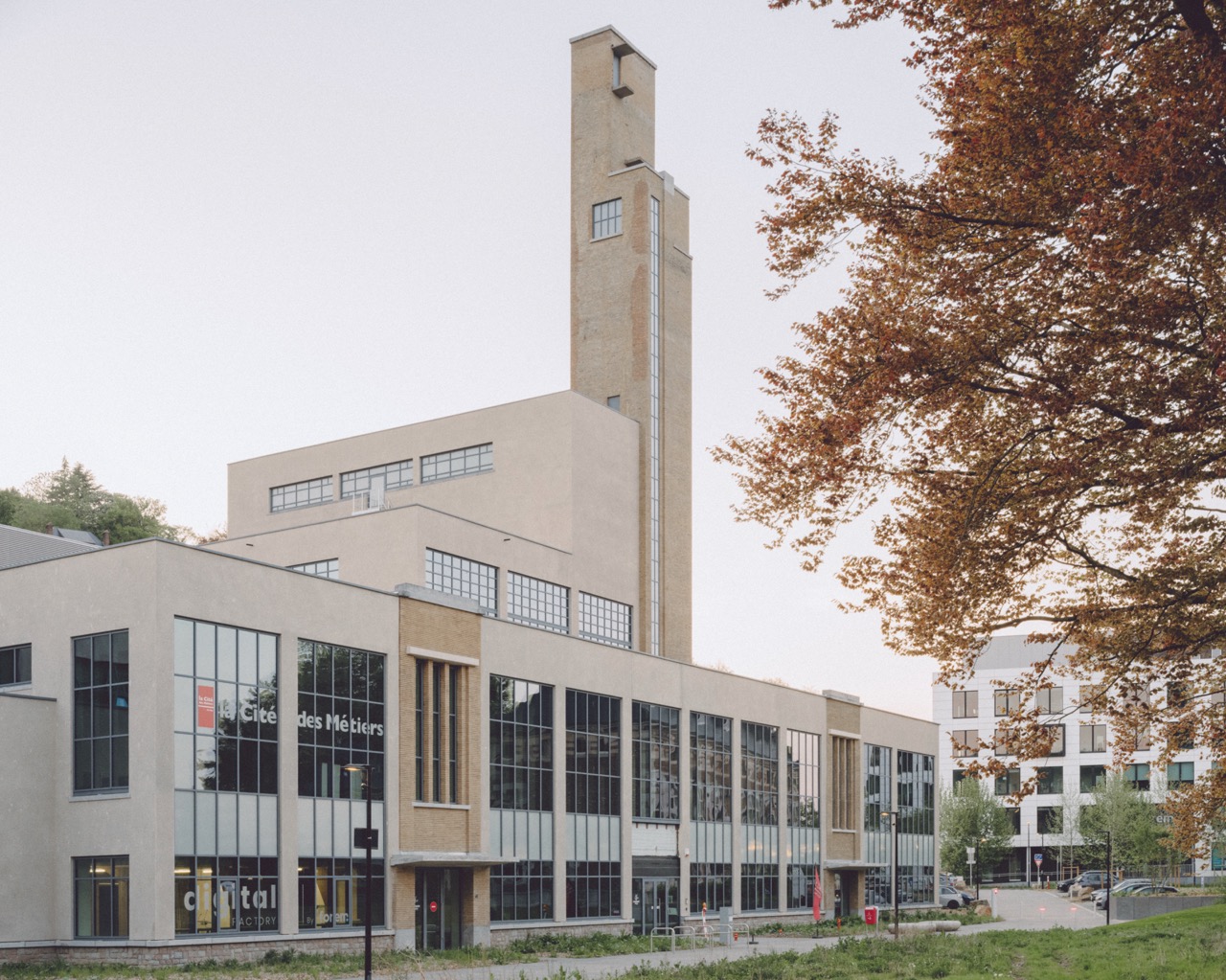
A symbol of 1930s modernism, the Val-Benoît thermoelectric power station is currently undergoing a major conversion. Balancing heritage preservation with contemporary realities, the Baumans-Deffet – Dirix project tells the story of both a legacy and its contemporary rebirth.
In the early 1930s, the University of Liège acquired undeveloped land around the Val-Benoît Abbey to build a campus dedicated to engineering. In this era of rapid progress, engineering professors surrounded themselves with committed modernist architects. A series of innovative buildings were erected on ten hectares of land, their avant-garde techniques echoing the international exhibitions held in Liège during that decade. The thermoelectric power station building, designed by Albert Duesberg in 1937, is one of these remarkable constructions, a manifesto of progress. With its ocean liner appearance and iconic tower, the building stands out for its post-and-beam system, large glass facades and boiler room capable of supplying the entire site with hot water and electricity via an underground network. Barely thirty years after its construction, the University relocated its activities to the heights of Liège, gradually abandoning the campus. At the end of the 2000s, when the buildings were in an advanced state of disrepair, the SPI – the province’s territorial development agency – bought the site with the ambition of transforming the campus into a city district. It launched an urban planning competition to convert the power station into a vocational training centre.