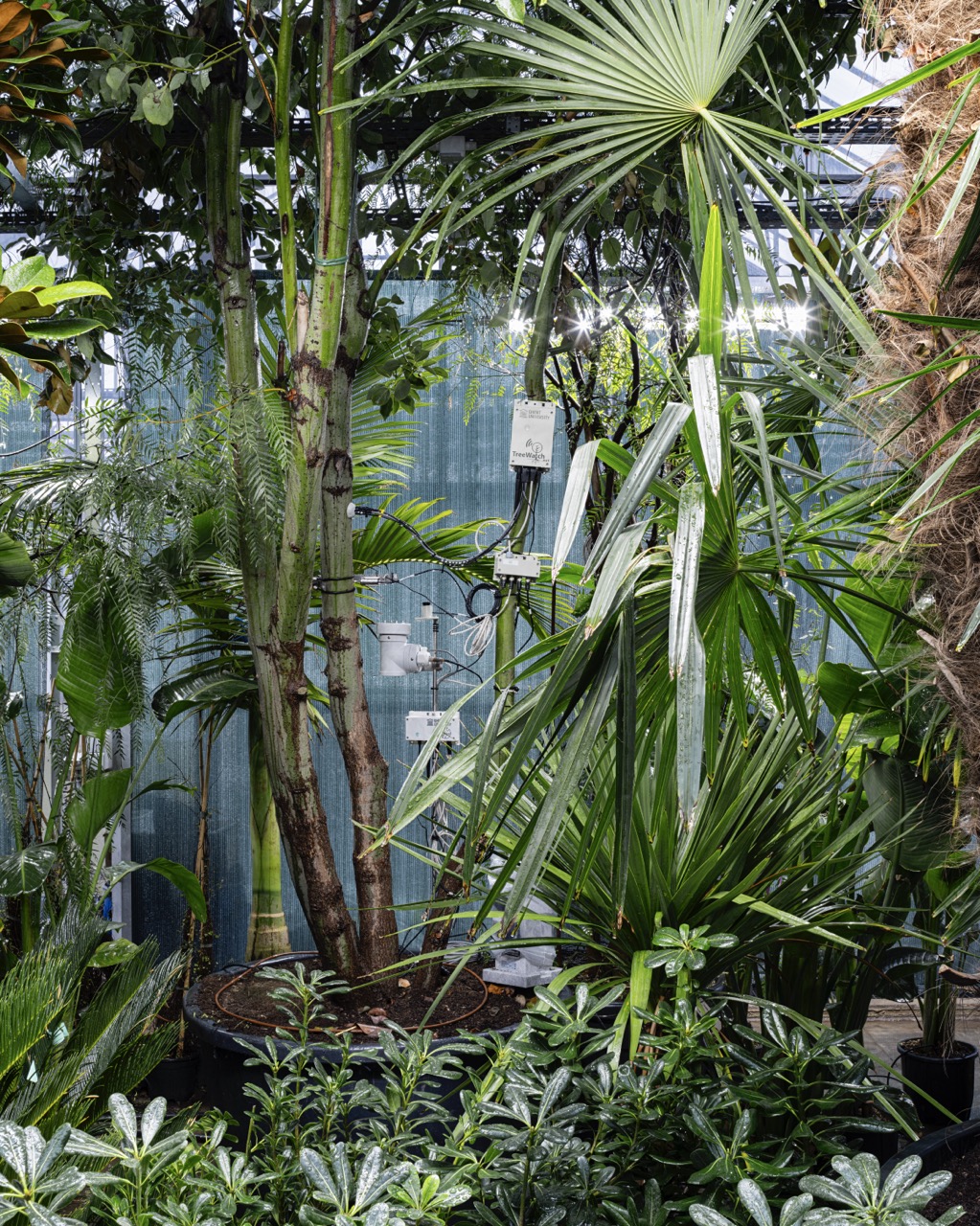
In the summer of 2025, Bas Smets, in collaboration with Stefano Mancuso, will present the exhibition Building Biospheres in the Belgian pavilion at the Venice Architecture Biennale, which explores the impact of the natural intelligence of plants on architecture. In response to this, Kelly Shannon, lecturer at KU Leuven and author of the recently published Forest Urbanisms, was invited by A to talk to Bas Smets. In this conversation, they both explore what biospheric urbanism, augmented landscapes and natural intelligence mean to them, as an academic on the one hand and as a practising landscape architect on the other. ‘We want to examine the extent to which architecture can be redefined as an organisation of living organisms – human and non-human.’
Kelly Shannon – I would like to start with your concept of ‘biospheric urbanism’. From which specific heritage of urban planning and landscape architecture did this originate? And how does the iterative process of analysis and design work? For example, is the Universal Thermal Climate Index (UT&I), which works with observed thermal comfort, also used in this process? On a broader, territorial scale, are there opportunities for bioclimatic urban design as constellations of dynamic microclimates? Are vegetal and hydrological systems designed and choreographed to adapt to the uncertainty brought about by global warming?